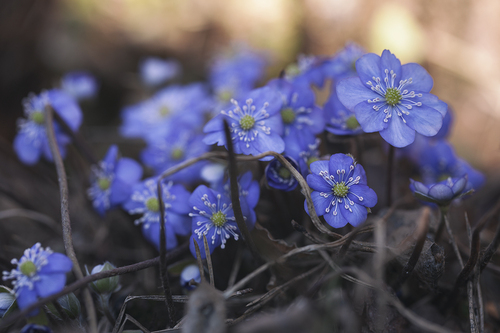
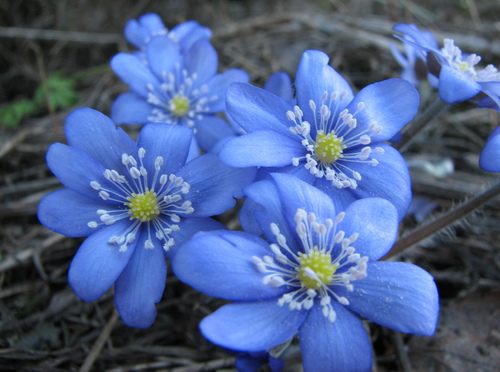
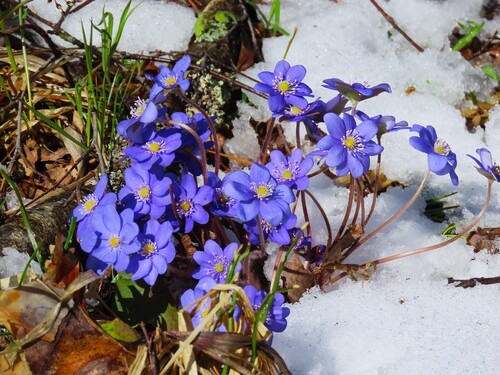
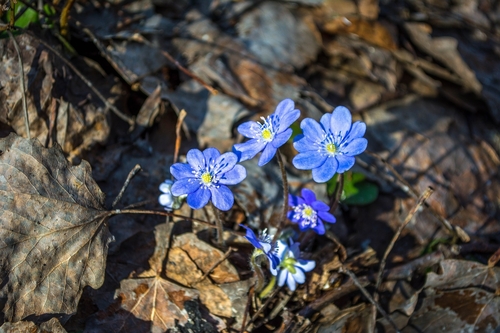
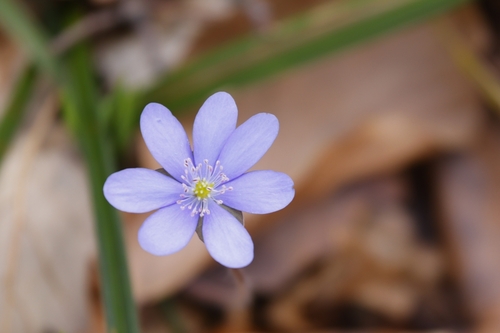
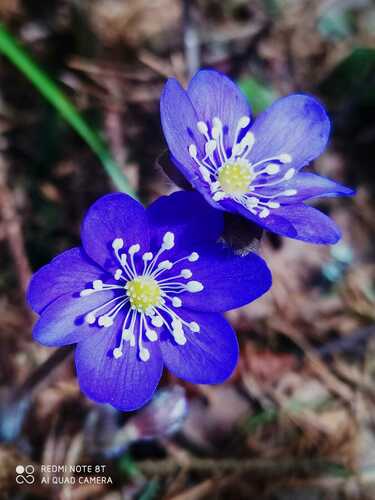
Hepatica nobilis Schreb.
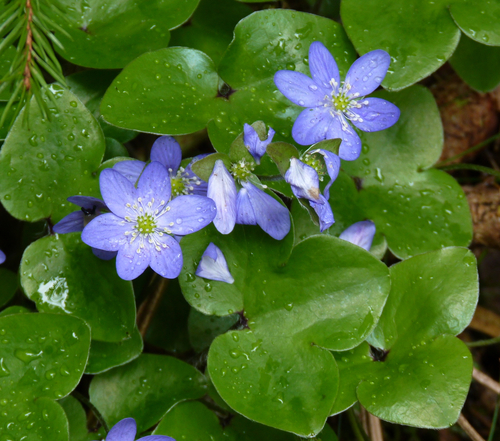
Source: Wikipedia
Synonyms 24
- 393,401 GBIF occurrences
- 44,359 iNaturalist observations
No information on population trends are available. Overall the population seems stable.
The species thrives in forests, scrubby grasslands and gardens in the lowlands but also high in the mountains (Castroviejo et al. 1986).
Logging and wood harvesting may impact populations locally, and collection of the plant from the wild for medicinal use is considered a threat in Macedonia (Council of Europe 2010).
The species is included as threatened in the national Red Lists of Bosnia and Herzegovina and of Croatia (Šilić 1996, unpublished factsheet from MAPROW database: U. Schippmann, pers. comm. Nov. 2013). Monitoring of populations to determine the scale and impact of collection from the wild is recommended.The species is represented by 13 germplasm accessions held at European institutions (EURISCO 2024) and is included in the living collection of at least 115 botanical gardens (BGCI 2024). It occurs in many protected areas, including Natura 2000 sites (UNEP-WCMC and IUCN 2024, GBIF.org 2024).
European regional assessment: Least Concern (LC)EU 27 regional assessment: Least Concern (LC)The species is present in most of Europe and has become naturalised in some parts. It is assessed as Least Concern for both Europe and the EU27 Member States due to its widespread distribution, stable populations and no major threats; however, monitoring of populations to determine the scale and impact of collection from the wild is recommended.
Gallery