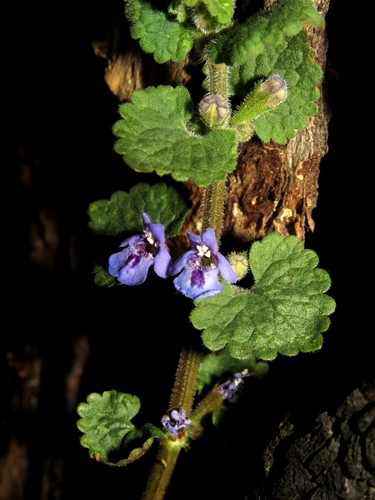
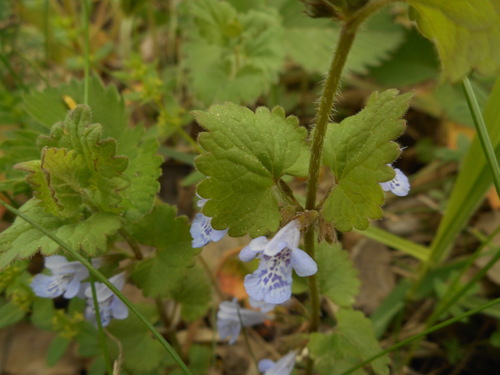
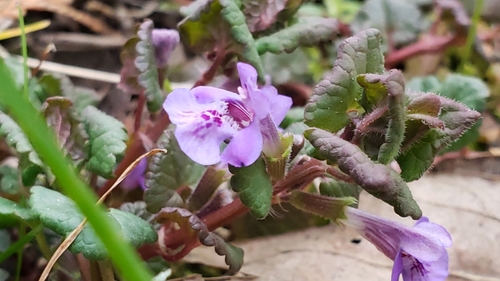
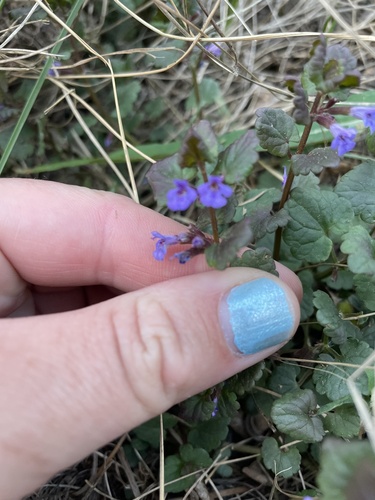
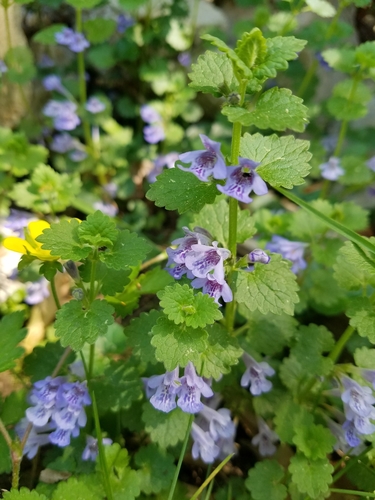
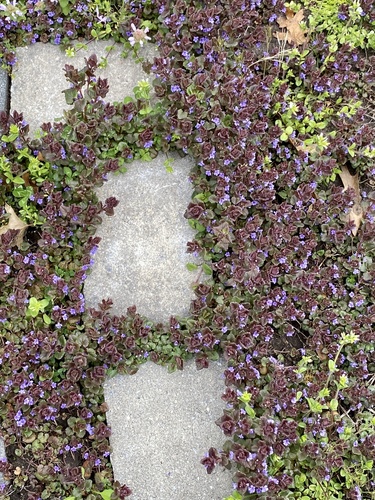
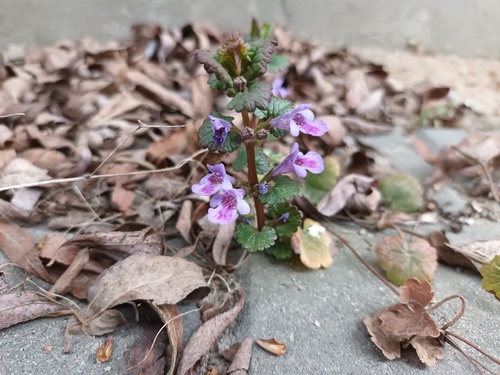
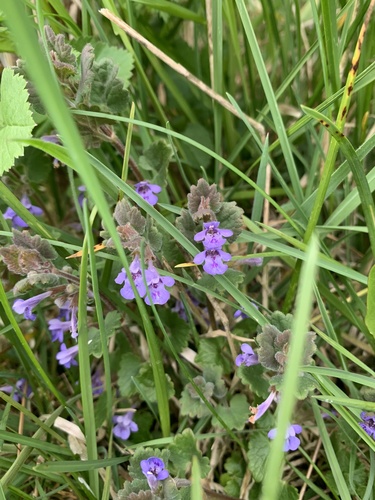
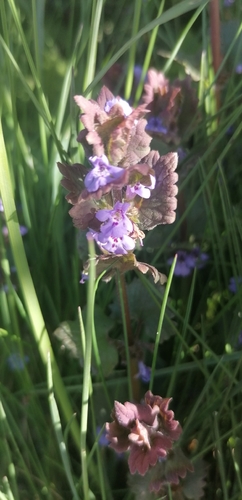
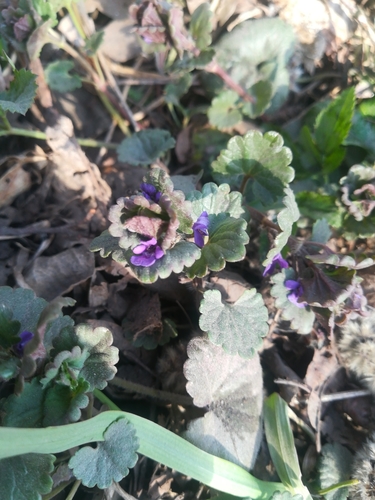
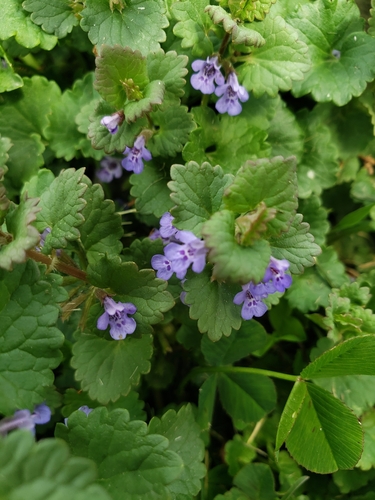
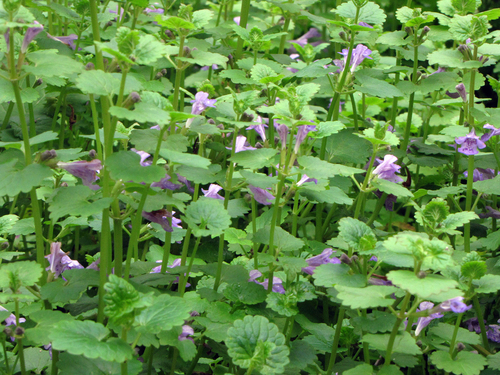
Glechoma hederacea L.
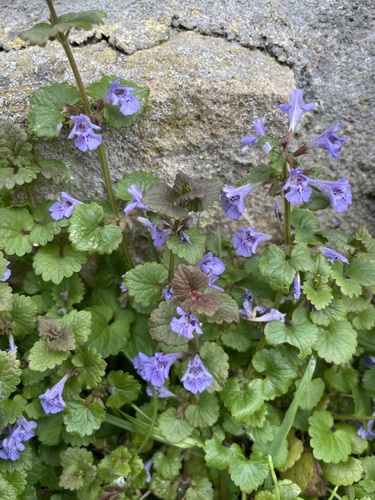
Source: Wikipedia
Synonyms 46
- 1,332,113 GBIF occurrences
- 209,680 iNaturalist observations
A common and widespread species throughout Europe and temperate Asia, often considered a weed (Castroviejo et al. 2010).
A low to short, stoloniferous, patch-forming, aromatic, usually hairy perennial herb found in woodland, coppices, hedgebanks, grassland, meadows, waste places and sometimes as a weed of cultivated land growing in shaded damp soils (Castroviejo et al. 2010, Blamey and Grey-Wilson 2003, Forey 1991).Part of the reason for its widespread distribution is its rhizomatous method of reproduction. It will form dense mats which can take over areas of lawn, and thus can be considered a potentially invasive or aggressive weed.
The threats to this species are not known.
It is listed as Least Concern in the national Red List of Denmark (NERI 2007, Aarhus Universitet 2019), Estonia (eElurikkus 2024), Germany (Ludwig and Schnittler 1996, Metzing et al. 2018), Luxembourg (Colling 2005), Switzerland (Moser et al. 2002, Bornand et al. 2016), the United Kingdom (Cheffings and Farrell 2005) and others. The species is represented by 35 germplasm accessions held at European institutions (EURISCO 2024), and is included in the living collection of at least 83 botanical gardens (BGCI 2024). It occurs in many protected areas, including Natura 2000 sites (UNEP-WCMC and IUCN 2024).
European regional assessment: Least Concern (LC)EU 27 regional assessment: Least Concern (LC)This species is classified as Least Concern for both Europe and the EU27 Member States due to its widespread distribution, stable populations and no known major threats.
Gallery