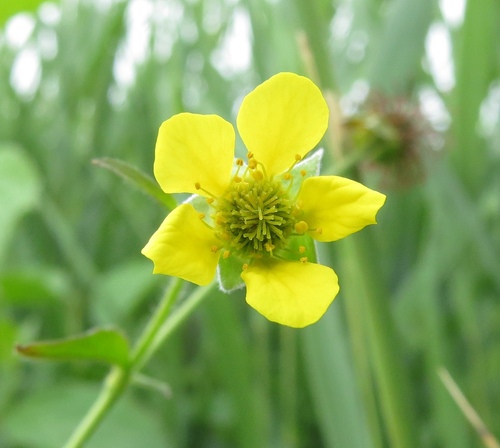
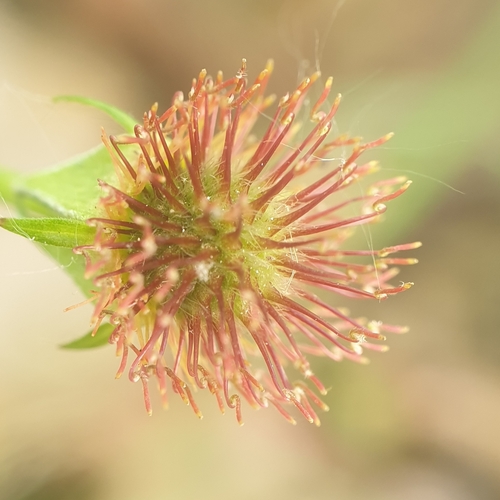
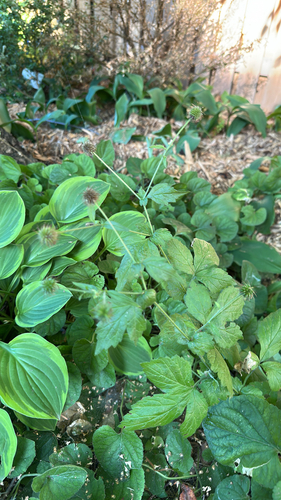
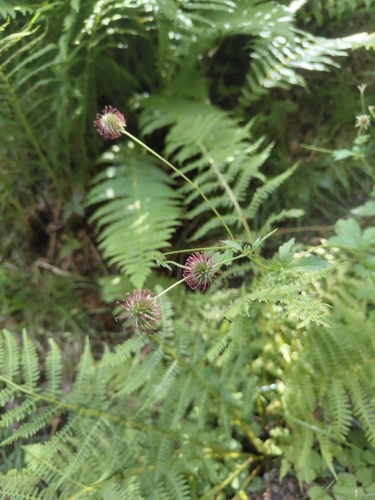
Geum urbanum L.
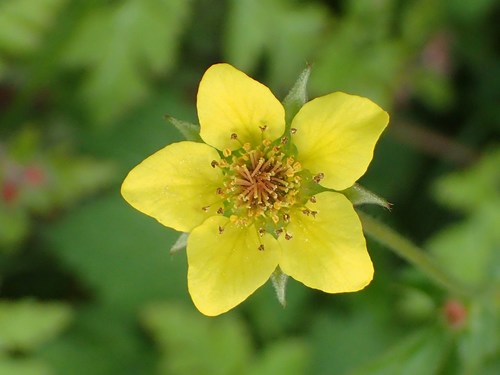
Source: Wikipedia
Synonyms 43
- 1,046,543 GBIF occurrences
- 78,172 iNaturalist observations
This species is widespread and abundant throughout its range (Vandepitte et al. 2007). The population in the UK has remained stable (BSBI/BRC 2024).
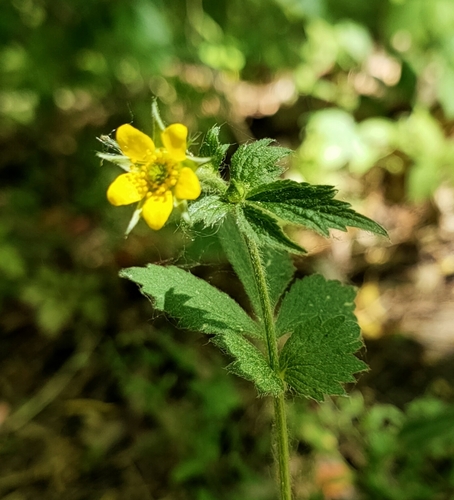
Wood Avens are a perennial herb which grows on drained, mildly acid to calcareous soils and occurs along forest fringes, deciduous woodland, especially disturbed secondary woodland, scrub, hedgerows, meadows and disturbed open habitats, along fences, and as a weed in gardens (BSBI/BRC 2024, Castroviejo et al. 1998). Its wide distribution pattern suggests it has wide climatic tolerances, and photosynthesis and growth at high altitudes are directly linked to temperature (Taylor 1997).
Overall, the species does not appear to be threatened. Vandepitte et al. (2007) reported that deforestation is affecting this species, as it primarily occurs in woodland and even where regeneration occurs, it has been found to be absent from successional patches younger than 50 years.
There are no conservation measures in place or needed. It is listed as Least Concern in France (UICN France et al. 2018), Luxembourg (Colling 2005), Denmark (NERI 2007, Aarhus Universitet 2019), Estonia (eElurikkus 2024), Germany (Ludwig and Schnittler 1996, Metzing et al. 2018), Norway (Artsdatabanken 2024), Switzerland (Moser et al. 2002, Bornand et al. 2016) and the United Kingdom (Cheffings and Farrell 2005). The species is represented by 200 germplasm accessions held at European institutions (EURISCO 2024) and is included in the living collection of at least 122 botanical gardens (BGCI 2024). It occurs in many protected areas, including Natura 2000 sites (UNEP-WCMC and IUCN 2024, GBIF.org 2024).
European regional assessment: Least Concern (LC)EU 27 regional assessment: Least Concern (LC)This species is classified as Least Concern for both Europe and for the EU27 Member States due to its widespread distribution, stable populations and no major threats.
Gallery