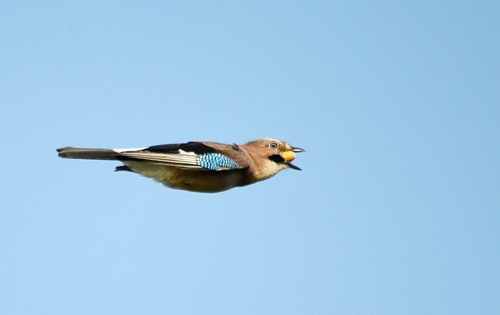
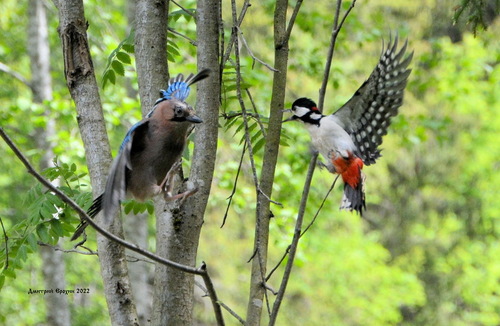
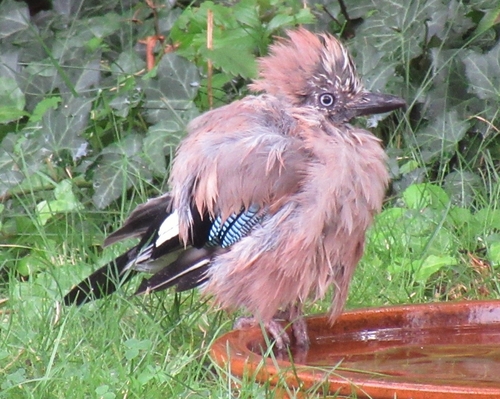
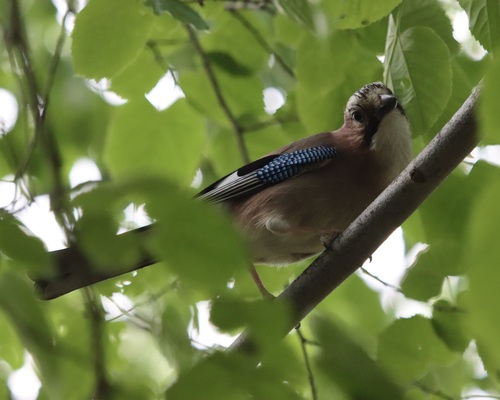
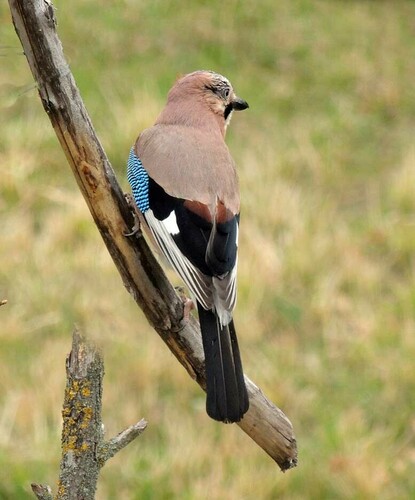
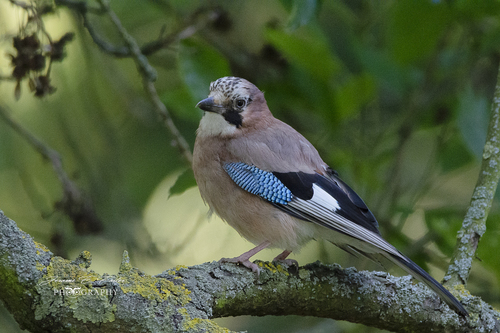
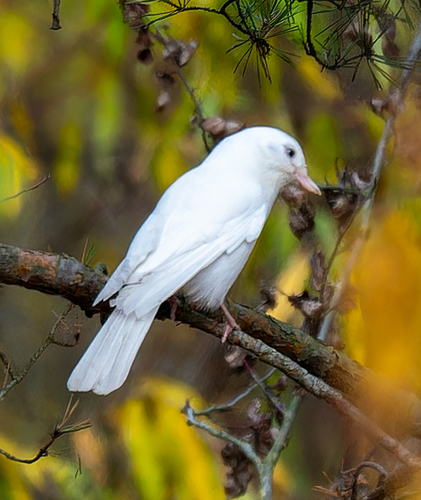
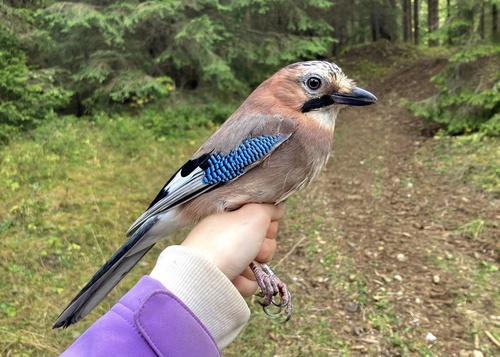
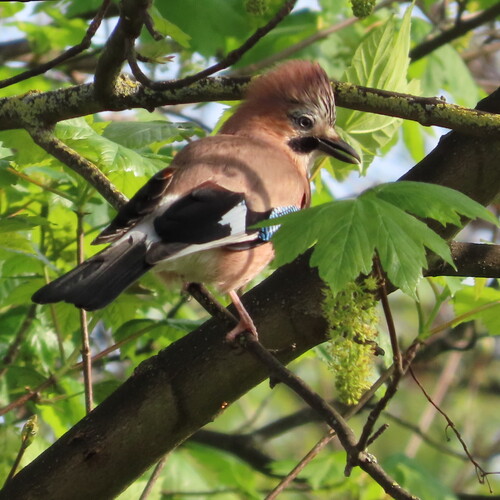
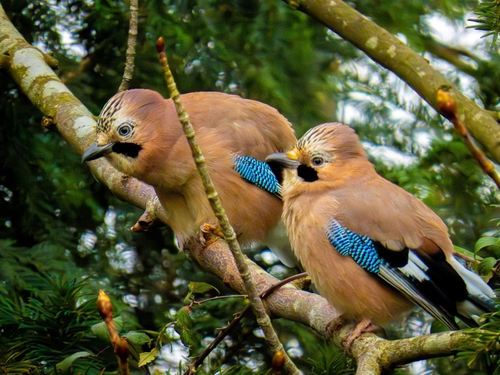
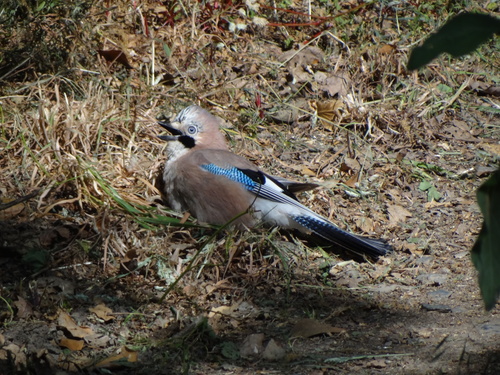
Garrulus glandarius (Linnaeus, 1758)
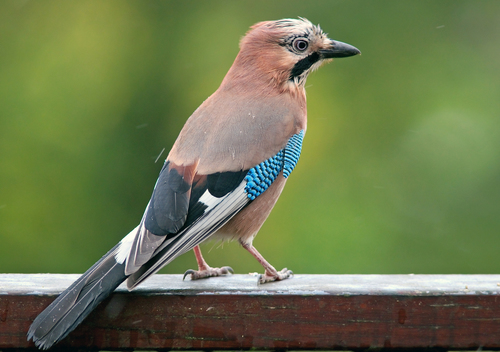
Source: Wikipedia
Synonyms 32
- 4,301,582 GBIF occurrences
- 105,497 iNaturalist observations
In Europe, the total population size is estimated at 12,000,000-23,100,000 mature individuals, with 6,040,000-11,600,000 breeding pairs (BirdLife International 2021), and comprises under half (c.50%) of the species' global range. The global population size has therefore been estimated at 24,000,000-46,200,000 mature individuals.
This species inhabits woodlands and forests of all kinds, especially beech (Fagus) and hornbeam (Carpinus), although oak (Quercus) is preferred. It can also be found in parks, orchards and large gardens. Northern populations also occur in conifers and birch (Betula) forest. In most of Europe, egg-laying occurs mainly from mid-April. The nest is built by both sexes and is a well-constructed, platform of twigs around a relatively deep cup, lined with soft plant materials. It is usually placed four to six metres above ground and often at the junction of substantial branch and main trunk. Clutches are typically five to seven eggs. It is omnivorous, feeding mostly on invertebrates during the breeding season. It also takes eggs and nestlings of a range of birds up to the size of a sparrowhawk (Accipiter) and a wide variety of seeds and berries, especially in autumn and winter, including grain, beech mast, chestnuts and acorns. Throughout the autumn and into winter it builds up caches of acorns, burying them individually in leaf litter on forest floor or beneath clumps of brambles or ferns, and has been estimated that a single bird could store c. 3000 acorns in one month (Madge 2009). The species is mainly resident with irregular movements, including irruptions and seasonal altitudinal movements (Madge 2009).
The species's colourful blue wing feathers became very fashionable in the early 20th century, both as hat decoration and in the making of "flies" for salmon-fishing. It was also long persecuted by gamekeepers and farmers due to its habit of raiding nests, although persecution is now much less widespread (Madge 2009).
Conservation Actions UnderwayEU Birds Directive Appendix II. There are currently no known specific conservation measures for this species within Europe.Conservation Actions ProposedNo conservation measures are currently needed for this species within Europe.
This species has an extremely large range, and hence does not approach the thresholds for Vulnerable under the range size criterion (extent of occurrence under 20,000 km² combined with a declining or fluctuating range size, habitat extent/quality, or population size and a small number of locations or severe fragmentation). The population size is extremely large, and hence does not approach the thresholds for Vulnerable under the population size criterion (under 10,000 mature individuals with a continuing decline estimated to be over 10% in ten years or three generations, or with a specified population structure). The population trend appears to be stable, and hence the species does not approach the thresholds for Vulnerable under the population trend criterion (over 30% decline over ten years or three generations). For these reasons the species is evaluated as Least Concern.
Gallery