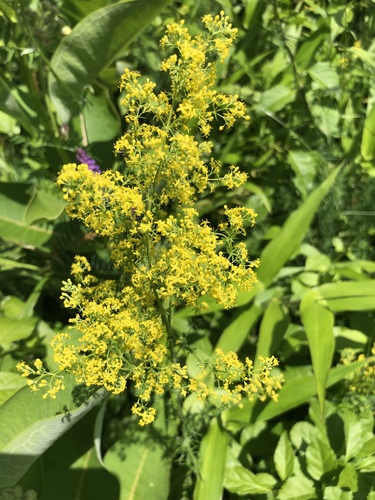
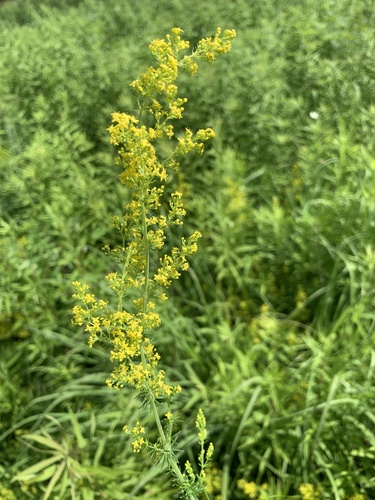
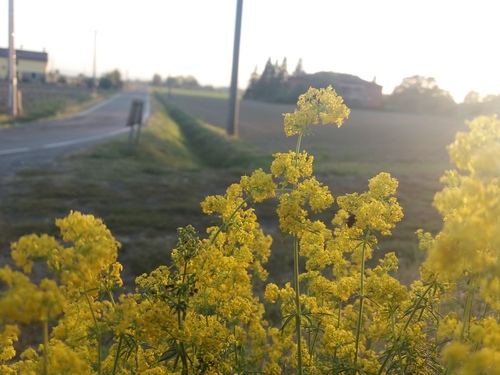
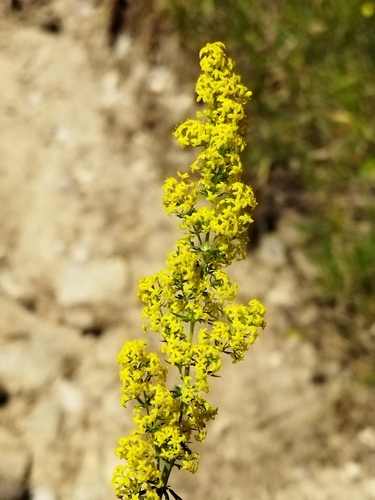
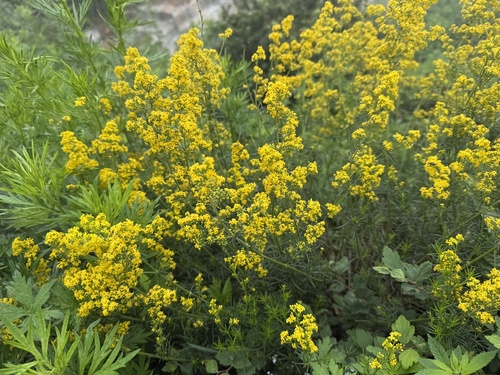
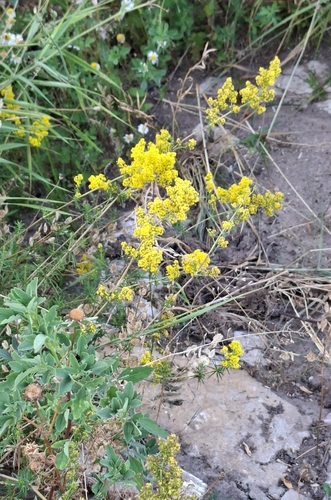
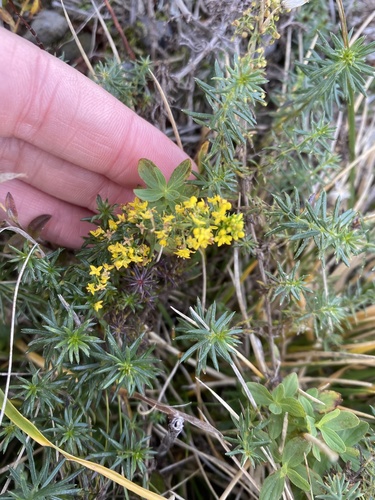
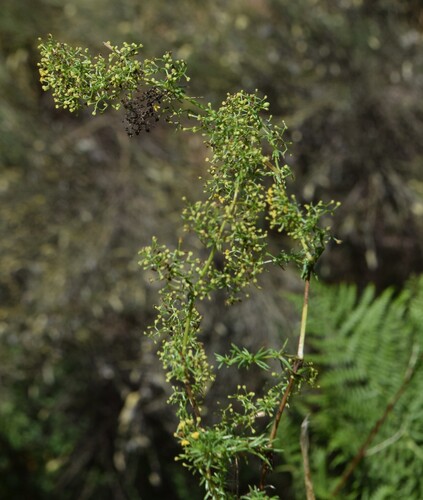
Galium verum L.
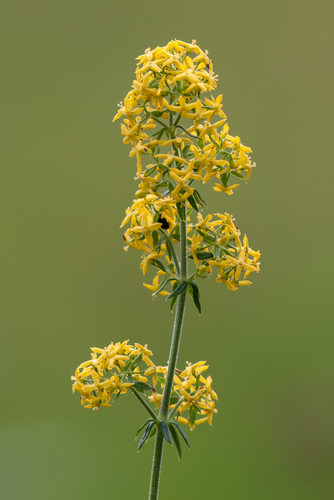
Source: Wikipedia
Synonyms 48
- 842,972 GBIF occurrences
- 54,628 iNaturalist observations
There have been declines with changes and improvements to grasslands; however, it remains a common invasive throughout its distribution (BSBI/BRC 2024).
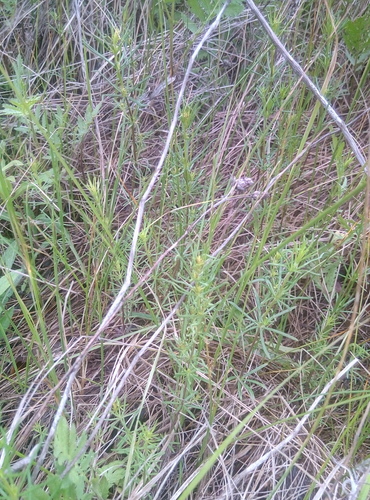
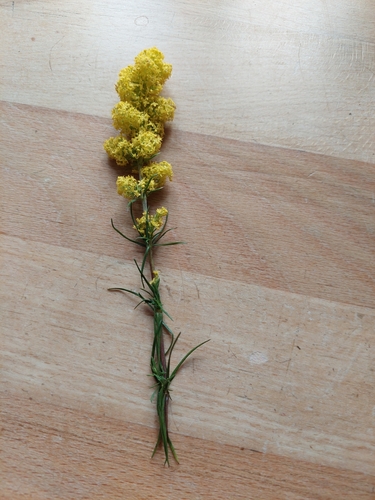
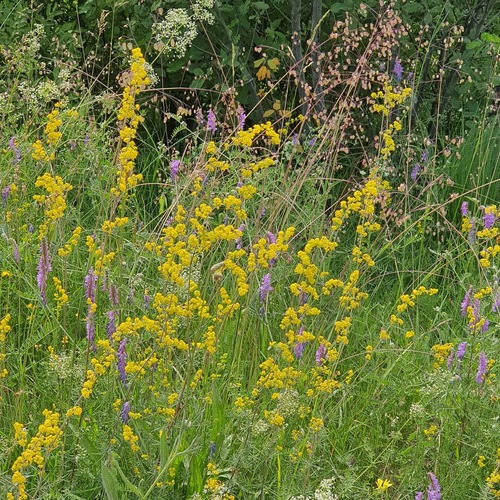
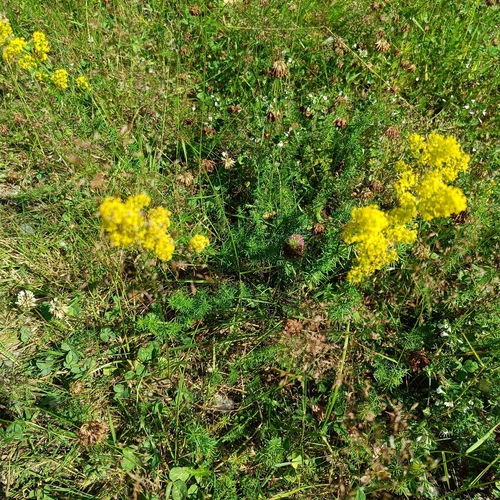
A low-growing stoloniferous perennial herb forming dense patches in short grassland, open woodland, fixed sand dunes and along roadsides and hedgebanks. It is a common wayside flower which blooms throughout summer, and the flowers have a strong coumarin (sweet hay-like) scent. This species can hybridise with G. album, G. glaucum and G. mollugo (Forey 1991, Blamey and Grey-Wilson 2003).
Conversion of land for agricultural purposes may impact some subpopulations, but overall, the population is relatively stable (BSBI/BRC 2024).
It is listed as Vulnerable in Finland (Rassi et al. 2010, Hyvärinen et al. 2019) and Least Concern in Denmark (NERI 2007, Aarhus Universitet 2019), Estonia (eElurikkus 2024), Germany (Ludwig and Schnittler 1996, Metzing et al. 2018), Luxembourg (Colling 2005), Norway (Artsdatabanken 2024), Switzerland (Moser et al. 2002) and the United Kingdom (Cheffings and Farrell 2005).The species is represented by 102 germplasm accessions held at European institutions (EURISCO 2024) and is included in the living collection of at least 119 botanical gardens (BGCI 2024). It occurs in many protected areas, including Natura 2000 sites (UNEP-WCMC and IUCN 2024, GBIF.org 2024).
European regional assessment: Least Concern (LC) EU 27 regional assessment: Least Concern (LC)This species is classified as Least Concern for both Europe and for the EU27 Member States due to its widespread distribution, stable populations and no major known threats.
Gallery