Galium odoratum (L.) Scop.
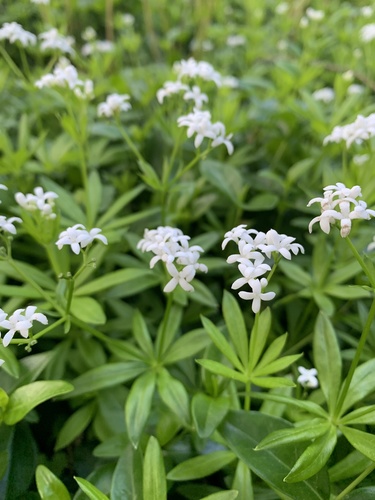
Source: Wikipedia
Synonyms 11
- 440,645 GBIF occurrences
- 37,437 iNaturalist observations
This species has a wide distribution but is rarer around the Mediterranean region (Castroviejo et al. 2007). It has declined in England with the loss of ancient woodland but is still frequent and locally abundant throughout its distribution (BSBI/BRC 2024).
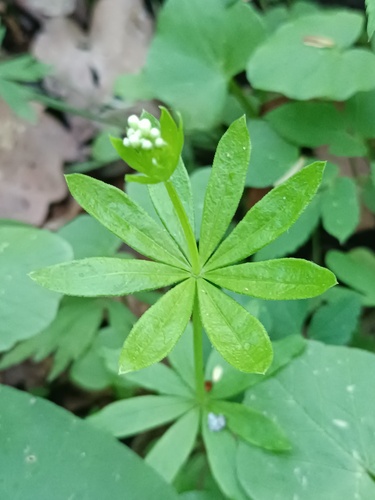
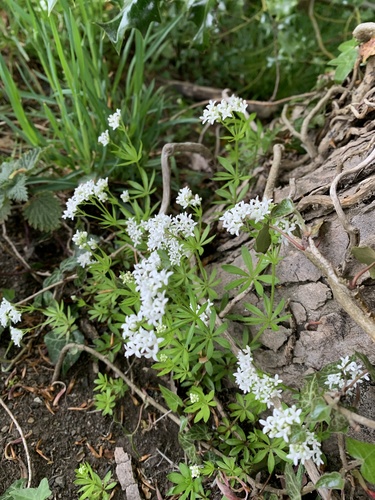
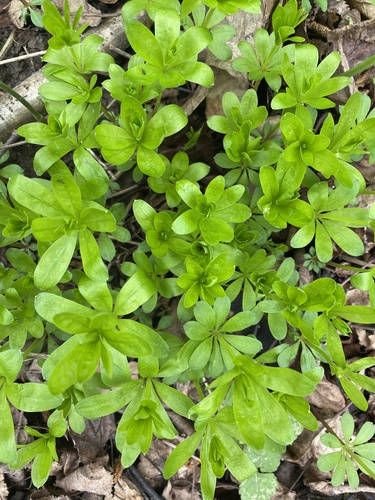
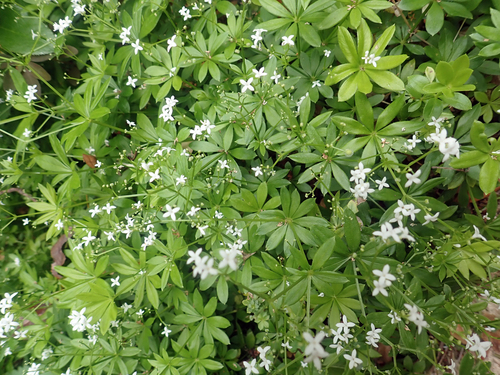
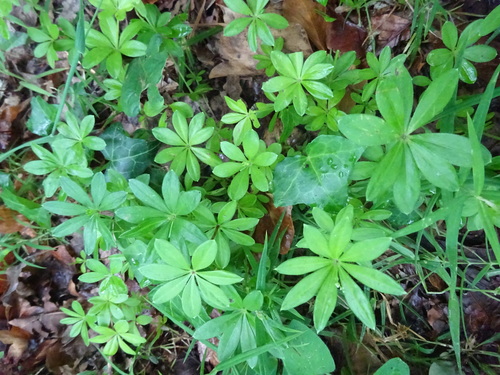
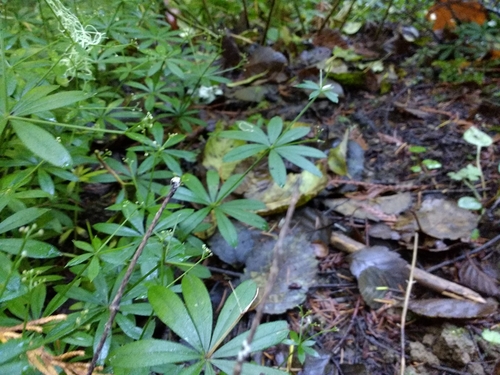
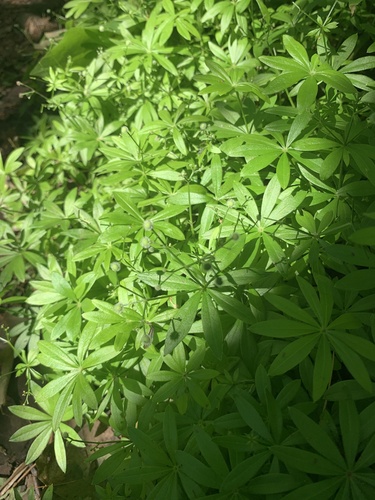
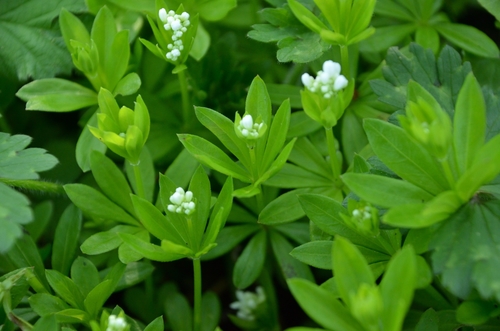
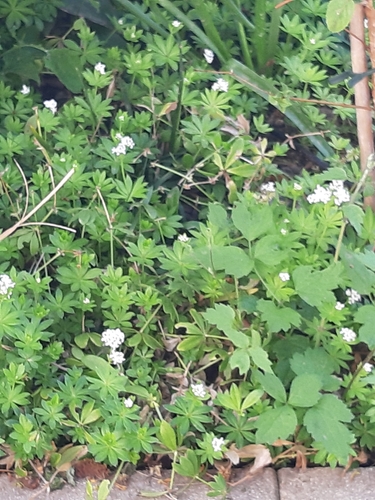
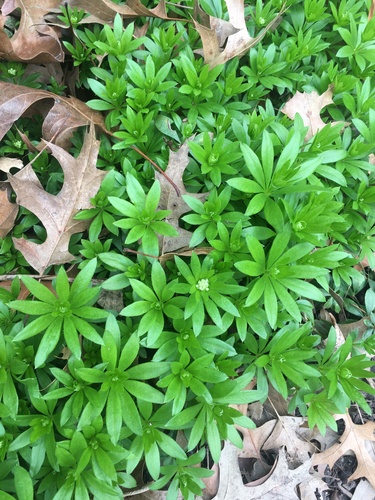
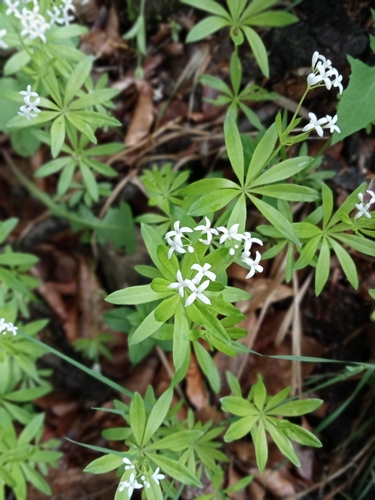
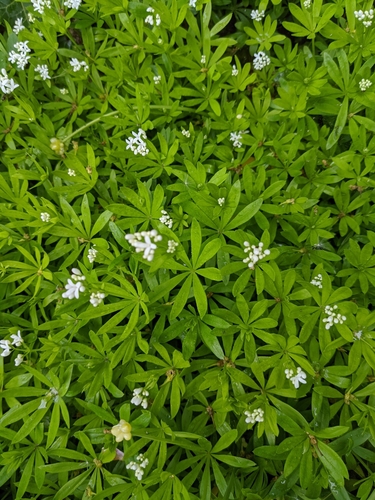
Woodruff is a rhizomatous perennial herb which is found predominantly in deciduous woodland and scrub but is also found in shaded hedgebanks, meadows and grasslands and rural gardens, and it is a good indicator species of ancient woodlands (Castroviejo et al. 2007, BSBI/BRC 2024). It is a shade-tolerant plant and soon dies out when shade cover is removed. The attractive plant grows in shady, damp places on base-rich soils, forming mats or carpets of leaves and flowers in early summer (Blamey and Grey-Wilson 2003). Similar to Galium aparine, this nitrophilic species is tolerant of soil acidification (Falkengren-Grerup 1989).
This species has declined in areas where ancient woodland has been removed or replaced with plantations such as in the south of England (BSBI/BRC 2024).
Although this species is not threatened, conservation of existing deciduous forests and ancient woodlands and management without large clear fellings will help this species persist in this habitat type.It is listed as Near Threatened in Finland (Rassi et al. 2010, Hyvärinen et al. 2019) and Least Concern in Denmark (NERI 2007, Aarhus Universitet 2019), Estonia (eElurikkus 2024), Germany (Ludwig and Schnittler 1996, Metzing et al. 2018), Luxembourg (Colling 2005), Norway (Artsdatabanken 2024), Switzerland (Moser et al. 2002), the United Kingdom (Cheffings and Farrell 2005), and others.The species is represented by 172 germplasm accessions held at European institutions (EURISCO 2024) and is included in the living collection of at least 175 botanical gardens (BGCI 2024). It occurs in many protected areas, including Natura 2000 sites (UNEP-WCMC and IUCN 2024, GBIF.org 2024).
European regional assessment: Least Concern (LC) EU 27 regional assessment: Least Concern (LC)This species is classified as Least Concern for both Europe and for the EU27 Member States due to its widespread distribution, stable populations and no major threats. Although this species has declined in some areas due to the loss of ancient forest and woodland, it is still a common species.
Gallery