Frullania tamarisci (L.) Dumort.
Source: Wikipedia
Synonyms 37
- 58,380 GBIF occurrences
- 1,076 iNaturalist observations
No specific data are available on the size of the subpopulations, but it is quite common in woody and rocky habitats as well as in grasslands in northwestern, western, central and southern Europe. In almost all these regions sporophytes are frequent. In some oceanic regions it is abundant, but there is evidence of decline in certain areas, such as in England, Netherlands and north Germany (Meinunger and Schröder 2007, Blockeel et al. 2014, BLWG 2018). However, subpopulations in many areas appear to be stable and the overall current population trend is therefore also considered stable.
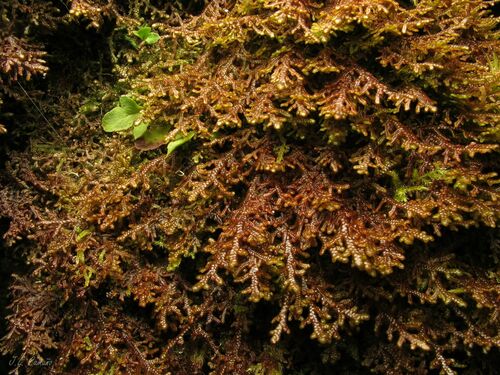
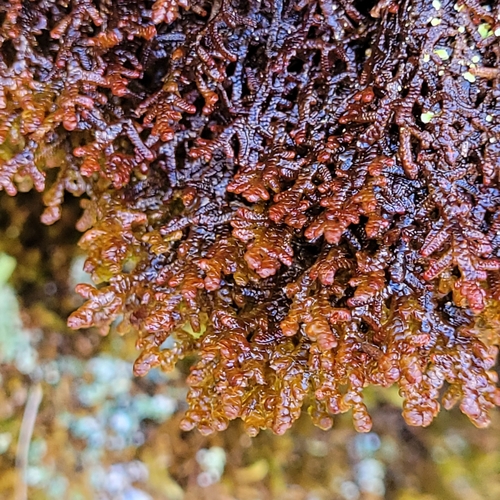
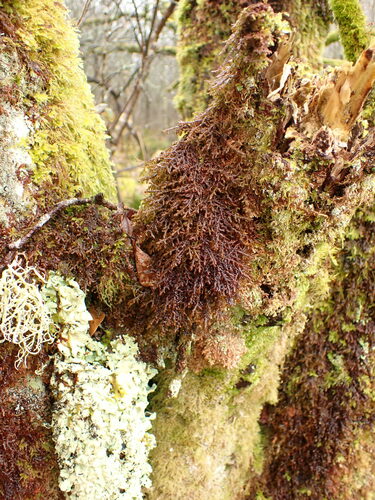
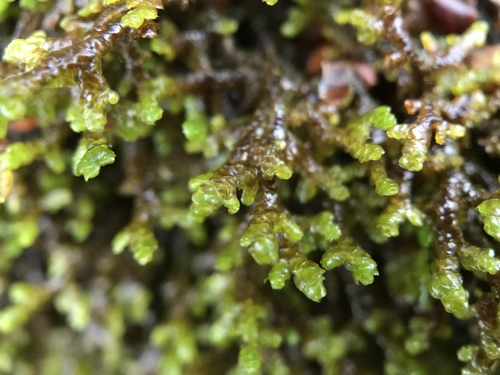
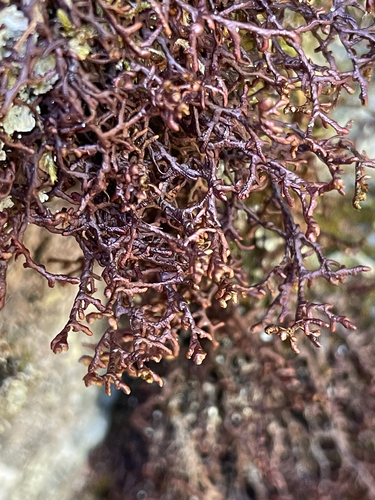
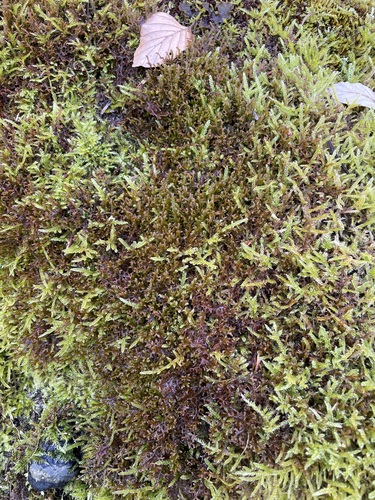
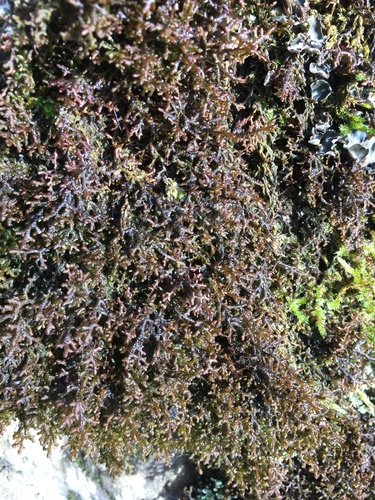
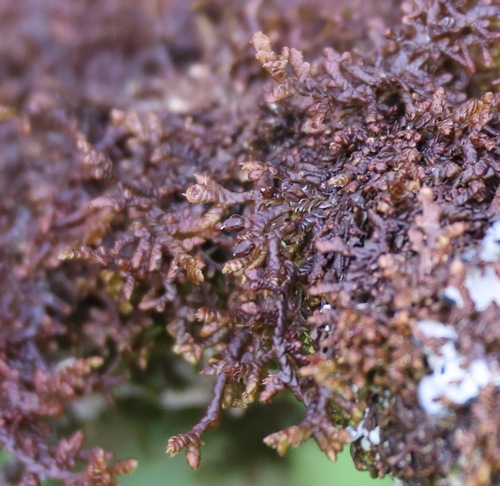
This species grows on the trunks and branches of trees and shrubs, as well as on many different types of moist or rather dry, acid to base-rich rocks, boulders and scree. It also occurs in damp turf and in grassland litter, on stabilized sand dunes, and on soil in heathlands (Paton 1999, Dierßen 2001).
For some subpopulations, such as those growing on peat habitats, climate warming can be a threat. Unfortunately, no specific data are available on this.
No specific conservation measures are needed at the moment for this species but research on possible threats should be carried out. It occurs in protected areas.
European regional assessment: Least Concern (LC)EU 28 regional assessment: Least Concern (LC)The Tamarisk Scalewort (Frullania tamarisci) is found in most parts of Europe, being present from Iceland and northwestern Russia to the Mediterranean area, but absent from much of eastern and northeastern Europe. This species is assessed as Least Concern since it is quite common in woody and rocky habitats as well as in grasslands, in northwestern, western, central and southern Europe. In addition, the current population trend is considered to be stable, even though declines have been reported in some areas. No specific conservation measures are currently needed.
Gallery