Fringilla coelebs Linnaeus, 1758
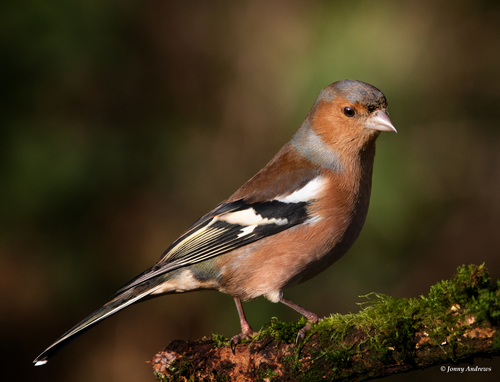
Source: Wikipedia
- 10,338,899 GBIF occurrences
- 206,321 iNaturalist observations
The European breeding population is estimated at 154,000,000-231,000,000 pairs, which equates to 308,000,000-462,000,000 mature individuals. The breeding population in the EU28 is estimated at 85,400,000-121,000,000 pairs, which equates to 170,000,000-242,000,000 mature individuals. For details of national estimates, see the Supplementary Information.
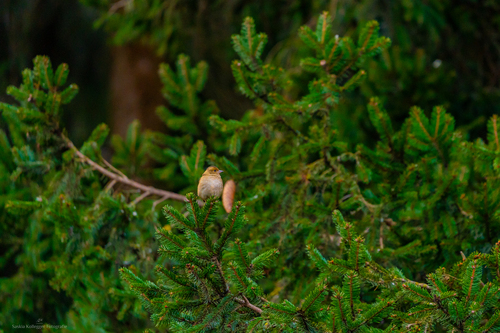
This species inhabits lowland and lower montane deciduous, mixed and conifer woods with a slight preference for beech (Fagus), hornbeam (Carpinus), mature oak (Quercus), spruce (Picea) and pine (Pinus). It also uses forest edges and glades, copses, heaths, edges of tundra and agricultural areas, hedgerows, orchards, parks and gardens. In the Canary Islands it is found in laurel (Lauraceae) forest and areas of dense vegetation (Clement 2016). Egg-laying occurs mainly from late-April to mid-July but clutches can be found from mid-March to mid-July (Snow and Perrins 1998). The nest is placed up to 35 m above ground on a branch, against a trunk or in the fork of a tree or bush. It is a deep cup made of plant fibres, grass, fine roots, lichens, moss, bark strips, animal hair and feathers. Clutches are four to five eggs. The diet is varied and is mostly small invertebrates and their larvae, seeds and buds. The species is resident, partially migratory and migratory, with populations in the north and northeast moving south and southwest between mid-September and the end of November (Clement 2016).Although the generation length for both EU and Europe regional assessments were calculated using the same methodology, new information arriving after the EU assessments were undertaken gave rise to an update in the generation lengths. This new information was then used for the Europe level assessments giving rise to a difference between the generation lengths used for the EU and Europe regions.
Particularly in northern areas populations may fluctuate in response to weather conditions, with cold conditions resulting in temporary declines (Hagemeijer and Blair 1997). The species is trapped in some parts of its range. In the Canary Islands the race palmae is threatened by forest fires, wood harvesting and predation by introduced mammals, while race ombriosa is threatened by forest fires, wood harvesting and drought (Madroño and González 2004).
Conservation Actions UnderwayFringilla coelebs ombriosa is listed on Annex I of the EU Birds Directive. In the Canary Islands, both palmae and ombriosa have had much of their habitat protected as Natural and Special Protected Areas and the species has benefited from protection measures for other species (Madroño and González 2004).Conservation Actions ProposedAcross its range this species is not threatened, however the races palmae and ombriosa in the Canary Islands are threatened. It has been recommended that a management plan be produced for these races, in addition to research on reproductive success, impacts of introduced predators and habitat selection. Regular monitoring should also be carried out (Madroño and González 2004).
European regional assessment: Least Concern (LC)EU28 regional assessment: Least Concern (LC)At both European and EU28 scales, this species has an extremely large range (its extent of occurrence (EOO) is much larger than 20,000 km² and its area of occupancy (AOO) is much larger than 2,000 km²), and hence it does not approach the thresholds for Vulnerable under the range size criteria (criteria B and D2). The population size is extremely large (much larger than 10,000 mature individuals), and hence it does not approach the thresholds for Vulnerable under the population size criteria (criteria C and D). The population trend appears to be stable, and hence the species does not approach the thresholds for Vulnerable under the population size reduction criterion (criterion A). The probability of extinction has not been calculated for this species, therefore criterion E cannot be applied. For these reasons the species is evaluated as Least Concern within Europe and the EU28.
Gallery