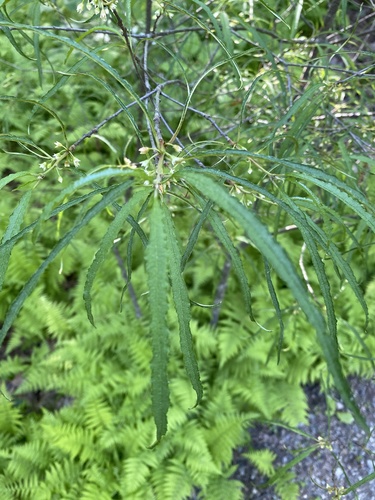
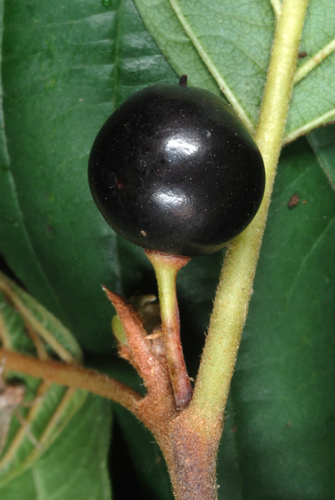
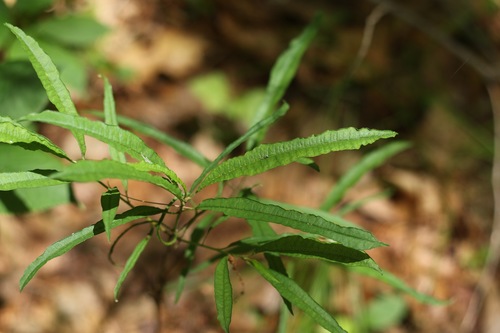
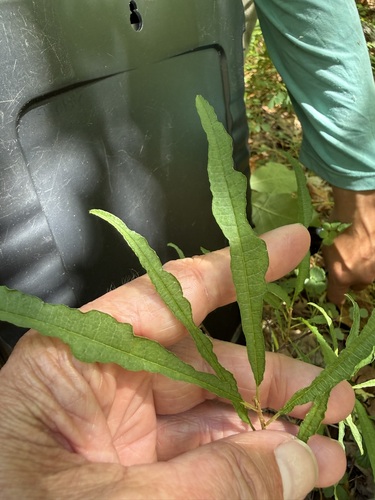
Frangula alnus Mill.
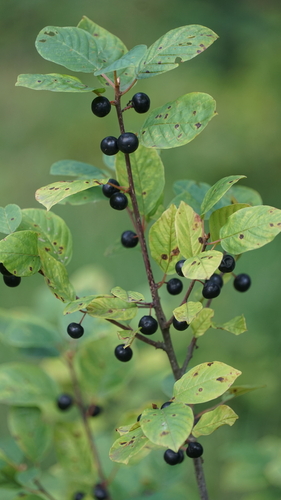
Source: Wikipedia
Synonyms 48
- 624,993 GBIF occurrences
- 69,082 iNaturalist observations
Populations are scattered, but present in many countries. The species has seen recent population increases in more remote areas of Europe resulting from land abandonment.
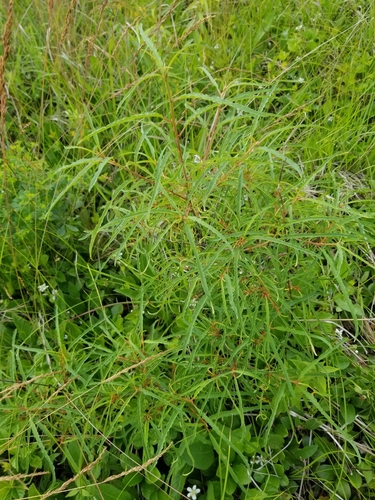
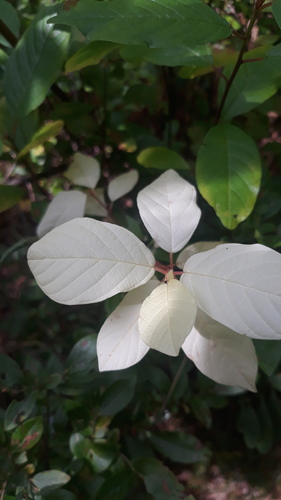
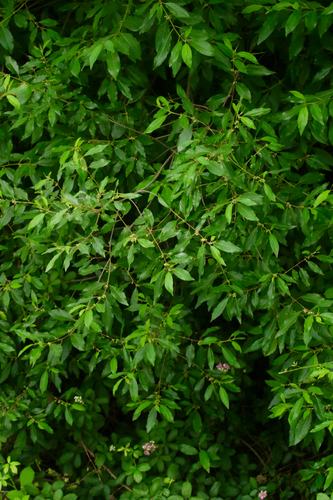
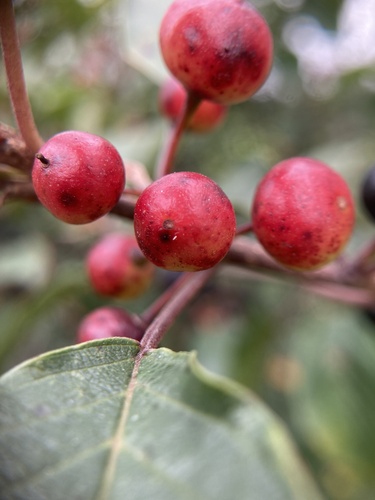
The species is a perennial tall shrub or small tree. It is present in wet shrubland, forests, hedges and woods, riverine forests, peatbogs, and acidic Alder carrs (wet woodlands). Flowering in Italy is from May to June, in France and Corsica from April to July (August) (Castroviejo et al. 2014, Botanical Society of Britain and Ireland 2023).
In Northern Ireland, the plant is considered a priority species threatened by habitat destruction due to wetland drainage for agriculture and habitat loss from peat-cutting (National Museums Northern Ireland 2006-2010).
The species is represented by 50 germplasm accessions held at European institutions (EURISCO 2024) and is included in the living collection of at least 102 botanical gardens (BGCI 2024). It occurs in many protected areas, including Natura 2000 sites (UNEP-WCMC and IUCN 2024, GBIF.org 2024).
European regional assessment: Least Concern (LC)EU 27 regional assessment: Least Concern (LC)This species occurs in many European countries and does not appear to be in decline from any threatening processes at present, except in Northern Ireland. It is assessed as Least Concern for both Europe and the EU27 Member States.
Gallery