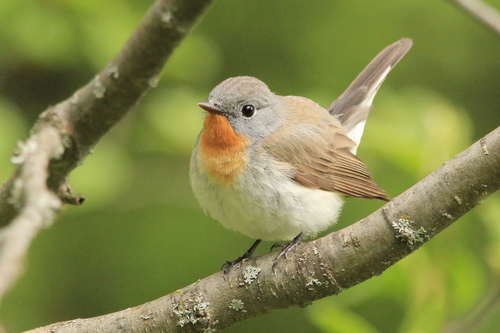
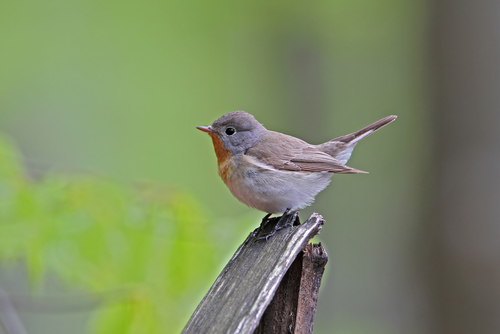
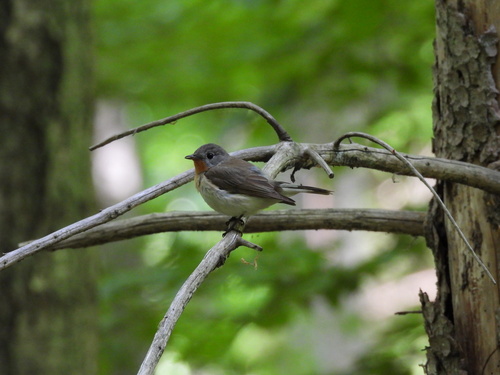
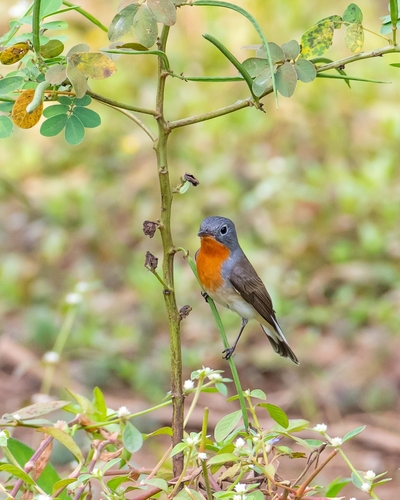
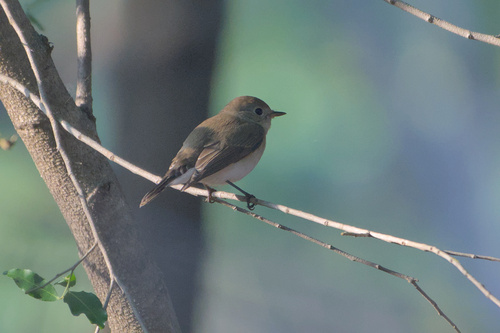
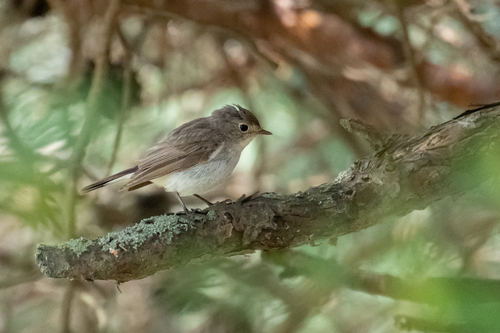
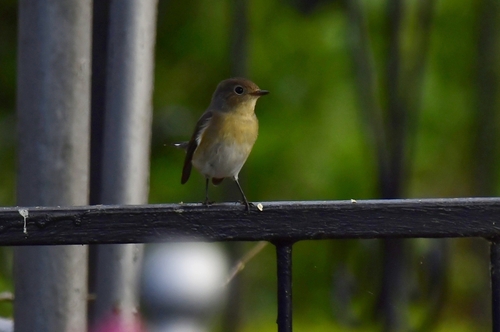
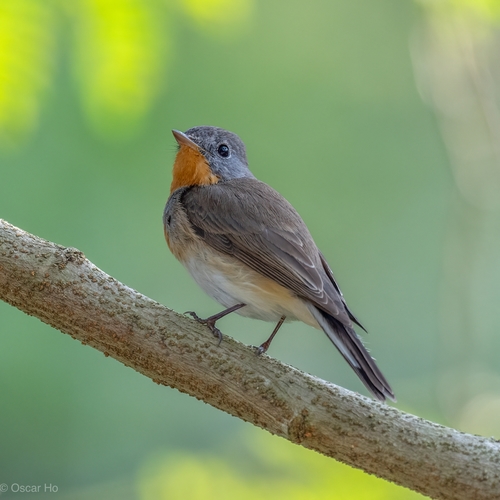
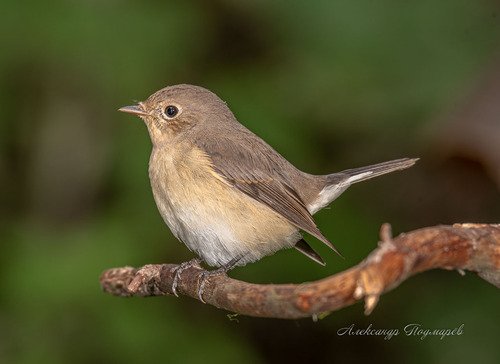
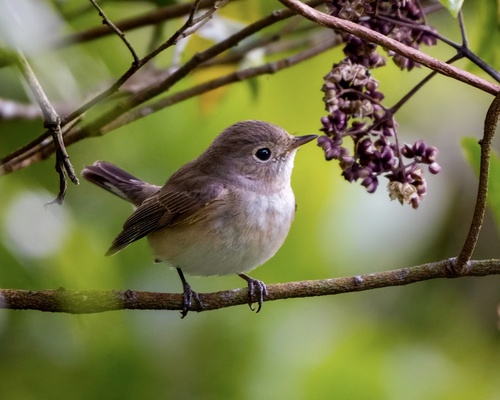
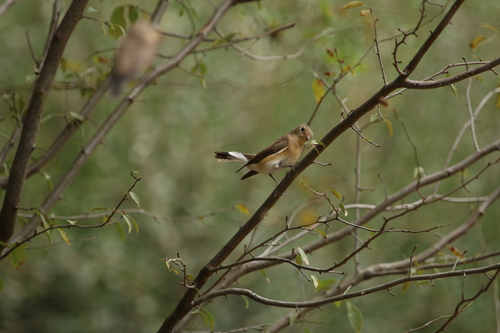
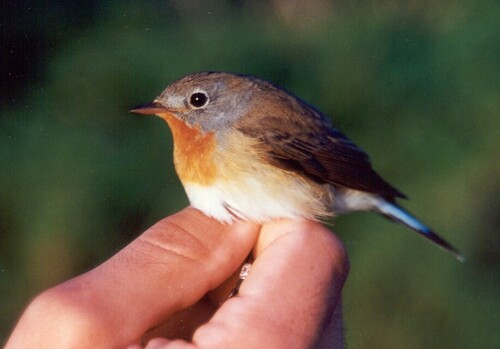
Ficedula parva (Bechstein, 1792)
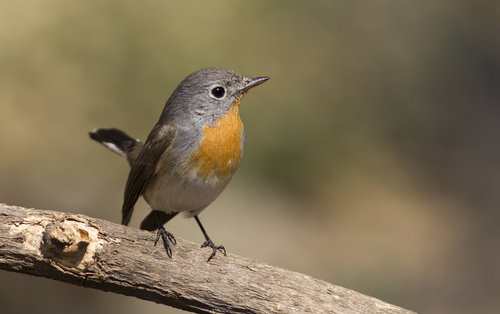
Source: Wikipedia
- 218,148 GBIF occurrences
- 4,797 iNaturalist observations
The European breeding population is estimated at 1,790,000-3,440,000 pairs, which equates to 3,590,000-6,870,000 mature individuals. The breeding population in the EU28 is estimated at 305,000-621,000 pairs, which equates to 610,000-1,250,000 mature individuals. For details of national estimates, see the Supplementary Information.
This species breeds in forest and woodland, mainly mixed deciduous stands, especially with beech (Fagus), but also in oak (Quercus) forest; also in spruce (Picea) forest in the north of its range. It favours tall trees with much undergrowth, light canopy, and an open zone with perching twigs between canopy and undergrowth layer as well as glades, clearings and areas near water. It also occurs in orchards and vineyards. In central and eastern Europe it nests from mid-May to the end of June. The nest is a cup of moss, dry grass stalks and leaves, root fibres and hair, lined with hair and sometimes with lichen woven into the outside. It is normally placed in a hole in a tree or wall, among the side shoots of a trunk, sometimes on a branch close to the trunk, or even in a fork in the branches. Nestboxes are also accepted. Clutches are typically five or six eggs. It feeds mainly on insects and other invertebrates (Taylor 2015).Although the generation length for both EU and Europe regional assessments were calculated using the same methodology, new information arriving after the EU assessments were undertaken gave rise to an update in the generation lengths. This new information was then used for the Europe level assessments giving rise to a difference between the generation lengths used for the EU and Europe regions.
As the species relies on old, diversified forests it is vulnerable to modern forestry practices in Europe, such as shorter rotations and the felling of old trees. As a result it may face a shortage of nesting sites in the future (Hagemeijer and Blair 1997).
Conservation Actions UnderwayCMS Appendix II. Bern Convention Appendix II. EU Birds directive Annex I. There are currently no known conservation measures for this species.Conservation Actions ProposedAlthough this species is not currently threatened it may benefit from the maintenance of low-intensity forestry practices and the provision of nestboxes in the future.
European regional assessment: Least Concern (LC)EU28 regional assessment: Least Concern (LC)In Europe, this species has an extremely large range (its extent of occurrence (EOO) is much larger than 20,000 km² and its area of occupancy (AOO) is much larger than 2,000 km²), and hence it does not approach the thresholds for Vulnerable under the range size criteria (criteria B and D2). The population size is extremely large (much larger than 10,000 mature individuals), and hence it does not approach the thresholds for Vulnerable under the population size criteria (criteria C and D). The population trend appears to be stable, and hence the species does not approach the thresholds for Vulnerable under the population size reduction criterion (criterion A). The probability of extinction has not been calculated for this species, therefore criterion E cannot be applied. For these reasons the species is evaluated as Least Concern in Europe.In the EU28, this species has an extremely large range (its extent of occurrence (EOO) is much larger than 20,000 km² and its area of occupancy (AOO) is much larger than 2,000 km²), and hence it does not approach the thresholds for Vulnerable under the range size criteria (criteria B and D2). The population size is very large (larger than 10,000 mature individuals), and hence it does not approach the thresholds for Vulnerable under the population size criteria (criteria C and D). The population trend is not known, but it is not believed to approach the thresholds for Vulnerable under the population size reduction criterion (criterion A). The probability of extinction has not been calculated for this species, therefore criterion E cannot be applied. For these reasons the species is evaluated as Least Concern in the EU28.
Gallery