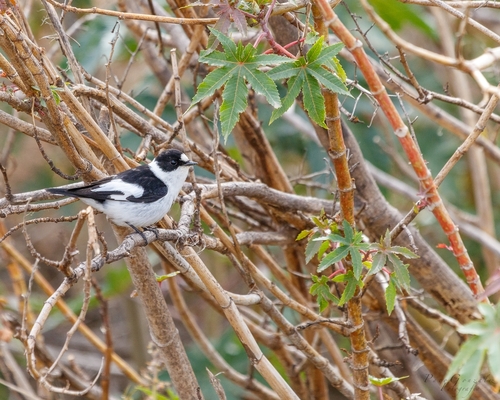
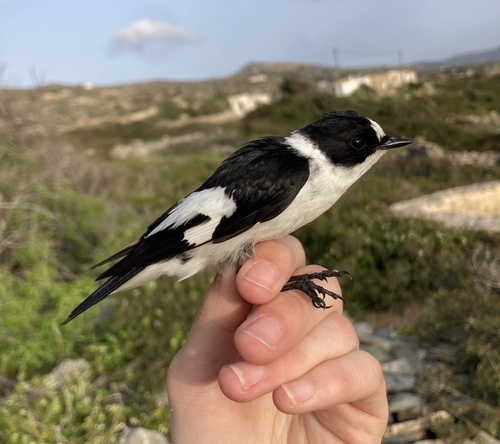
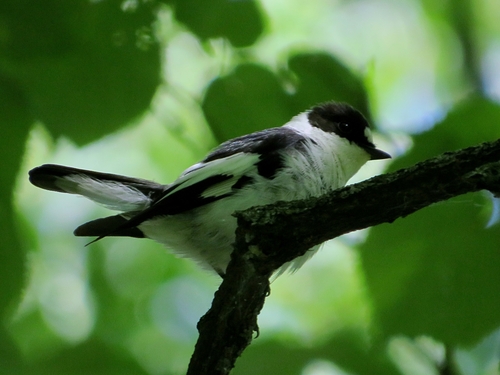
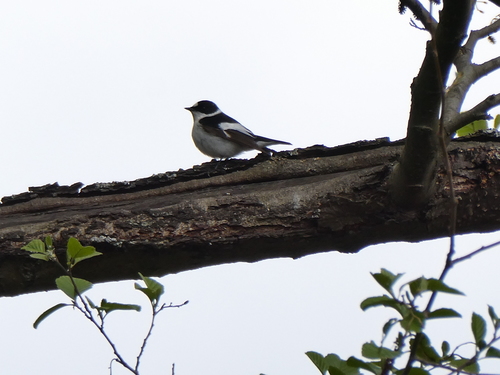
Ficedula albicollis (Temminck, 1815)
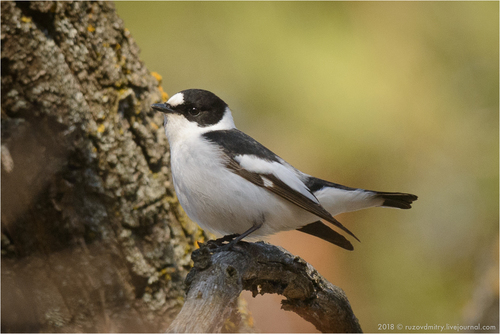
Source: Wikipedia
- 205,729 GBIF occurrences
- 4,530 iNaturalist observations
This species breeds only in Europe, where the total population size is estimated at 3,210,000-5,130,000 mature individuals (BirdLife International 2021).
This species inhabits open forest, forest edges, moist woodland, open country with scattered trees, and well-timbered parks and avenues. It is also found secondarily in gardens and orchards, which it vacates to return to woods immediately after breeding. It requires old trees offering nest-holes high enough above ground and prefers deciduous woodland. Egg-laying occurs from mid-April to early July in central Europe and from late April in Ukraine. The nest is a cup of dry grass, leaves and stalks, lined with fine grass and placed 3-32 m (usually 10-15 m) above ground in a hole in a tree, wall or building. Clutches can be from one to nine eggs but typically five to seven. The diet is mostly flying insects and other arthropods but it also takes some seeds and fruits of currant (Ribes), rowan (Sorbus) and elder (Sambucus). The species is migratory but migration routes and wintering areas are poorly known (Taylor 2015).
This species is known to hybridize with Ficedula hypoleuca (Hagemeijer and Blair 1997).
Conservation Actions UnderwayCMS Appendix II. Bern Convention Appendix II. EU Birds directive Annex I. There are currently no known conservation measures for this species.Conservation Action ProposedThe provision of nestboxes has been shown to increase populations (Taylor 2015).
This species has an extremely large range, and hence does not approach the thresholds for Vulnerable under the range size criterion (extent of occurrence under 20,000 km² combined with a declining or fluctuating range size, habitat extent/quality, or population size and a small number of locations or severe fragmentation). The population size is extremely large, and hence does not approach the thresholds for Vulnerable under the population size criterion (under 10,000 mature individuals with a continuing decline estimated to be over 10% in ten years or three generations, or with a specified population structure). The population trend appears to be stable, and hence the species does not approach the thresholds for Vulnerable under the population trend criterion (over 30% decline over ten years or three generations). For these reasons the species is evaluated as Least Concern.
Gallery