Falco tinnunculus Linnaeus, 1758
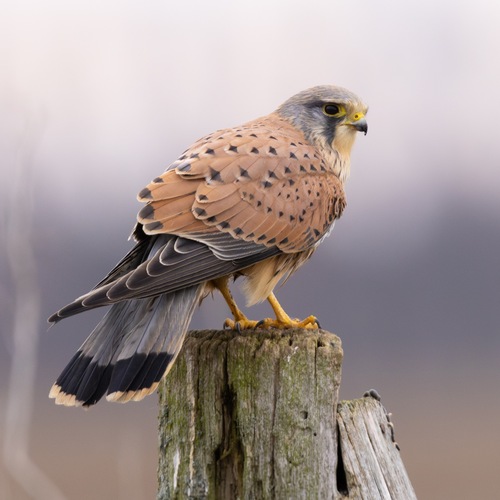
Source: Wikipedia
Synonyms 7
- 5,779,322 GBIF occurrences
- 139,973 iNaturalist observations
The population size within the Mediterranean hotspot has not been quantified, but based on the population size estimated in BirdLife International (2021), it is likely to be significantly greater than the thresholds for consideration as threatened. The overall population trend is uncertain (see BirdLife International 2021).
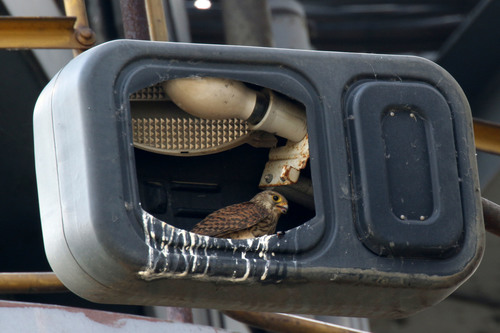
Populations in the northern part of the species’s global range tend to be migrant, with others resident (Orta et al. 2020). Migrant birds leave their breeding grounds between August and October and those arriving in sub-Saharan Africa do so from October onwards (Ferguson-Lees and Christie 2001). The return journey begins from February through until April (the exact time probably dependent on food availability), and is often undertaken in small mixed groups with Falco naumanni and occasionally F. vespertinus (Brown et al. 1982, Snow and Perrins 1998, Ferguson-Lees and Christie 2001). The species can be solitary or gregarious, being most often seen singly but sometimes travelling in flocks of up to 10 individuals, especially on migration. Larger groups may congregate at sources of abundant food. It is mainly diurnal (Ferguson-Lees and Christie 2001). The species tolerates a wide range of open and partially forested habitats. It feeds mainly on small mammals, particularly in northern Europe, with insects possibly more important in the Mediterranean. The locations of nests are variable, with rock ledges, buildings and abandoned corvid nests being commonly reported sites. Typically lays three to six eggs (Orta et al. 2020).
Past population declines resulted from the heavy use of organochlorine and other pesticides in the 1950s–1960s (Orta et al. 2020). In Malta, the species was exterminated by shooting, though it has since returned (Ferguson-Lees and Christie 2001). The population in much of the rest of Europe has shown a more recent steady decline, thought to be due to agricultural intensification (Snow and Perrins 1998). The species is vulnerable to the effects of potential wind energy development (Strix 2012). Many individuals are poached annually (MaghrebOrnitho 2013, Isenmann et al. 2016, J.R. Garrido pers. comm.). All falcons are poached and trapped for falconry, especially in Libya and Egypt; and kestrels are used as lures to attract the target species for falconry (Porter 2005, Emile et al. 2014, BirdLife International 2015, Isenmann et al. 2016).
Conservation Actions UnderwayCMS Appendix II. CITES Appendix II. Bern Convention Appendix II. The ban of organochlorine pesticides, which were used heavily during the 1960s and 1970s has allowed this species to recover in some areas (Hagemeijer and Blair 1997).Conservation Actions ProposedThis species requires wide-scale conservation, which alleviates agricultural intensification. Policies should encourage mixed farming and high crop diversity and maintain non-cultivated marginal habitats, which decrease stocking rates and pesticide use (Tucker and Heath 1994). Management should also ensure suitable perches and roosting sites, usually provided by trees, telegraph poles, buildings or rock faces are maintained (Orta et al. 2020). Kestrel populations should be monitored, particularly with regards to the effects of modern farming (Tucker and Heath 1994).
Mediterranean regional assessment: Least Concern (LC)This species has an extremely large range (its extent of occurrence (EOO) is much larger than 20,000 km² and its area of occupancy (AOO) is much larger than 2,000 km²), and hence it does not approach the thresholds for Vulnerable under the range size criteria (criteria B and D2). The population size is very large (larger than 10,000 mature individuals), and hence it does not approach the thresholds for Vulnerable under the population size criteria (criteria C and D). The population trend is unknown but the species is not thought to approach the thresholds for Vulnerable under the population size reduction criterion (criterion A). The probability of extinction has not been calculated for this species, therefore criterion E cannot be applied. For these reasons the species is evaluated as Least Concern.
Gallery