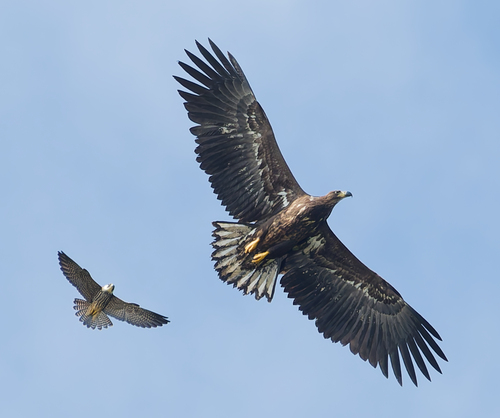
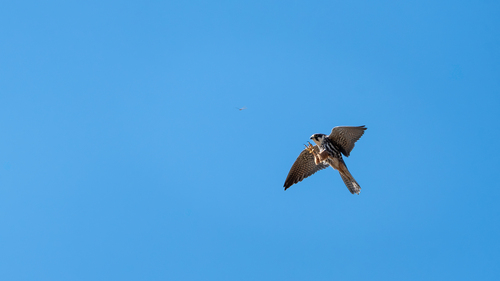
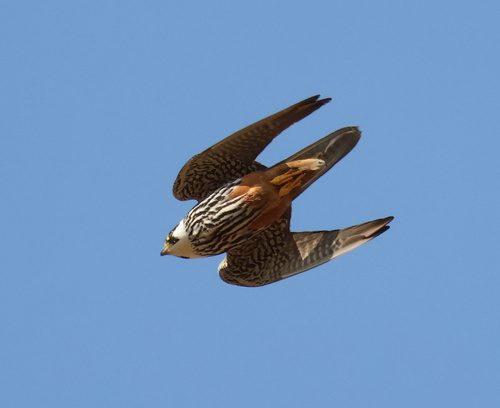
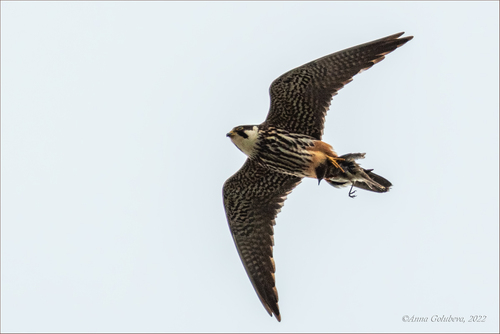
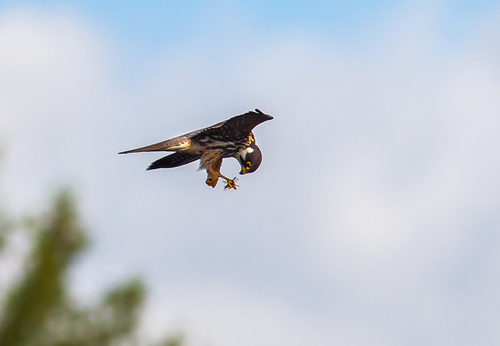
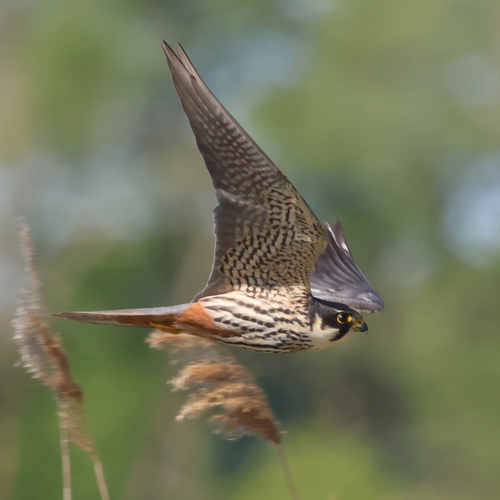
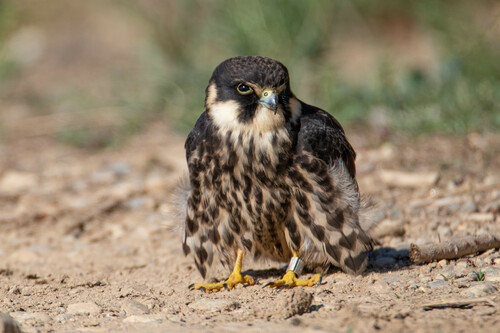
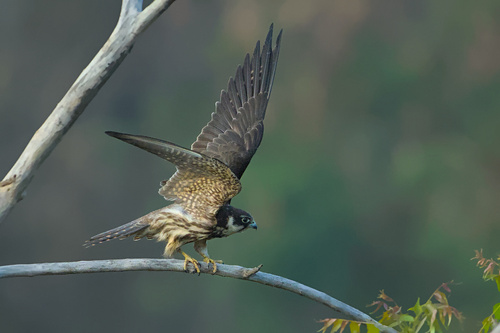
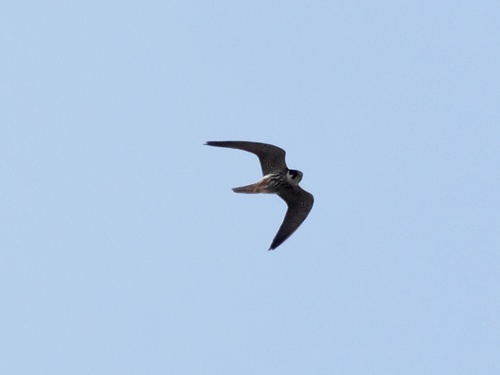
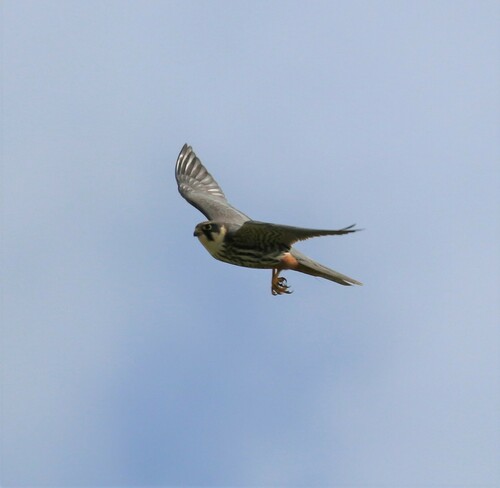
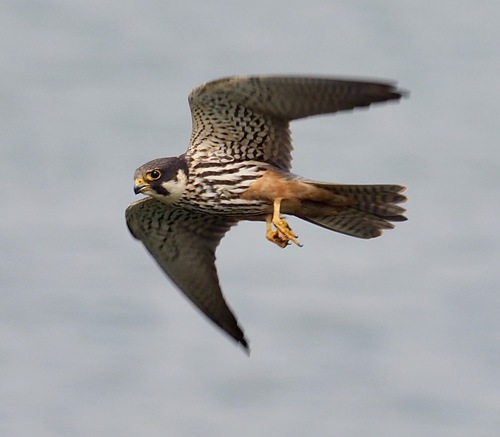
Falco subbuteo Linnaeus, 1758
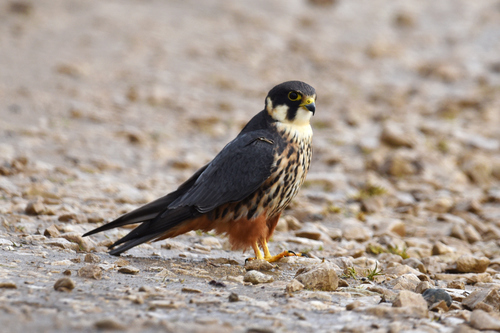
Source: Wikipedia
- 878,713 GBIF occurrences
- 17,305 iNaturalist observations
The population size within the Mediterranean region has not been quantified. However, based on the figures from BirdLife International (2021) then it would significantly exceed the threatened threshold under criterion D (4,200-4,600 pairs in Spain alone, most of which will be inside the Mediterranean region). The population trend for Spain is a decline (see BirdLife International 2021), and it is thought to be declining in North Africa too (Garrido et al. 2021). However, elsewhere throughout its range it is considered to be stable, increasing or the trend is unknown (see e.g. BirdLife International 2021). Therefore, the population trend is essentially unknown, but even if it were to be declining it is unlikely to be declining at a rate to warrant listing as threatened under criterion A.
Most individuals of the species are migratory, with western birds mainly wintering in Africa (Orta and Kirwan 2014). Birds leave their breeding grounds between August and October, arriving at wintering quarters from late October onwards. The return journey begins in March and April, and breeding territories are occupied again in May and June. Birds are usually seen singly or in pairs or family groups, even on migration, with larger groups being rare except at roosts and especially rich feeding sites (Ferguson-Lees and Christie 2001). It migrates in broad fronts and does not generally concentrate at narrow sea crossings as do many other migratory raptors (Snow and Perrins 1998, Orta and Kirwan 2014). It is mainly diurnal although partly crepuscular and even nocturnal to some extent on migration (Ferguson-Lees and Christie 2001). It occurs in open wooded areas, including wooded steppes, pastures, cultivation or scrub with clumps of trees, scattered trees or copses; fields with hedges, edges of woods. Flying insects form the main part of its diet, although birds are often taken in the breeding season. It uses unoccupied nests of corvids or other raptors, or squirrel dreys, but does not add material and is almost always in trees, preferring pines, but also in other conifers and broad-leaved trees; exceptionally on cliffs. Clutches are typically three eggs (Orta and Kirwan 2014).
Some are shot, notably in Malta where hunters are thought to kill 500–1,000 individuals each year. A growing threat is human disturbance, which facilitates nest predation by crows and squirrels. Pesticide use has likely had only minor impacts, as has egg-collecting, which tends to be a local issue (Ferguson-Lees and Christie 2001). The species is highly vulnerable to the effects of potential wind energy development (Strix 2012). The clearing of old forest patches has also caused local declines (Orta et al. 2020). Agricultural intensification threatens Eurasian Hobbies through the entire local removal of trees for nesting and the reduction of prey availability such as insects and farmland birds (Sergio et al. 2001).
Conservation Actions UnderwayBern Convention Appendix II. CMS Appendix II, CITES Appendix II. Measures such as reducing pesticide output, ensuring the availability of nesting trees, and expanding insect-rich habitats have been beneficial to this species, although not specifically aimed at it (Sergio and Bogliani 1996).Conservation Action ProposedWide-scale management should include the preservation of trees in which to nest, as although preferring generally open areas in the breeding season it will avoid those that are completely deforested (Orta and Kirwan 2014). Appropriate agricultural policies should be promoted, including preservation of trees for nesting, control of pesticides to maintain insect populations (across its range) and maintenance of stubble fields and hedges, and direct drilling to preserve farmland birds that Eurasian Hobbies feed on. Woodlands should also be managed appropriately, avoiding the complete removal of all trees. Pesticide use should be minimised and legislation against illegal hunting along migration routes enforced. The provision of artificial nests can also help this species when there is a lack of natural nests of other species for it to use (Mebs and Schmidt 2006). Policies should also look to control hunting along migration routes, and should promote the control of pesticide use. Additionally, suitable impact assessments should be conducted for wind energy developments, especially in the southern part of the Strait of Gibraltar. Surveys and monitoring of the population should be conducted to determine, protect and manage potential breeding sites and key dispersal areas, including migration corridors in western and eastern flyways. Other key research should investigate the migration strategies and the ranging behaviour through the deployment of GPS loggers. Also, as this species is migratory work should not only focus on the Mediterranean; wintering areas and their ecological requirements and threats should be identified to protect them; and further research is needed to figure out any additional potential threats to the species in the region and its winter grounds.
Mediterranean regional assessment: Least Concern (LC)This species has a very wide breeding range in the Mediterranean region, and the population size is suspected to be too large to qualify as threatened at least under criterion D and probably under criterion C as well. While the species is declining in some areas, the overall trend is uncertain; but even if it is in decline overall this rate would not be great enough to qualify as threatened under criterion A. Taken altogether, this species is therefore assessed as Least Concern. However, specific work to more accurately quantify the population size and trend within the region is required.
Gallery