Fagus sylvatica
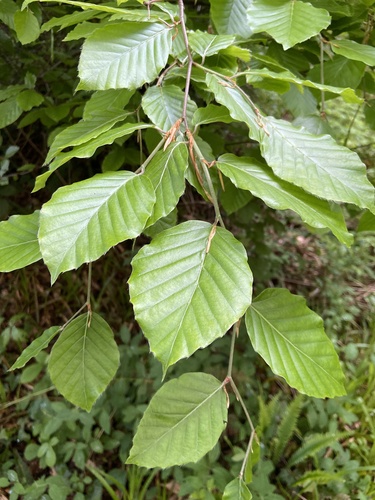
Source: Wikipedia
Synonyms 46
- 1,592,806 GBIF occurrences
- 86,083 iNaturalist observations
There is no population information for this species in either Europe or the Caucasus. It is likely to have a large population as it is considered one of the most widespread broad-leaf trees within Europe (Houston Durrant et al. 2016).
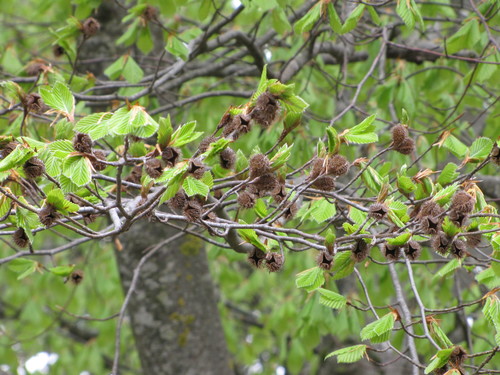
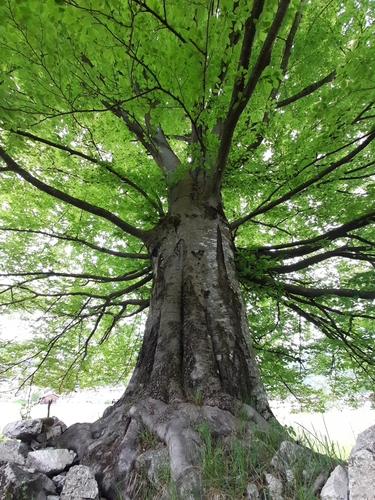
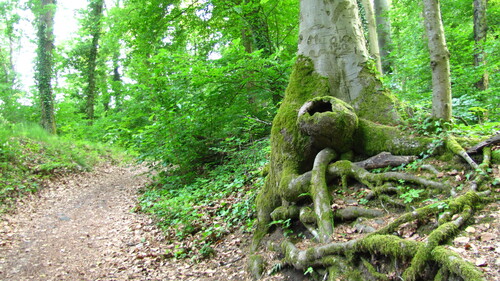
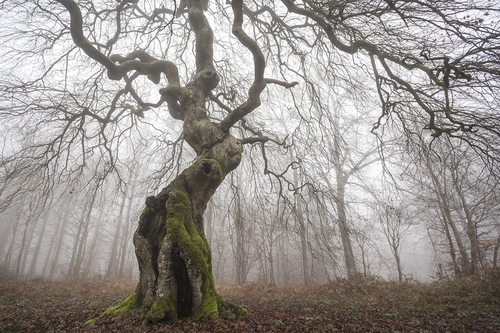
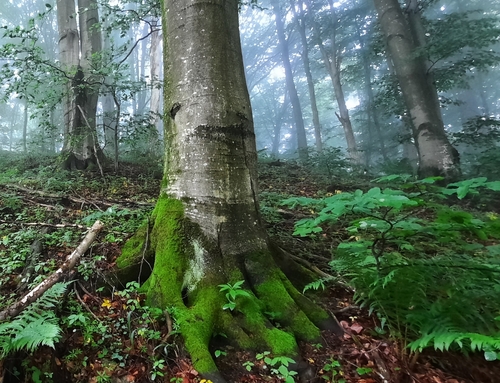
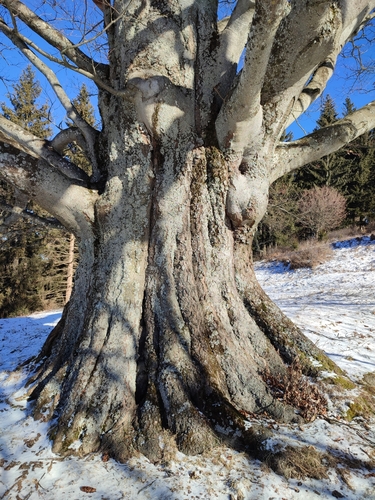
Fagus sylvatica is a large (up to 42 m), hardy tree species. It can grow in shaded areas and can tolerate the majority of soil habitats however the species is unable to cope with waterlogged or compacted soil. There is wide variation within the species enabling it to cope with a wide range of climates; it is thought that species from warmer, southern climates are more likely to cope with drought then those from more northern regions which have a shallow root bed (Houston Durrant et al. 2016). The species plays an important ecological role and is critical to soil conservation as it produces large amounts of litter (Houston Durrant et al. 2016). Within the UK, Beech trees provide an important habitat for rare plants species which thrive under its canopy cover and also many insect species. Its seeds are also important fodder for rodents and birds which also act as seed disperses. They form important associations with fungi, for both nutrient acquisition and due to the deadwood material of its bark (Woodland Trust 2017).
Historically beech trees will have been felled to make room for agriculture across Europe (Wühlisch et al. 2003). The shallow root system of the species can make it susceptible to rock fall and wind throw, if other growth conditions are also unfavourable (Houston Durrant et al. 2016). The species is vulnerable to herbivory; squirrels consume the thin bark and deer eat beech seedlings. Weevils and woolly aphids also pose a threat to the species. Fagus sylvatica is also at risk from infection by the fungus Ganoderma applanatum which causes mature trees to rot and also the pathogen Phytophtora ramorum. The threat of the latter is of increasing concern due to climate change which has made more of the trees range suitable for the pathogen (Houston Durrant et al. 2016). Increasing temperature are also a potential threat as suitable habitat loss in the species southern range may be lost. These threats are known to be widespread in Europe however their occurrence within the species Asian distribution are unknown, though it is likely they are threatened by similar actions.
The species is held in more than 200 ex situ collections (BGCI 2017). EUROFOGEN have recommended the better management of in situ stands of trees to properly maintain the genetic diversity of beech populations and to establish ex situ conservation plantations that act similarly if the original site is no longer suitable (Wühlisch et al. 2003). Fagus sylvatica is listed as Least Concern in Europe (Beech 2016) and in Switzerland (Moher et al. 2002). There is a research need to understand the impact of climate change and pathogens on the species.
Fagus sylvatica is a widespread and common tree species, residing in the majority of European countries and the Caucasus. It is likely to have a large population across its distribution but there is no explicit count of this. The species is threatened by both human use, pests and diseases but the scale of this across the species range is unknown. The species is assessed as Least Concern due to its large population and range which means the species far exceeds the criteria of a threatened category. It is recommended that data be collected on the impact climate change and pests have on the species to develop our understanding of these threats on population.
Gallery