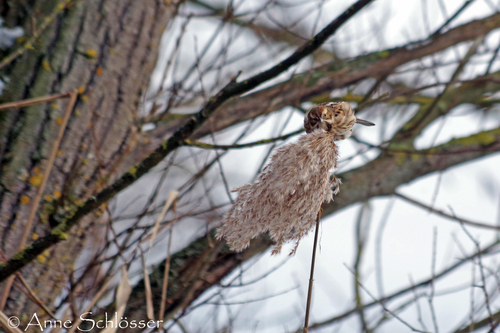
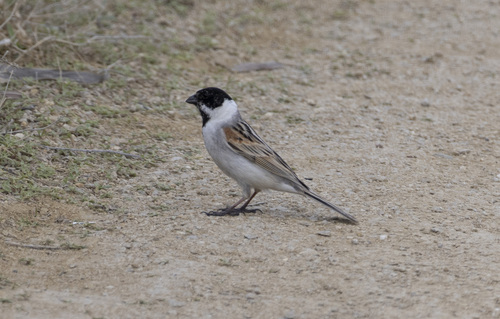
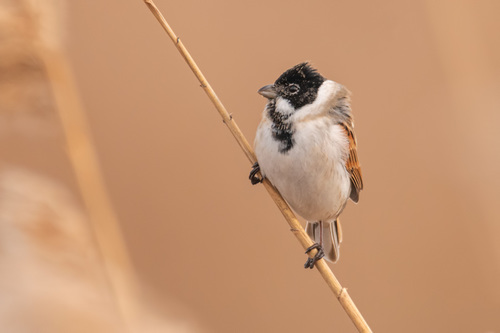
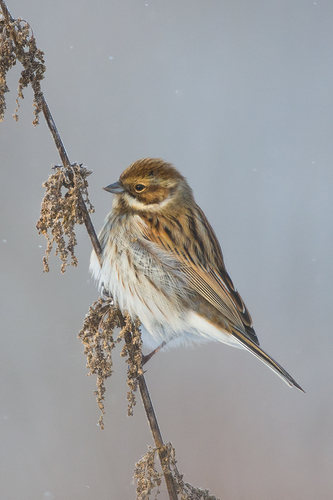
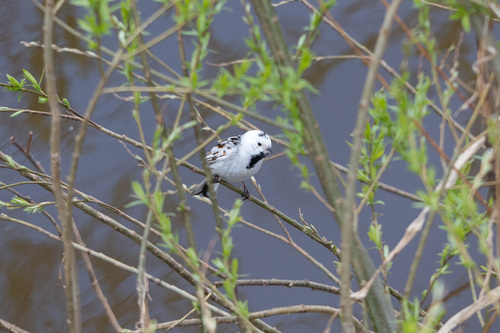
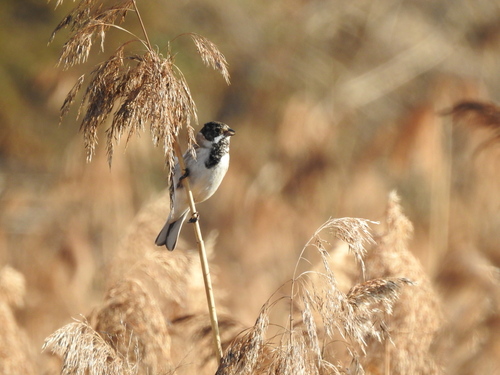
Emberiza schoeniclus (Linnaeus, 1758)
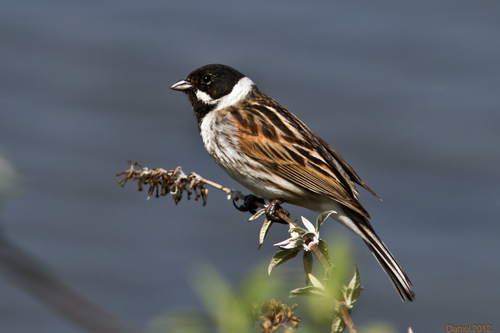
Source: Wikipedia
Synonyms 30
- 3,638,321 GBIF occurrences
- 47,512 iNaturalist observations
The European breeding population is estimated at 4,750,000–8,320,000 pairs, which equates to 9,500,000–16,700,000 mature individuals. The breeding population in the EU28 is estimated at 1,780,000–2,880,000 pairs, which equates to 3,570,000–5,760,000 mature individuals. For details of national estimates, see the Supplementary Information.
Generally this species inhabits marshy areas with dense low vegetation types in (small) wetlands, such as fens, bogs, reed marshes, riversides and other inland waters. In Siberia, it breeds in willow thickets in floodplains. In some regions the species has colonised drier habitats such as young woodland and farmland (maize, cereals and oil-seed rape fields) (Hagemeijer and Blair 1997, Copete 2016). Oil-seed rape fields have even become the most important breeding habitat for the species in lowland Britain (Gruar et al. 2006).The breeding season starts in early April and ends in August, depending on latitude and altitude. The species is mostly monogamous. The nest is built by the female, mostly on the ground, but sometimes in shrubs. The clutch, usually four or five eggs is incubated by both sexes. The chicks hatch after 12–15 days. They are fed by both parents and leave the nest after 9–12 days.The diet consists mainly of invertebrates during the breeding season and mainly seeds and other plant material at other times of the year.The species is partly migratory, in particular the northern and western European breeding birds, depending on the mean winter temperature. During the winter the species is also found in open fields, agricultural areas and woodland clearings (Copete 2016). Nowadays, in Central Europe it favours fallow and stubble fields overgrown with Chenopodium album and Amaranthus retroflexus forming important winter food sources for the species (Orlowki and Czarnecka 2007).Although the generation length for both EU and Europe regional assessments were calculated using the same methodology, new information arriving after the EU assessments were undertaken gave rise to an update in the generation lengths. This new information was then used for the Europe level assessments giving rise to a difference between the generation lengths used for the EU and Europe regions.
Agricultural intensification is considered the main cause of the decline of the species in Europe and especially the endangered subspecies E. s. witherbyi and E. s. lusitanica (Vera et al. 2014). In particular the availability of winter food in farmland has declined as a consequence of crop change and the use of herbicides, resulting in the disappearance of weed-rich stubbles, and the use of advanced technologies reducing the amount of spilled grain (Peach et al. 1999, Orlowki and Czarnecka 2007). In addition, the destruction of wetlands and unfavourable management (e.g. intensive reed cutting) is another important threat to the species, including the endangered subspecies E. s. witherbyi and E. s. lusitanica (Vera et al. 2014).
Conservation Actions UnderwayThe Mediterranean subspecies (E. s. witherbyi) and the north-western Iberian subspecies (E. s. lusitanica) are classified as Endangered in the Spanish Red List (Atienza & Copete 2014). The species has been moved from the Red to the Amber list of Birds of Conservation Concern in Britain (Eaton et al. 2009).Conservation Actions ProposedImplement marsh bird-friendly management of wetlands, for example avoid complete mowing or burning of older reed beds (Pasinelli and Schiegg 2012, Vera et al. 2014). Wintering habitat should be improved by preserving stubble fields. In addition, the presence of heavily overgrown root crop and vegetable stubbles should be allowed to ensure the spontaneous regeneration of plant cover on fallows. These objectives should be promoted as part of agri-environmental schemes or within set-aside land options (Orlowski and Czarnecka 2007).Special attention should be paid to safeguard the small remaining populations of the endangered subspecies E. s. witherbyi and E. s. lusitanica by conducting annual censuses of the subspecies' population numbers, protecting all wetlands where it still occurs and conducting research on its taxonomy and ecology, in particular the species habitat requirements and pressures limiting the population. Other measures include compiling a national subspecies action plan; promoting extensive agricultural practices in areas surrounding the species' habitat in particular with regard to the use of insecticides; and maintaining fallow and stubble fields near its breeding areas as wintering feeding habitat (Atienza and Copete 2014).
European regional assessment: Least Concern (LC)EU28 regional assessment: Least Concern (LC)At both European and EU28 scales, this species has an extremely large range (its extent of occurrence (EOO) is much larger than 20,000 km² and its area of occupancy (AOO) is much larger than 2,000 km²), and hence it does not approach the thresholds for Vulnerable under the range size criteria (criteria B and D2). The population size is extremely large (much larger than 10,000 mature individuals), and hence it does not approach the thresholds for Vulnerable under the population size criteria (criteria C and D). Despite the fact that the population trend appears to be decreasing, it is not believed to approach the thresholds for Vulnerable under the population size reduction criterion (criterion A). The probability of extinction has not been calculated for this species, therefore criterion E cannot be applied.For these reasons the species is evaluated as Least Concern within both Europe and the EU28.
Gallery