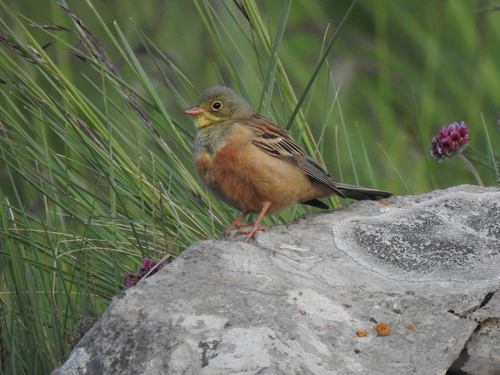
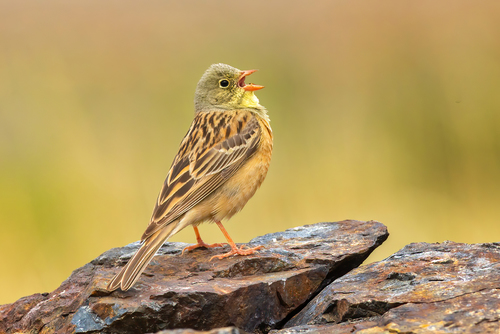
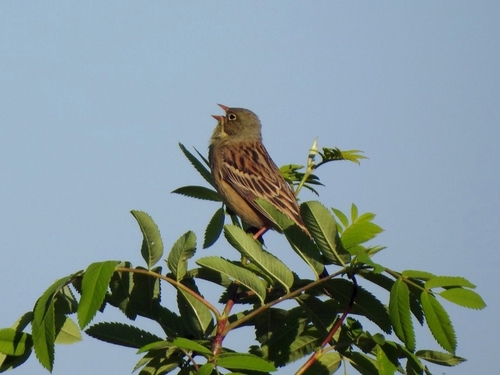
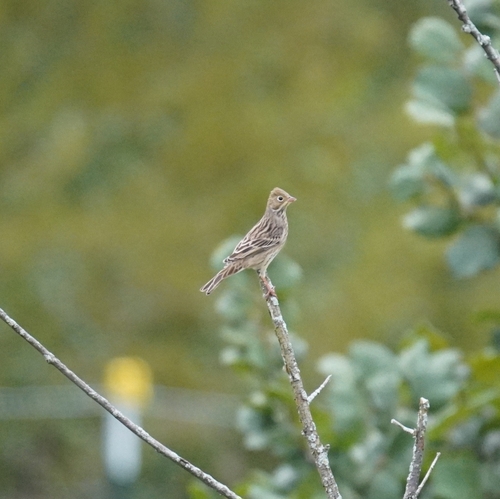
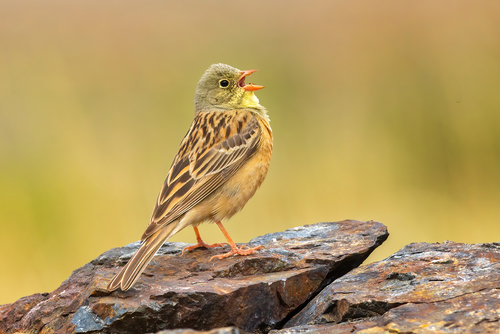
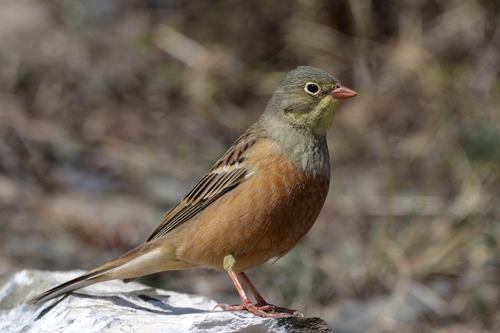
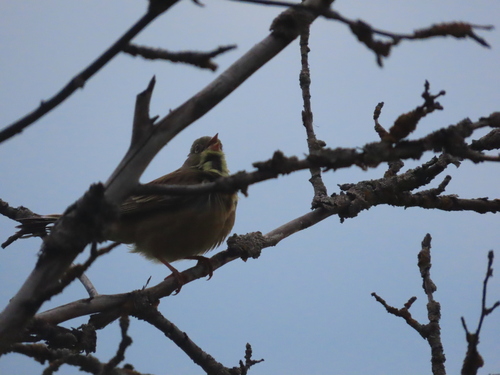
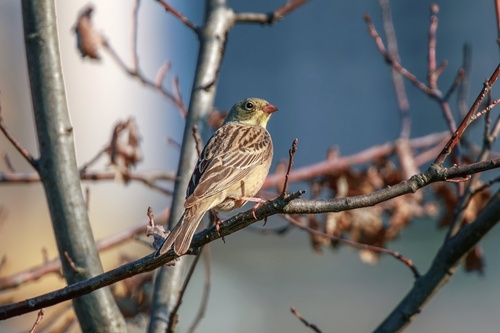
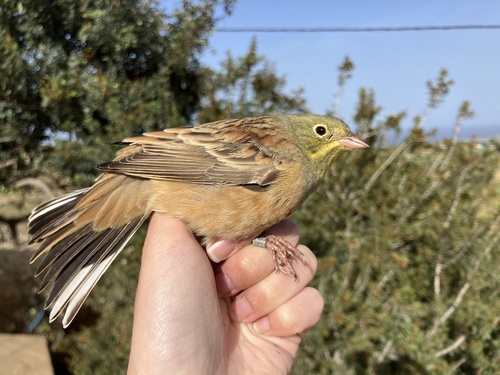
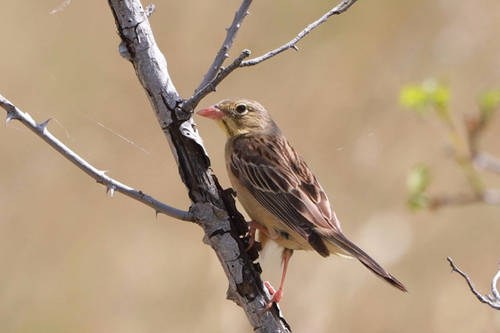
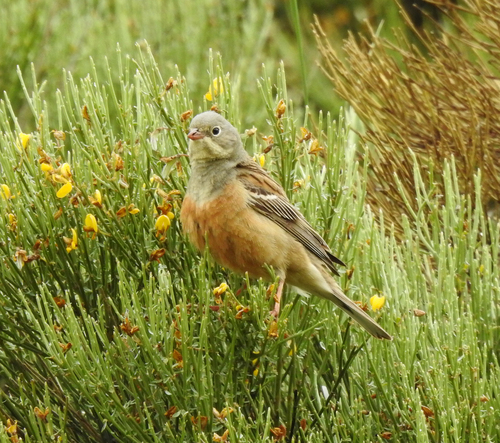
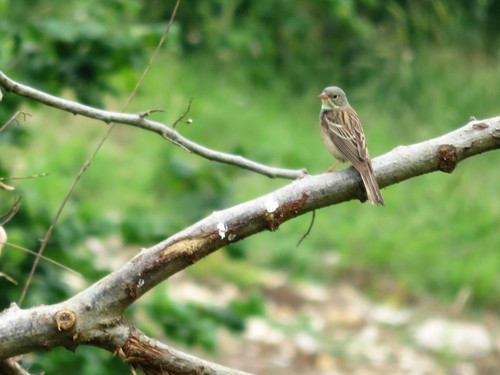
Emberiza hortulana Linnaeus, 1758
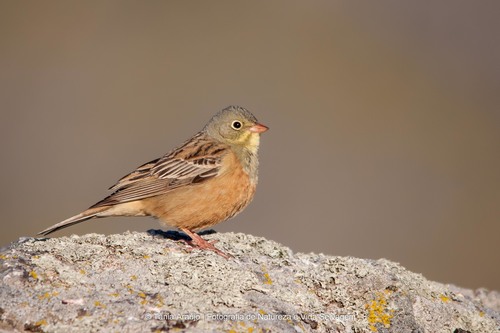
Source: Wikipedia
- 168,922 GBIF occurrences
- 5,842 iNaturalist observations
In Europe, the breeding population is estimated to number 3,600,000-5,600,000 pairs, which equates to 7,200,000-11,200,000 mature individuals (BirdLife International 2021). Europe forms c. 65% of the global range, so a very preliminary estimate of the global population size is 11,000,000-17,000,000 mature individuals, although further validation of this estimate is needed.
This species utilises a variety of breeding habitats, preferably situated in areas with a continental climate (many hours of sunshine and low rainfall). In the northern part of its range it occurs mainly in cultivated land, preferring low-intensity, mixed farmland on light soils, with sparsely vegetated spots and scattered or lines of trees or bushes. In forested areas of Fenno-Scandinavia and Russia, it occupies forest margins, clearings and clear fells. In the southern areas of its breeding range it occurs in rugged open mountainous areas with some shrubs up to 2,500 m asl (Hagemeijer and Blair 1997, Madge and Sharpe 2016). Eggs are laid from mid-April until early June. The nest is built by the female, often on the ground in a field of growing crops. The clutch consists of four or five eggs. The chicks hatch after 11–12 days, are tended by both parents and leave the nest after another 12–13 days. Autumn migration usually takes place from mid-August to mid-September (Madge and Sharpe 2016). During the breeding season the species mainly feeds on small invertebrates such as ants, beetles and grasshoppers, both on the ground and in bushes or the canopy of trees. Outside the breeding season it mainly forages on seeds. The species is migratory, wintering in the northern part of sub-Saharan Africa (Madge and Sharpe 2016).
The main pressure affecting populations of the species in Europe is the replacement of small-scale mixed farming by large-scale agricultural intensification, including the use of insecticides and herbicides. A reduction in bare patches for foraging and a lack of invertebrate-rich grassland at nesting areas appears to have significant impacts on the species (Menz and Arlettaz 2012). Ongoing conversion of relatively extensively used habitat to crop fields for biofuel is another issue. Other threats include isolation of the remaining populations (increased risk of extinction) as a consequence of habitat fragmentation, as well as hunting and trapping of the species during migration (Bernardy 2009, Jiguet et al. 2019, BirdLife International 2021).
Conservation Actions UnderwayEU Birds Directive Annex I. Bern Convention on the Conservation of European Wildlife and Natural Habitats Resolution 6 Annex I (species requiring specific habitat conservation measures). African-Eurasian Migratory Landbirds Action Plan (AEMLAP) Category B. Nominally protected in 785 Natura 2000 sites across 18 EU Member States (EEA 2023), but functionally extinct across much of NW Europe (Keller et al. 2020). In Germany, Switzerland and Austria, small-scale habitat restoration measures have been undertaken (Bernardy 2009).Conservation Actions ProposedImplement measures directed to the conservation/establishment of extensively used farmland areas outside protected areas. Compose an international species action plan including protection during migration and on wintering areas. Establish a ban on hunting and trapping of the species. Evaluate effectiveness of conservation measures (Bernardy 2009).
This species has an extremely large range, and hence does not approach the thresholds for Vulnerable under the range size criterion (extent of occurrence <20,000 km2 combined with a declining or fluctuating range size, habitat extent/quality, or population size and a small number of locations or severe fragmentation). Despite the fact that the population trend appears to be decreasing, the decline is not believed to be sufficiently rapid to approach the thresholds for Vulnerable under the population trend criterion (>30% decline over ten years or three generations). The population size is extremely large, and hence does not approach the thresholds for Vulnerable under the population size criterion (<10,000 mature individuals with a continuing decline estimated to be >10% in ten years or three generations, or with a specified population structure). For these reasons the species is evaluated as Least Concern.
Gallery