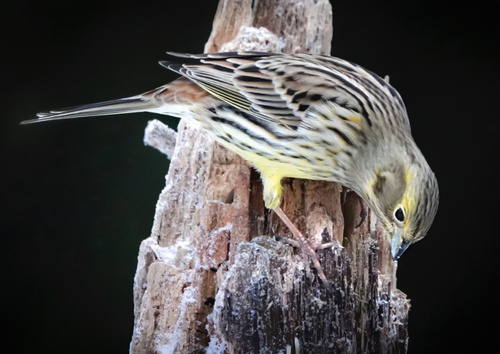
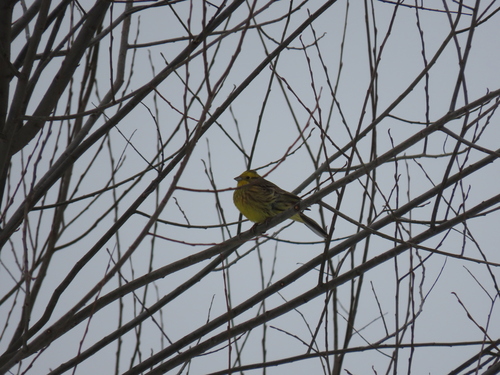
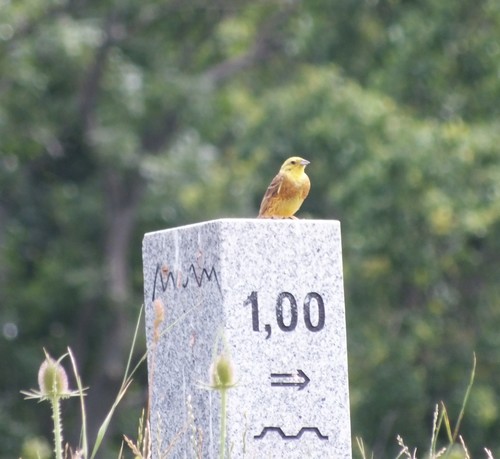
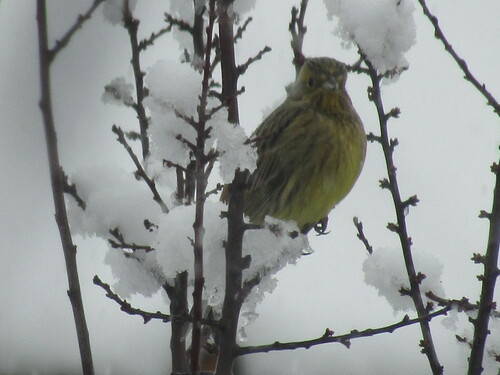
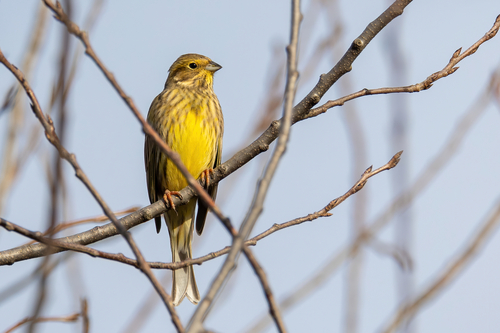
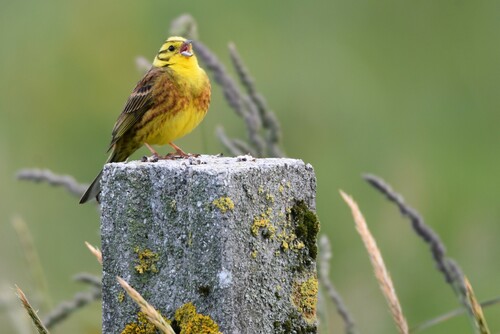
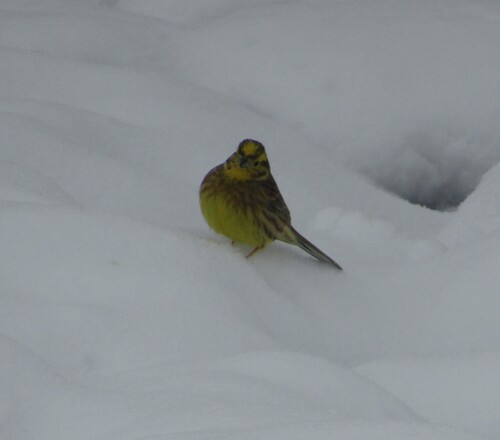
Emberiza citrinella Linnaeus, 1758
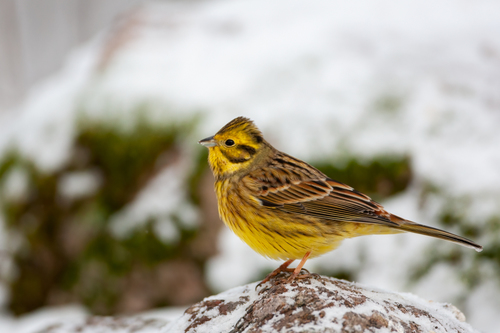
Source: Wikipedia
Synonyms 1
- 3,457,702 GBIF occurrences
- 58,504 iNaturalist observations
In Europe, the total population size is estimated at 39,000,000-54,000,000 mature individuals, with 19,500,000-27,000,000 breeding pairs (BirdLife International 2021), and comprises approximately 60% of the species' global range, so a very preliminary estimate of the global population size is between 65,000,000-90,000,000 mature individuals, although further validation of this estimate is desirable. The species' population in Europe is considered to have undergone a small decline over three generations (10 years), especially in the west (BirdLife International 2021). As this region holds the majority of the species' global range, the global population size is considered to be decreasing slowly over three generations.
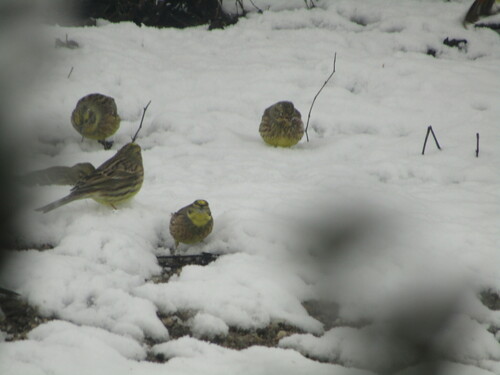
This is a characteristic species of the transition zone between woodland and open country, such as (extensively managed) farmland with hedges, forest clearings, young plantations, scrubs, heath and natural grasslands. During winter it gathers in flocks, often in farmland on stubble fields or other weedy habitats (Hagemeijer and Blair 1997, Copete 2016). Normally the breeding season starts in April and late broods may even be started in September. The nest is built by the female. It is placed on the ground, often in field boundaries or ditches, well hidden among the vegetation, or in hedges or isolated bushes. The clutch, usually three to five eggs, is normally incubated by the female alone. The chicks hatch after 12–14 days. They are brooded by the female, the male delivering food. The nestling period is 11–13 days (Bradbury et al. 2000, Copete 2016). The species mainly takes seeds and other plant materials from a variety of tree, herb and grass species. The species is sedentary and partially migratory with only the extreme north of the range completely vacated during winter (Copete 2016).
The population is suspected to be in decline in Europe owing to a reduction in cultivation of cereal crops and the intensification of farmland management. Agricultural efficiency measures such as removal of hedgerows, filling or clearing of ditches and grazing or ploughing right up to the field edge are likely to have adversely affected the species (Bradbury et al. 2000). Furthermore the species suffers indirectly from the use of insecticides and herbicides, as these reduce the abundance of arthropods and the availability of weedy patches rich in seeds (Perkins et al. 2002, Morris et al. 2005, Hart et al. 2006). The species interbreeds with Emberiza leucocephalos in the contact zone of both species in the most western part of its range. According to Panov et al. (2003) the hybridisation process will intensify in the contact zone of both species as they are very similar in behaviour and habitat choice. The long-term impact of this process is unclear (Hagemeijer and Blair 1997, Copete 2016).
Conservation Actions UnderwayThere are currently no known conservation measures for this species within its European range.Conservation Actions ProposedImplement agro-environmental schemes that effectively support beneficial management of field margin habitats and retention of winter-feeding sites (set-aside fields, manure heaps) such as stubbles (Bradbury et al. 2000, Perkins et al. 2002, Whittingham et al. 2005, Orlowksi et al. 2014). Ban or minimise the application of insecticides and herbicides. In particular minimise the applications of persistent broad-spectrum insecticides from March to June, or provide alternative unsprayed foraging habitat. Advice on mitigating indirect effects of pesticides should be given to advisers and users (Morris et al. 2005).
This species has an extremely large range and the population size is extremely large, hence does not approach threatened thresholds for the range or population size criteria. Despite the fact that the population trend appears to be decreasing, the decline is not believed to be sufficiently rapid to approach the thresholds for Vulnerable under the population trend criterion. For these reasons the species is evaluated as Least Concern.
Gallery