Dryopteris filix-mas (L.) Schott
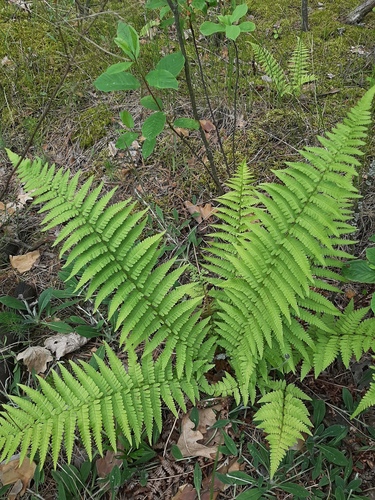
Source: Wikipedia
Synonyms 46
- 909,913 GBIF occurrences
- 53,289 iNaturalist observations
Subpopulations are extensive and continuous except at the northern and southern range of this species in Europe. The overall population is stable or even increasing. The production of spores is normal, but these spread easily and suitable habitats exist widely in natural and anthropogenic settings.
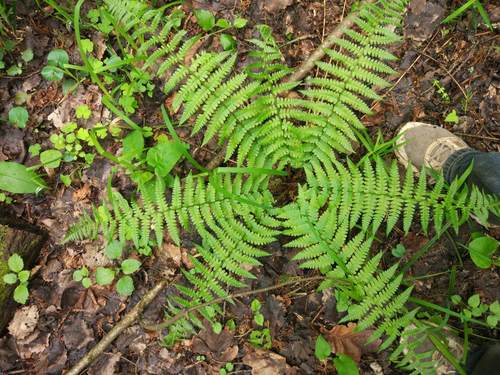
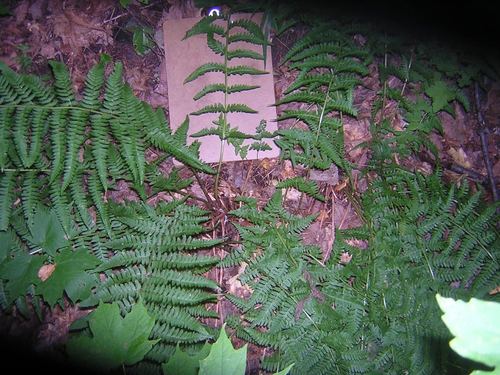
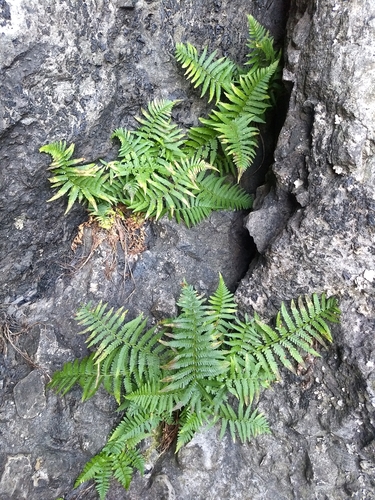
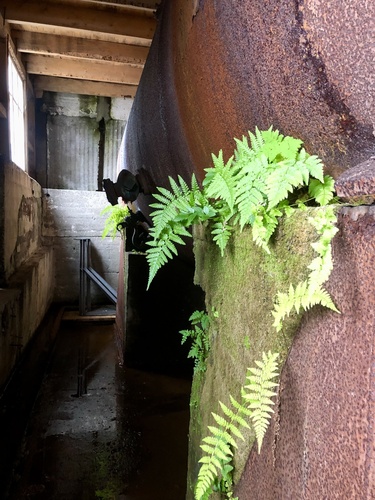
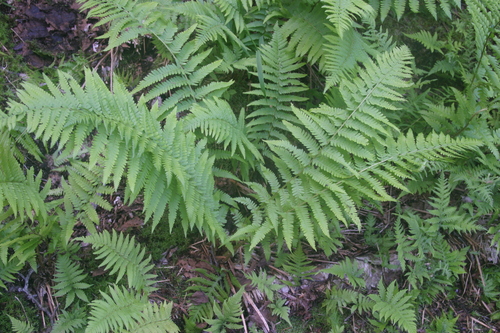
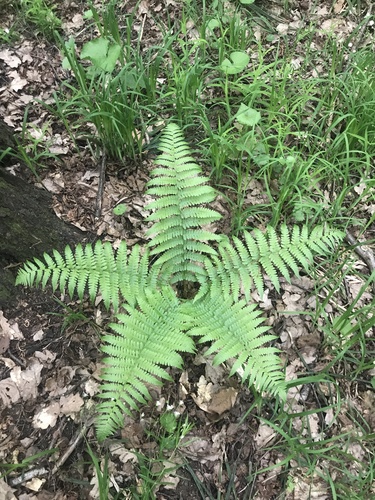
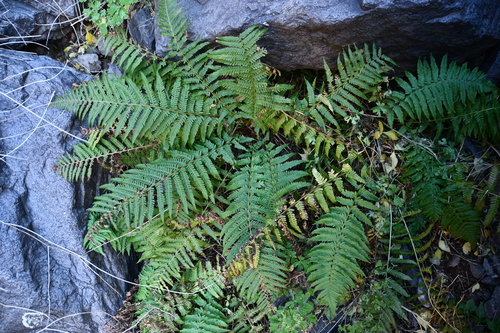
Dryopteris filix-mas is a common fern in continental to maritime areas of woodland, rocky forests, both broadleaf and coniferous, in ditches, on roadside verges, along stream banks, on rocky hillsides, cliff ledges and scree slopes. It prefers light, well-drained but moist soils that are mostly acidic to neutral, though sometimes slightly basic. It is also found in urban habitats, including railway embankments, bridges, walls and gardens (Hess et al. 1967, Stace 1997, Jonsell 2000, The Botanical Society of the British Isles 2004).It is primarily a species of moist and particularly fertile deciduous forests, but is also found in a wide range of other habitats including open ground and stone/brick walls in towns, open ground in natural settings and under deciduous scrub in dune hollows and railway track beds. In glacial succession it first appears against boulders and other moist sites on coarse substrates up to 2,540 m elevation in Switzerland. Dryopteris filix-mas grows on somewhat drier sites than other Dryopteris species and can tolerate moderate levels of disturbance. In summary, D. filix-mas is gregarious and grows in a wide range of vegetation types across Europe.
There are no threats to this species, which can be sometimes weedy in gardens.
There are no conservation actions in place and none appear to be needed. It is classified as threatened in the Komi Republic, Russia, due to its rarity there (class 3 in the Russian rank; Taskaev 2009). It is listed in the United Kingdom as Least Concern (Stroh et al. 2014), as in most national Red Lists where it is included.
European regional assessment: Least Concern (LC)EU 28 regional assessment: Least Concern (LC)This widespread species is locally common, has a stable population trend and it does not face any major threats. It is therefore listed as Least Concern.
Gallery