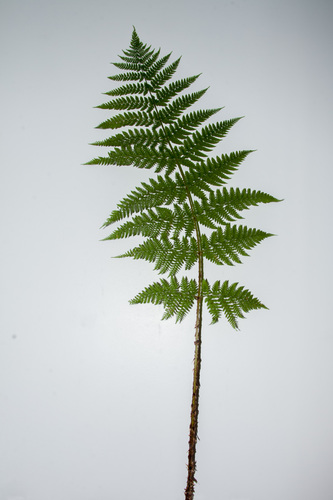
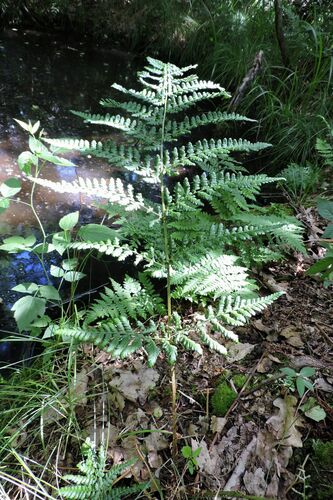
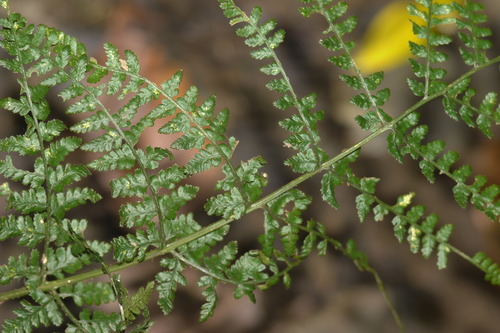
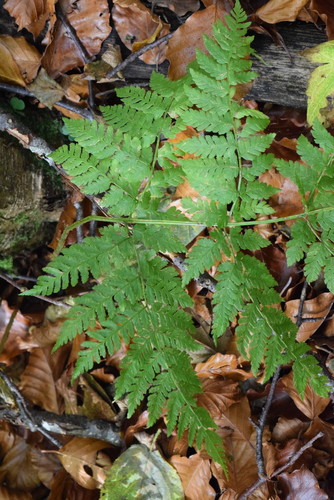
Dryopteris dilatata (Hoffm.) A.Gray
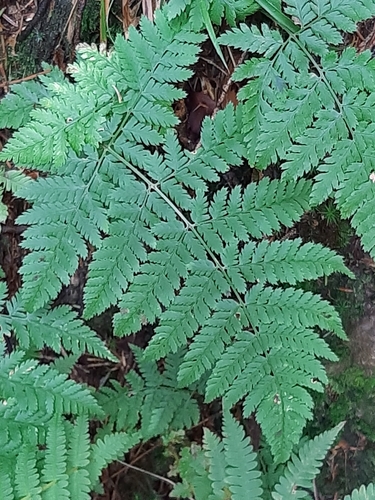
Source: Wikipedia
Synonyms 45
- 559,865 GBIF occurrences
- 12,154 iNaturalist observations
The population trend is stable and there are no reported declines. It is a common and abundant fern throughout its range.
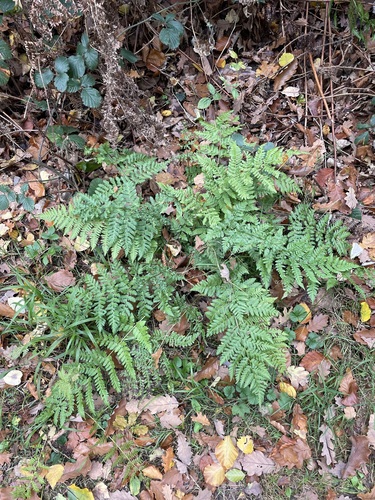
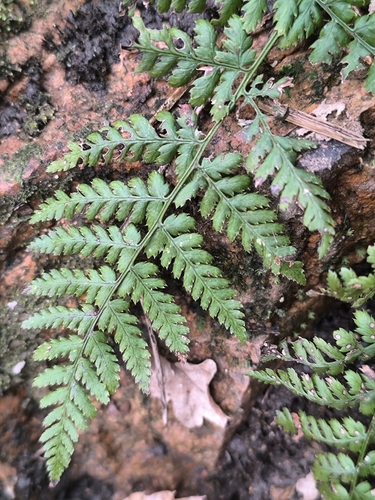
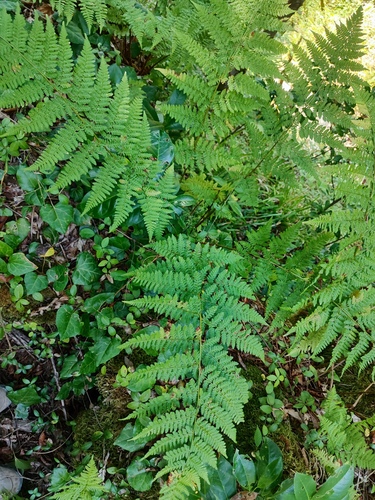
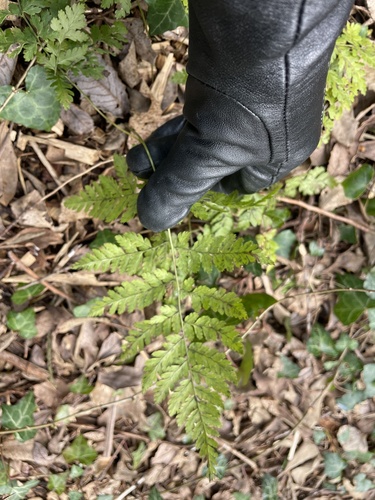
This species occurs in many different habitats, but D. dilatata is mostly a woodland species, rarely found in the lower alpine belt. It is very shade-tolerant and is most frequent and abundant on acidic soils with pH <5.0, and on well- to poorly-drained substrates with a developed humus layer. The species is present in deciduous and coniferous woodland, hedgerows, ditches, open moorland, rocky slopes, boulder scree and rock fissures. It occurs mostly in habitats with permanently moist but not wet soils. In wet woodlands and mires with high water-tables, D. dilatata grows in raised microhabitats, with better drainage (hummocks) (Hess et al. 1967, Stace 1997, Jonsell 2000, The Botanical Society of the British Isles 2004, Rünk et al. 2012). It can be occasionally found as an epiphyte in mossy tree trunks in damp climates and it is rarely found on masonry (M. Christenhusz pers. comm. 2016).
There are major no threats to this species.
There are no conservation actions in place and none seem to be needed. It is found in protected areas throughout its range. It is listed as Least Concern in the United Kingdom (Stroh et al. 2014), and similarly not threatened in any other national Red Lists.
European regional assessment: Least Concern (LC)EU 28 regional assessment: Least Concern (LC)This is a widespread fern species that is locally common and whose population trend is stable. There are no major threats to the species and it is therefore listed as Least Concern.
Gallery