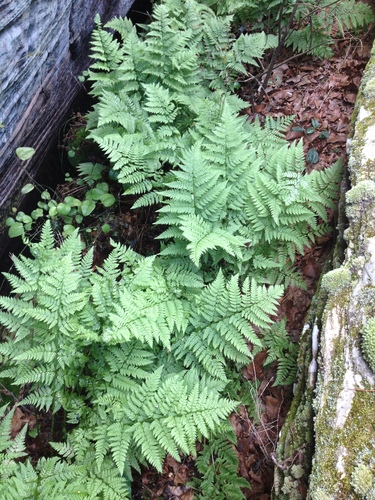
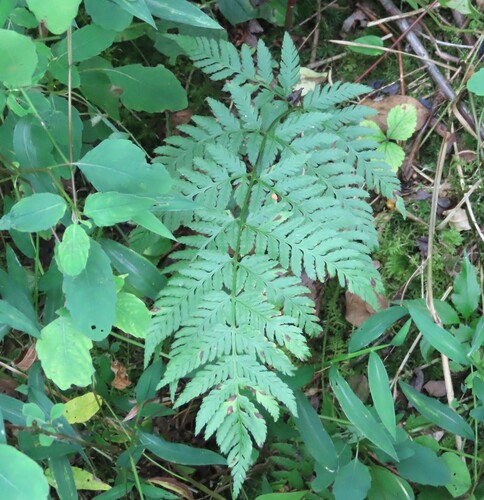
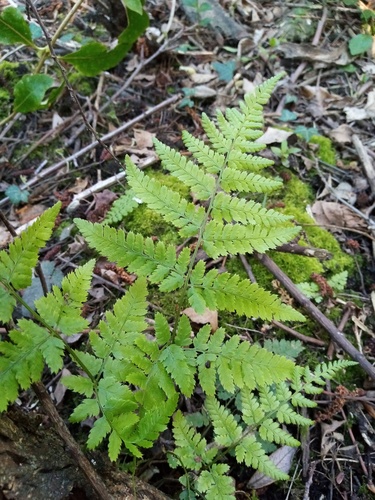
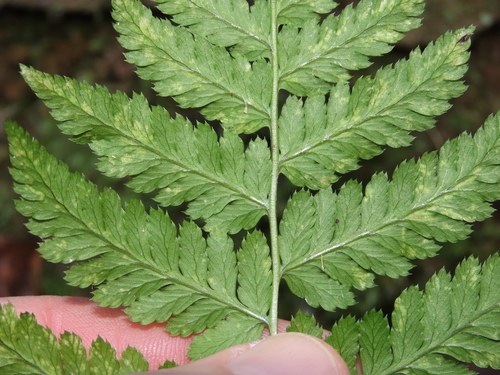
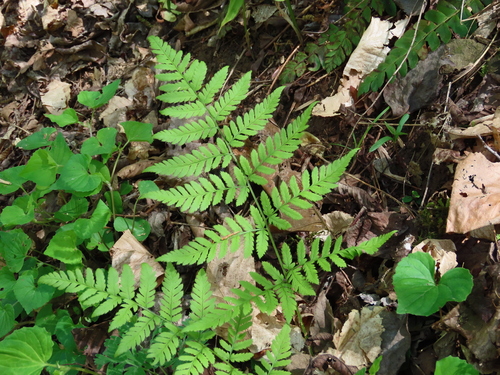
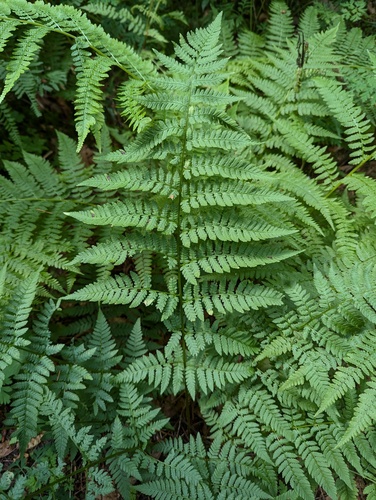
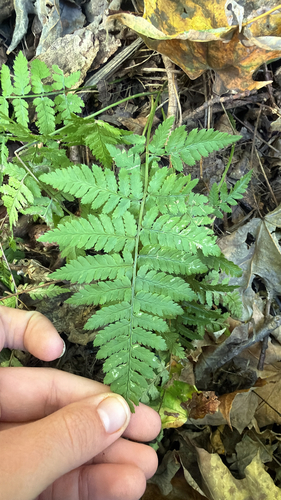
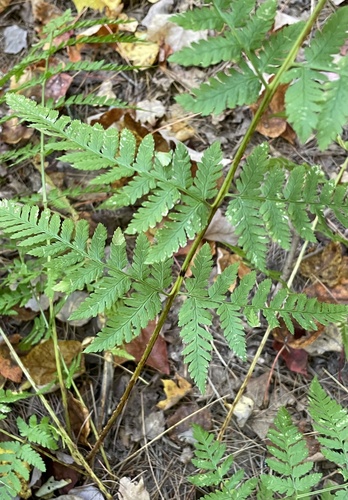
Dryopteris carthusiana (Vill.) H.P.Fuchs
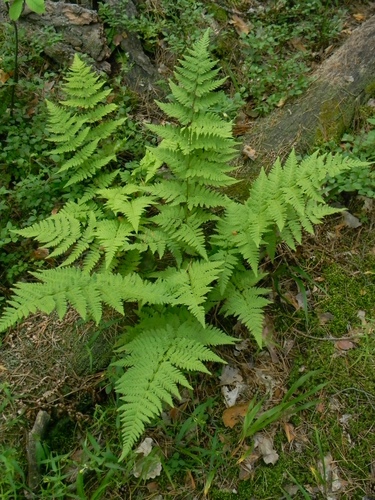
Source: Wikipedia
Synonyms 45
- 462,602 GBIF occurrences
- 39,795 iNaturalist observations
This species is very common across Europe and occurs frequently and in large numbers. The overall population trend is stable.
This fern is found in a range of damp habitats, including wet heaths, fens, mires, raised bogs, carrs and wet woodlands. It prefers rich alluvial soils with a high water table. It extends open moorland more rarely, possibly as a relic of former woodland. It generally occurs on lowlands, but it reaches forests of mountains slopes, although it is rarely present at the lower alpine belt. It is present on moist acidic to moderately acidic soils with developed hummus layer. The species occurs in a wide range of habitats, from exposed, well-illuminated to moderately shaded ones, a species of wetlands and wet woodlands.Dryopteris carthusiana is characteristic of a seasonally fluctuating or permanently high groundwater level. Its ecological optimum lies between constantly moist or damp and wet habitats, suggesting that the high water-table conditions are required for optimal growth and reproduction. In Scandinavia and central Europe, D. carthusiana occurs over a broader soil moisture range. In southern Europe, the species can also be found in drier habitats, such as stone walls or as an epiphyte on trees (Hess et al. 1967, Stace 1997, Jonsell 2000, The Botanical Society of the British Isles 2004, Rünk et al. 2012).
There are no major threats to this species.
There are no conservation actions in place and none appear to be needed. It is found in protected areas throughout its range.
European regional assessment: Least Concern (LC)EU 28 regional assessment: Least Concern (LC)This widespread fern species is locally very common and its population trend is stable. There are no major threats to the species and it is thus listed as Least Concern.
Gallery