Digitalis purpurea L.

Source: Wikipedia
Synonyms 45
- 558,685 GBIF occurrences
- 108,912 iNaturalist observations
This is a very common species within much of its range and it is inferred that the population is large and relatively stable.
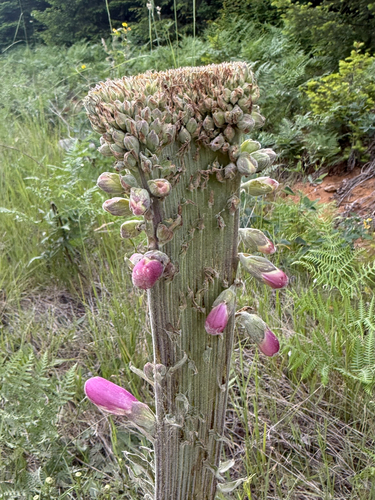
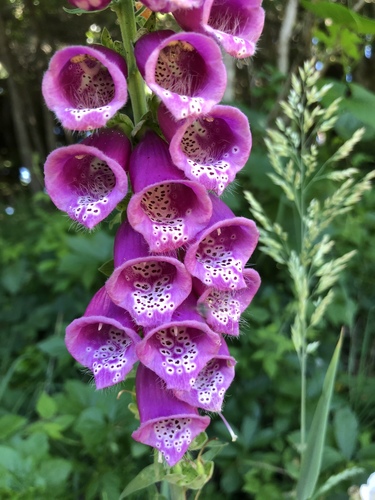
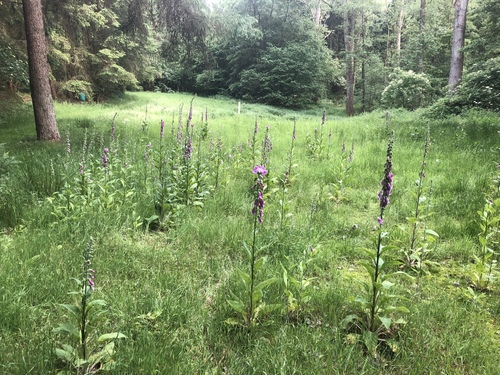
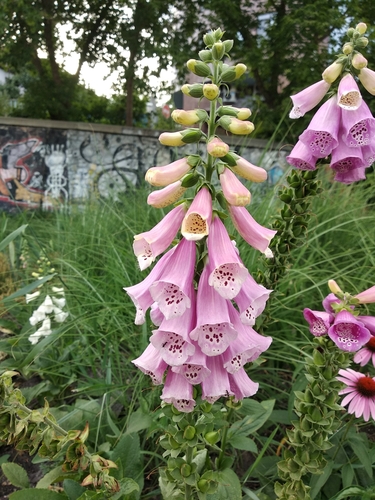
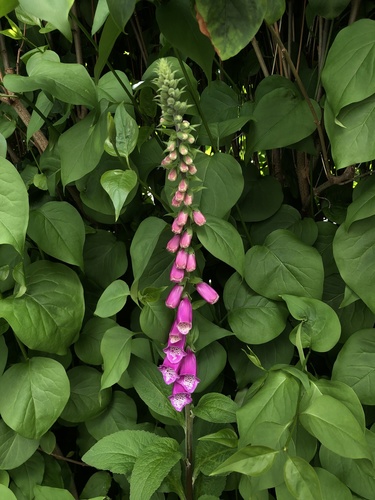
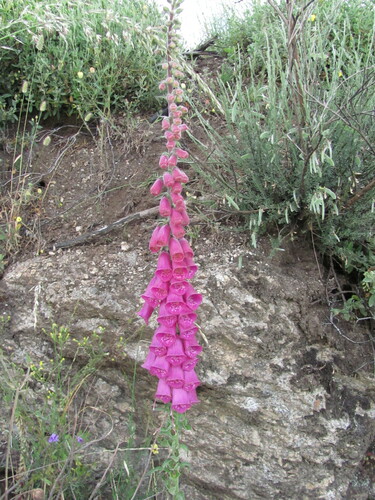
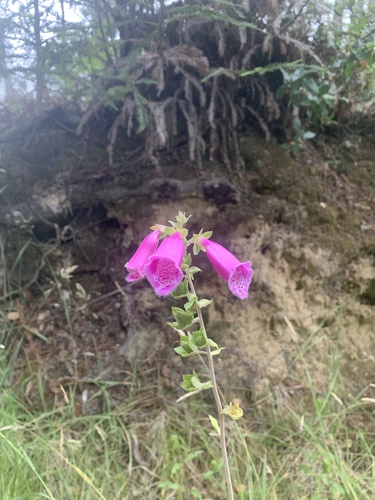
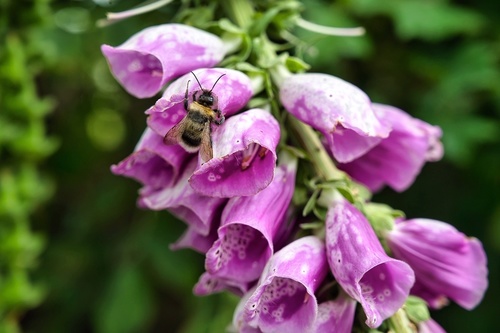
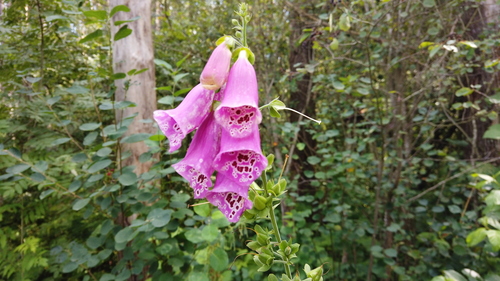
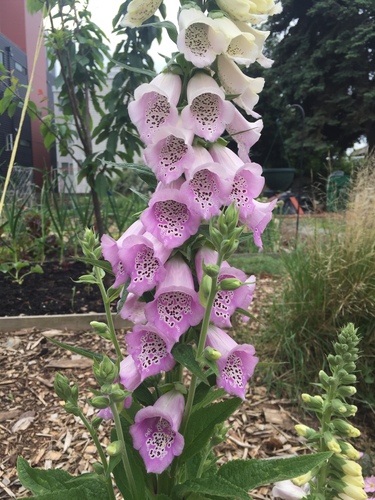
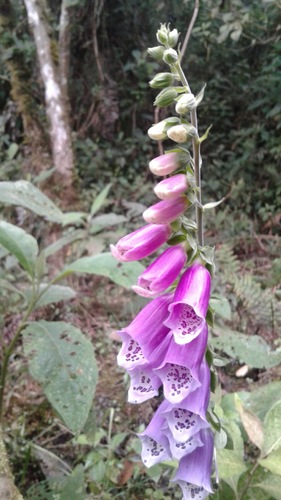
This erect biennial or short-lived perennial grows to an average of one metre in height. It flowers generally between June and September, and the flowers are pollinated by bees. It grows in open places, especially woodland clearings, hedges, sea cliffs, heaths and mountainsides, on waste ground, disturbed sites and as a pioneer in burnt areas. It is often found on acid soils but is also found on calcareous soils (Polunin 1969, Stace 1997, BSBI 2024).
Although habitat loss as a result of human activity is a generalized threat, there are not thought to be any significant ongoing threats to this species in its main native range and none are envisaged in the near future.
The species is represented by 228 germplasm accessions held at European institutions (EURISCO 2024), and is included in the living collection of at least 177 botanical gardens (BGCI 2024). It occurs in many protected areas, including Natura 2000 sites (UNEP-WCMC and IUCN 2024, GBIF.org 2024).
European regional assessment: Least Concern (LC)EU 27 regional assessment: Least Concern (LC)This is a widespread and common species, and no significant declines have been identified. The estimated extent of occurrence (EOO), area of occupancy (AOO) and population all exceed the values for a threatened category. It is assessed as Least Concern for both the European region and the EU27 Member States.
Gallery