Crataegus laevigata (Poir.) DC.

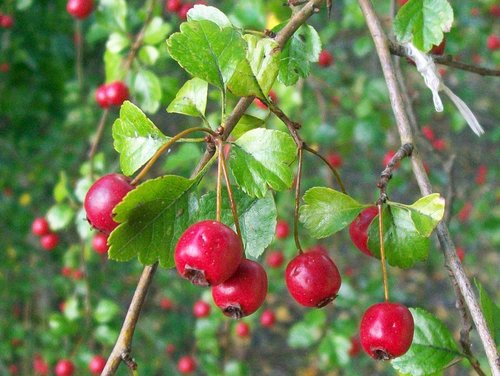
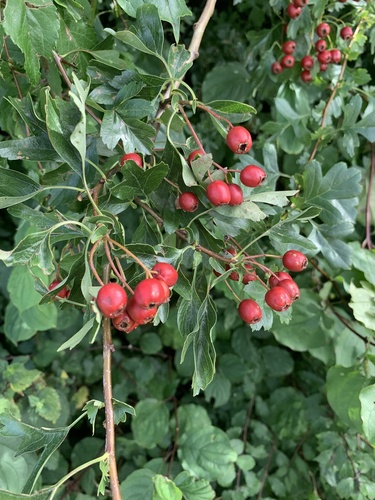
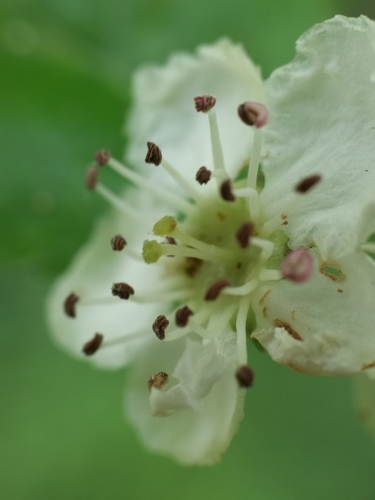
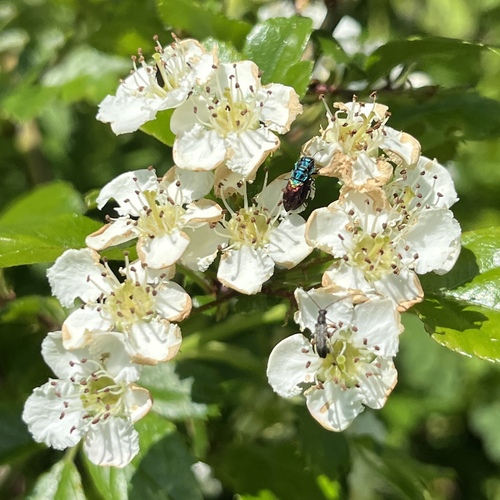
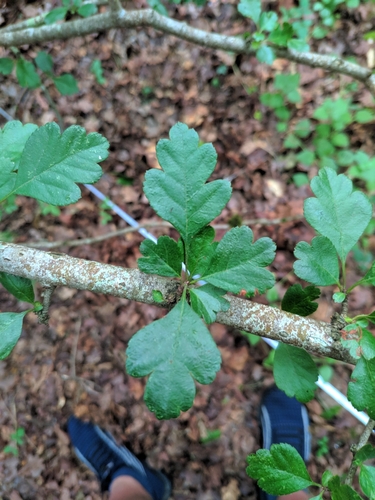
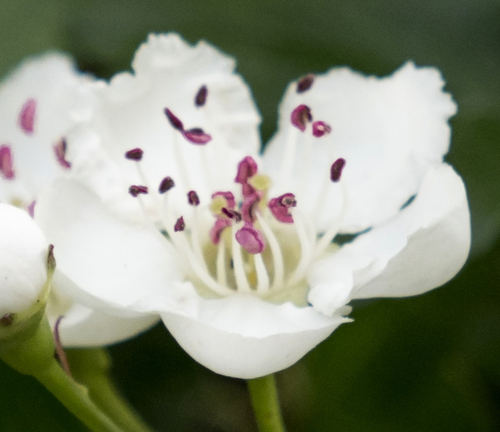
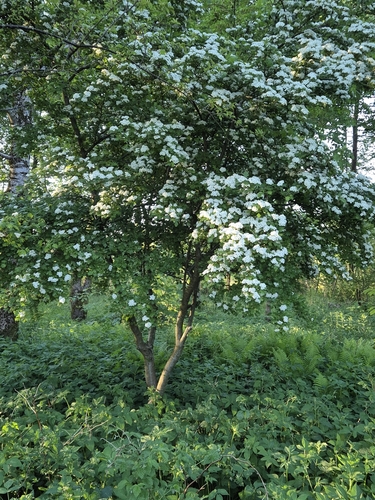
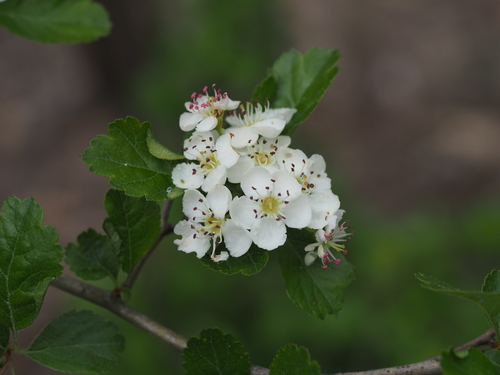
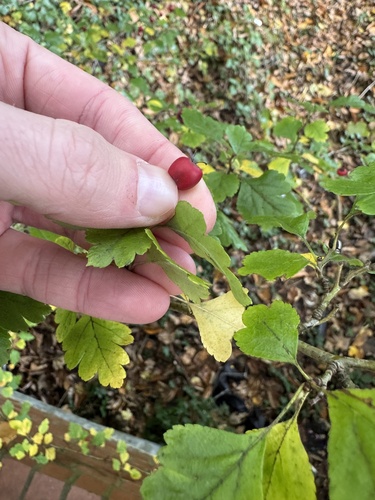
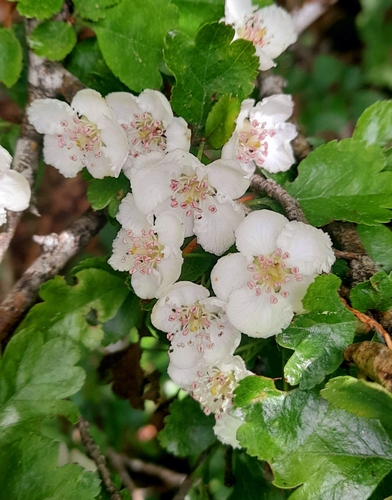
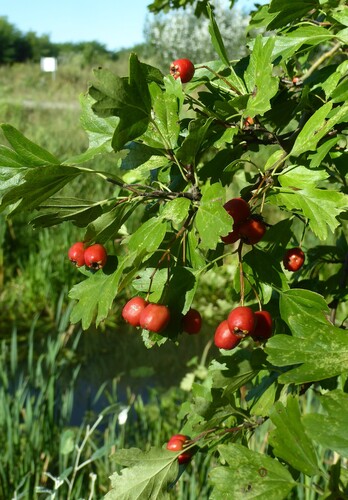
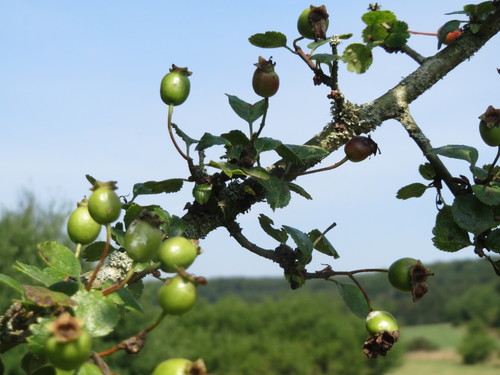
Crataegus laevigata, known as the Midland hawthorn, English hawthorn, woodland hawthorn, or mayflower, is a species of hawthorn native to western and central Europe, from Great Britain and Spain, east to Romania and Ukraine. The species name is sometimes spelt C. levigata, but the original orthography is C. lævigata.

Source: Wikipedia

Synonyms 43
Crataegus ariifolia, Crataegus cuneatotrifida, Crataegus oxyacanthoides, Crataegus palmstruchii, Crataegus spinosa, Crataegus subinermis, Crataegus × walokochiana, Mespilus digyna, Mespilus laevigata, Mespilus oxyacanthoides, Mespilus sorbifolia, Oxyacantha matthioli, Oxyacantha obtusata, Crataegus laevigata subsp. carnoviensis, Crataegus laevigata subsp. palmstruchii, Crataegus laevigata subsp. vulgaris, Crataegus laevigata subsp. walokochiana, Crataegus maura subsp. oxyacanthoides, Crataegus oxyacantha subsp. carnoviensis, Crataegus oxyacantha subsp. joachymi, Crataegus oxyacantha subsp. laevigata, Crataegus oxyacantha subsp. oxyacanthoides, Crataegus oxyacantha subsp. palmstruchii, Crataegus oxyacantha subsp. polygyna, Crataegus oxyacantha subsp. vernicosa, Crataegus oxyacantha subsp. walokochiana, Crataegus palmstruchii subsp. rhenana, Crataegus laevigata var. carnoviensis, Crataegus laevigata var. integrifolia, Crataegus laevigata var. mathei, Crataegus laevigata var. microphylla, Crataegus laevigata var. microxyacantha, Crataegus laevigata var. ovoxyacantha, Crataegus laevigata var. sorbifolia, Crataegus laevigata var. vulgaris, Crataegus monogyna var. rosea, Crataegus oxyacantha var. globosa, Crataegus oxyacantha var. integrifolia, Crataegus oxyacantha var. laevigata, Crataegus oxyacantha var. mathei, Crataegus oxyacantha var. microcarpa, Crataegus oxyacantha var. microxyacantha, Crataegus oxyacantha var. obtusata
  • 214,748 GBIF occurrences
  • 12,257 iNaturalist observations
Conservation status code
LC
Conservation: status label
Least Concern
Conservation: population trend
Stable
Conservation: year assessed
2026
Habitats
Threats
IUCN: population narrative

The species seems abundant in its range. In Ireland, where it was most likely introduced from England from commercial nurseries supplying hedge plants (Invasive Species Ireland 2012), this species is extremely uncommon yet is common in its hybrid form (C. monogyna and C. x media). Throughout its range, records of the species are abundant, and there is currently no indication of population decline.

IUCN: habitat narrative

Midland Hawthorn is a shrub or small tree found in ancient woodlands, borders of woodlands, old hedgerows and river banks growing on clay soil. It is also found in open pastureland and associated with oak and beech trees. It is generally a lowland species and is shade tolerant (Castroviejo et al. 1998, BSBI/BRC 2017). The flowers are hermaphrodite and pollinated by midges (PFAF 2016).

IUCN: threats narrative

The threats to this species are not known. The hybridisation with other Crateagus species may be causing a decline in this species. Hawthorn subpopulations, especially in the UK, consist of a mixture C. laevigata and C. monogyna to a greater extent than C. laevigata, which is a product of hybridisation in the wild and plantation of the hybrid species in nurseries. This hybrid may be considered an invasive species as it is not native to the UK (Allen and Hatfield 2004).

IUCN: conservation narrative

There are no conservation measures in place or needed for this species. It is listed as Least Concern in Belgium (Van Landuyt et al. 2006), Denmark (NERI 2007), Germany (Ludwig and Schnittler 1996), Luxembourg (Colling 2005), Switzerland (Moser et al. 2002) and the UK (Cheffings and Farrell 2005).

IUCN: rationale

Global and European regional assessment: Least Concern (LC)EU 27 regional assessment: Least Concern (LC)This species is classified as Least Concern both globally and for the EU27 Member States due to its widespread distribution, stable populations and no major known threats.