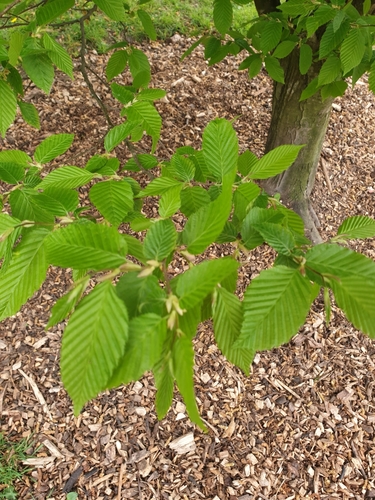
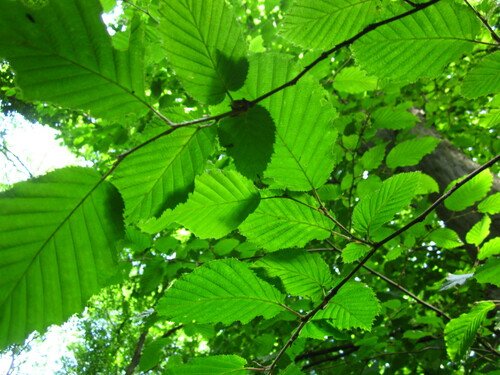
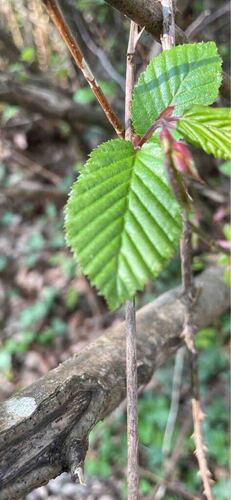
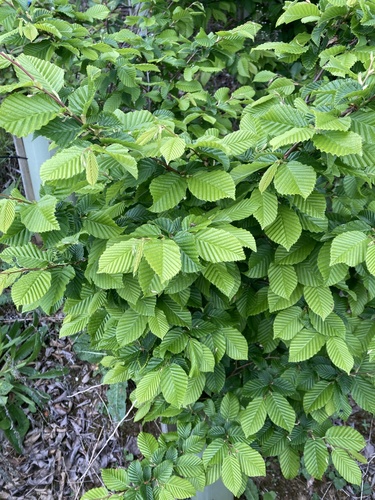
Carpinus betulus L.
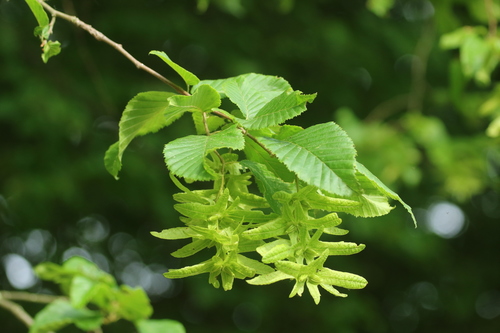
Source: Wikipedia
Synonyms 40
- 747,194 GBIF occurrences
- 41,022 iNaturalist observations
As a result of this species being common across the majority of its range, there are no data available on the size of its population but we expect it to be large and stable.
A deciduous tree that occurs on lowlands, hills and low mountain ranges. It is very frost resistant however high summer temperatures restrict its distribution in Southern Europe. It prefers to grow in moist and well drained soil, and is tolerant of most soil types apart from acidic. As it is very shade tolerate it is able to be both an understorey tree and a coloniser of disturbed soils. It is found in broad-leaved deciduous forests (Quercus-Fagus) and rarely in mixed forests (Abies-Picea-Fagus). The species is resistant to bark damage when it is chewed by animals, even when the outer surface is completely removed the exposed cambium often heals over completely. It produces an abundance of seed, however regeneration is a slow process, as most seeds are taken by animals and birds, and seed germination may not happen until the spring of the second year after sowing (Sikkema et al. 2016).
The generalist fungi from the genus Nectria has been found to cause cankers.The the genus Armillaria can cause root rot. This species has been reported to be a minor host of non-specialised invasive insects. It is susceptible to damage from the gypsy moth (Lymantria dispar) and can be a host for the processionary moth (Thaumetopoea processionea) (Sikkema et al. 2016). The beetle Anoplophora chinensis also causes declines in parts of its range in northern Italy.
This species is recorded in 198 ex situ collections (BGCI 2016), however they may or may not be from a European source. This species is listed as Vulnerable (D1+2) in the Red List of Spanish vascular flora, but it is thought to only be locally rare (Moreno 2008). This species is listed as Least Concern in Denmark (NERI, 2007, Wind and Pihl 2010), Luxembourg (Colling 2005), Switzerland (Moser et al, 2002) and Great Britain (Cheffings and Farrell 2005).
European regional assessment: Least Concern (LC)EU 28 regional assessment: Least Concern (LC)This species is a tree found across Europe. It is a common species across the majority of its large European range. Although there is no information on population numbers, there are no significant threats reported for this species or declines in population. It is therefore assessed as Least Concern.
Gallery