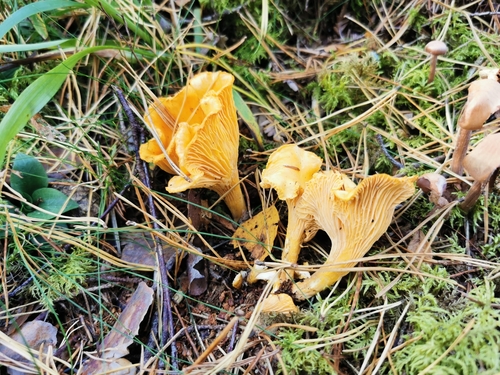
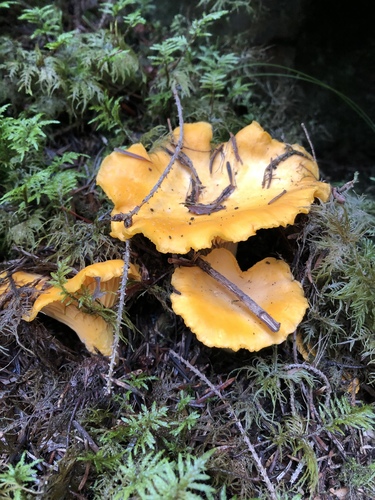
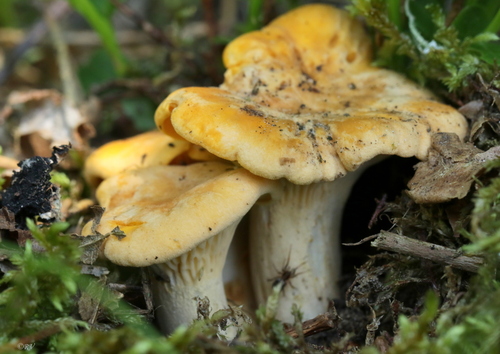
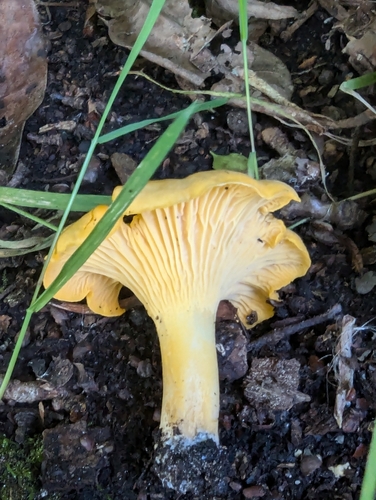
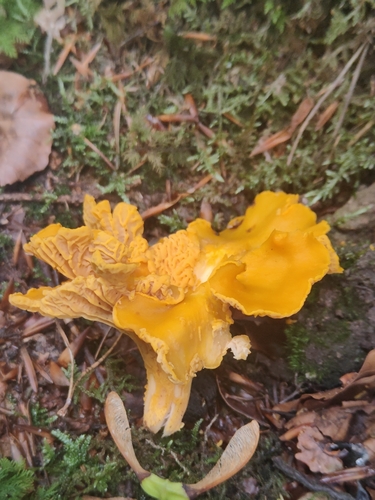
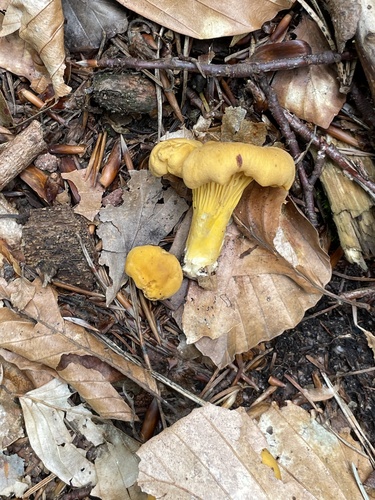
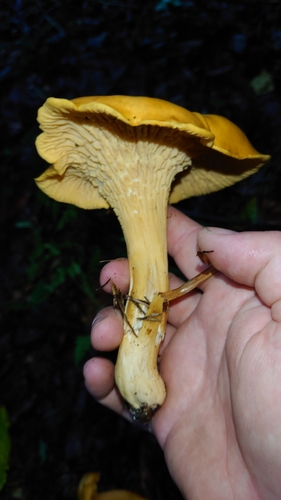
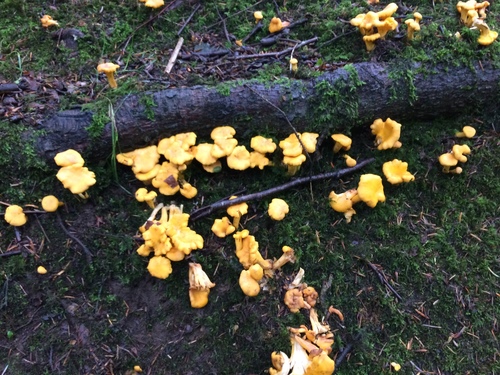
Cantharellus cibarius Fr.
Source: Wikipedia
Synonyms 31
- 74,555 GBIF occurrences
- 14,869 iNaturalist observations
This is a widespread and common species, and as such the population size is in at least the tens of thousands of mature individuals. In some European countries, e.g. the Netherlands, historical data shows a decline related to nitrogen deposition. While this might be abating in areas in which deposition levels are reducing, nonetheless there are substantial localities where deposition levels remain high (Arnolds and Veerkamp 2008, W. Ozinga pers. comm. 2017). Hence, though tentative, we consider this to be a declining species. The overall global trend, though, is not expected to meet the thresholds for consideration as threatened globally.
This is a widespread species of European woodlands. It can grow with multiple different host tree species and is not restricted to old growth forests.
In some European countries, e.g. the Netherlands, historical data shows a decline related to nitrogen deposition. While this might be abating in areas in which deposition levels are reducing, nonetheless there are substantial localities where deposition levels remain high (Arnolds and Veerkamp 2008, W. Ozinga pers. comm. 2017).
At some sites further information is needed to understand if the decline in fruit bodies for this group applies sensu stricto or sensu lato (van Strien et al. 2017, Wim A. Ozinga pers. comm. 2017). However, as its global status appears secure at this time, no specific conservation actions are thought to be necessary.
This species is listed as Least Concern (LC) because of its wide distribution and estimated large global population. It is a popular edible mushroom that is being harvested for commercial purposes in quite a large scale, and is one of the most commonly collected for personal use. However, the global population does not seem to be in decline at a rate fulfilling the conditions for being Red Listed in a higher category. It can grow with multiple different host tree species and is not restricted to old growth forests.
Gallery