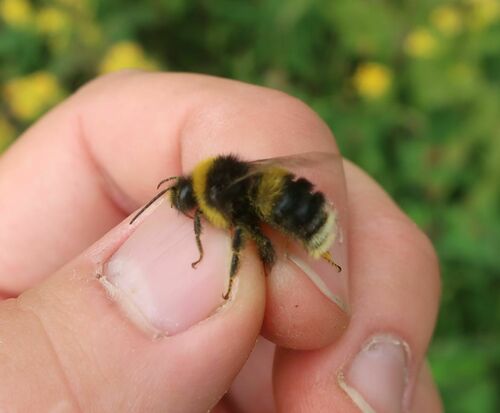
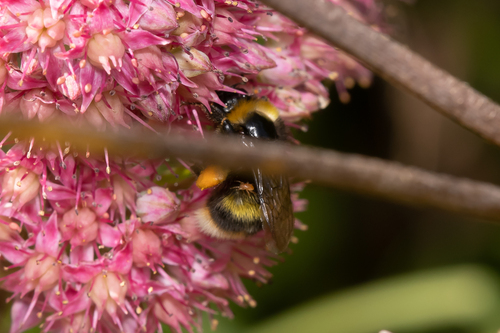
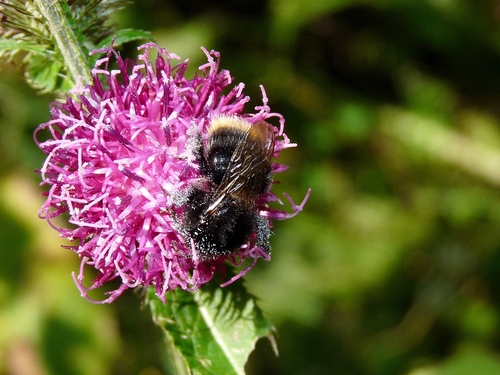
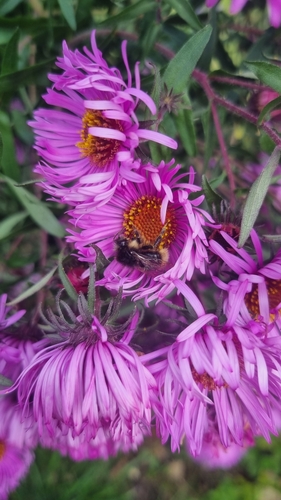
Bombus soroeensis (Fabricius, 1776)
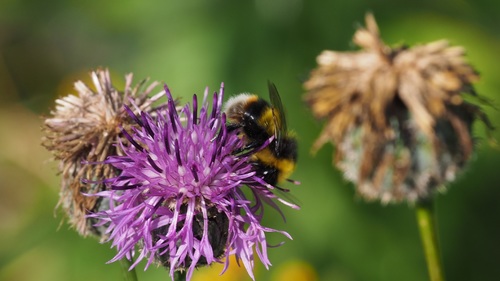
Source: Wikipedia
Synonyms 7
- 47,277 GBIF occurrences
- 1,817 iNaturalist observations
Bombus soroeersis is widespread and locally common in areas such as the Pyrenees (Rasmont et al. 2000, 2021), the boreal region, Fennoscandia, northern Russia, and Anatolia (Özbek 1998). In Estonia, it is one of the most common species from July (J. Devalez, pers. comm. 2023). However, it is declining in parts of its range, especially in areas with intensive land use change. Declines have been reported from the British Isles (Alford 1975), Belgium (Rasmont and Mersch 1988, Rasmont 1988, Rasmont et al. 1993), the Moscow region (Berezin et al. 1995), and Germany (Schwenninger 1997).
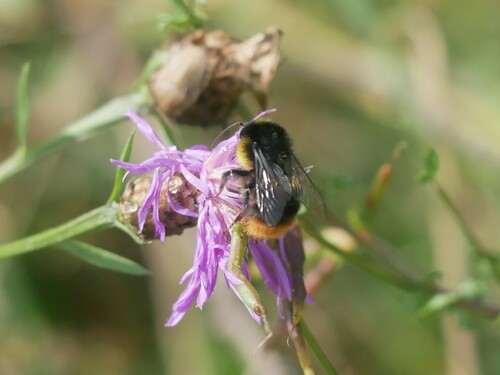
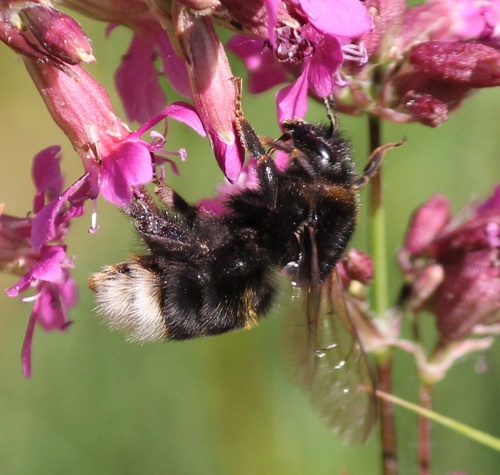
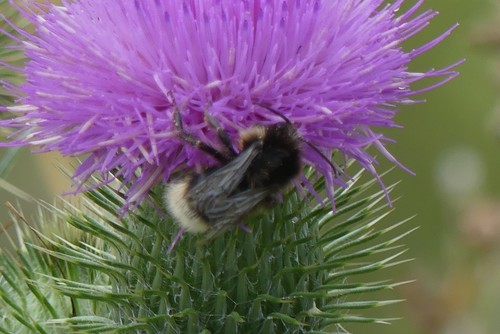
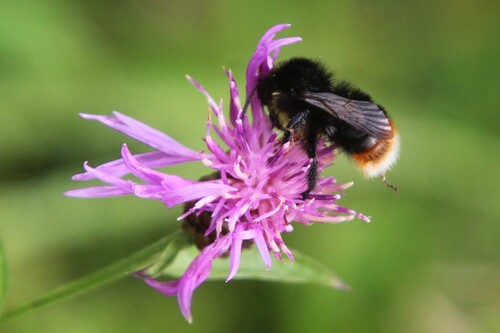
Bombus soroeensis is associated with heathlands and moorlands, but populations also exist in other biotopes, including pine forests, wooded meadows, chalk grassland, woodland and coastal cliffs and dunes, meadows, pastures and roadside, open clearings, and in the sub-alpine regions light woodland, and open hillsides. In the southern parts of its range, the species is more montane. The species has a generalist diet in that it can exploit a wide range of floral resources for both nectar and pollen. Based on the data available to the authors at the West-Palaerctic scale, Rasmont et al. (2021) report that queens mostly forage on flowers from the genera Vaccinium, Erica, Rubus, Rhododendron, and Stachys in decreasing order. Workers most frequently forage on Cirsium, Carduus, Rhododendron, Centaurea and Eryngium. Males mostly forage on Epilobium, Cirsium, Eryngium, Carduus and Centaurea. Bombus soroeensis is one of the few species that forages on Campanulaceae (genera Campanula, Jasione, Phyteuma).
Results from climate and land use change modeling also suggest that B. soroeensis is expected to lose a significant part of climatically suitable territories by the end of the century. Under the most severe climate change scenario modeled by Rasmont et al. (2015) (GRAS), the species could lose up to 73% of climatically suitable areas by 2100 (under a no dispersal model, and up to 57% under a full dispersal model). The latter authors placed the species into the category “High climate change risk”, reflecting the potential risk of climate change on this species. Projections of ecological niche models by Ghisbain et al. (2023), considering both land use change and climate change, also predict reductions in ecologically suitable areas for B. soroeensis in Europe by 2061-2080 (up to 30% under the SSP5-8.5 scenario). In addition, the potential for B. soroeensis to successfully disperse in the areas that will remain climatically and/or ecologically suitable is unknown. It also remains unpredictable whether the areas that are projected to appear “suitable” for the species in the future will remain clear of additional anthropogenic stressors not considered in the models of Rasmont et al. (2015) and Ghisbain et al. (2023). These additional (and likely synergistic) pressures include infrastructure development (for tourism and transport), pesticide use, pollution (by nitrogen and its subsequent impact on nitrophobic flowering plants, or by heavy metals), the spread of exotic invasive plants, the invasion of managed species and subsequent pathogen spillover, among other potential stressors known to substantially impact bumblebee populations.It is also unclear whether climatic events not considered in the models of Rasmont et al. (2015) and Ghisbain et al. (2023), such as the increased occurrence of droughts, heat waves, or storms will also modify the future range of this species. The resistance of B. soroeensis to acute heat stress is unknown. Previous works on another bumblebee model have demonstrated impaired cognition of these bees at elevated temperature (Gérard et al. 2022), as well as reduced fertility (Martinet et al. 2020), and research is needed as to whether B. soroeensis would be similarly threatened by repeated exposures to such temperatures.Whether the flowering plants the species is most strongly associated with will remain sufficiently abundant in the future is also unknown. The decline of Campanulaceae could negatively affect the populations of B. soroeensis in Europe. Vray et al. (2017) consider that the eradication of thistles could play a role in the increasing rarity of the species.
This species is included in the National Red Lists or Red Data Books of the following eight European countries: Belgium (Vulnerable; Drossart et al. 2019); Czechia (Hejda et al. 2017); Hungary (Vulnerable; Sárospataki et al. 2005); Netherlands (Critically Endangered; Reemer 2018), Norway (Least Concern; Artsdatabanken 2021) and Slovenia (Rare; Anonymous 2002). This species was listed in the previous National Red Lists of Estonia (Near Threatened; Lilleleht 2001) and the Netherlands (Critically Endangered; Peeters and Reemer 2003). It occurs in protected areas.General efforts aimed at pollinator conservation may maintain B. soroeensis populations. At local scales, appropriate conservation efforts include low-intensity grassland management (i.e. reduced grazing or cutting frequency) offering B. soroeensis an adequate vegetation structure for nesting, foraging, mating and overwintering. Suitable habitats should exhibit a very minimal to null exposure to land use stressors such as pesticides (insecticides, fungicides and herbicides), overgrazing, intensive plowing where the species builds its nest, and cutting plants before the peak of the flowering period (cf. the general works of Williams and Osborne 2007, Goulson et al. 2008, Cameron and Sadd 2020, Rasmont et al. 2021, Williams 2023 about bumblebee conservation). These areas should be connected to other stepping-stone habitats by ecological corridors to allow gene flow between populations of B. soroeensis. At macroscale, suitable efforts include (i) strengthened regulations about greenhouse gas emissions to mitigate the ongoing climate change and its subsequent impact on bumblebees and other insects, (ii) strengthened regulations regarding pesticide use to address the contamination of ecosystems, (iii) robust mitigation strategies for protecting and restoring habitats across anthropogenically transformed land, (iv) the creation of highly-connected flower rich areas (within and across nations) that would constitute ecologically suitable shelters for B. soroeensis and other insects, as well as hotspots of public awareness.
European regional assessment: Least Concern (LC)EU 27 regional assessment: Least Concern (LC)In the last assessment of European bees (Rasmont et al. 2014 in Nieto et al. 2014), B. soroeensis was listed as Least Concern based on (i) a presumed large overall population and (ii) the fact that it is unlikely to be declining fast enough to qualify for listing in a threatened category.There has not been signs of recovery in the localities where the species has declined, but overall the distribution of B. soroeensis in Europe continues to be very large and the populations relatively stable. A conservation status of Least Concern is therefore conservatively retained as part of this assessment for both Europe and the EU27 Member States. It must be noted, however, that changes in climate and land use could negatively impact the species in the next decades on the continent.
Gallery