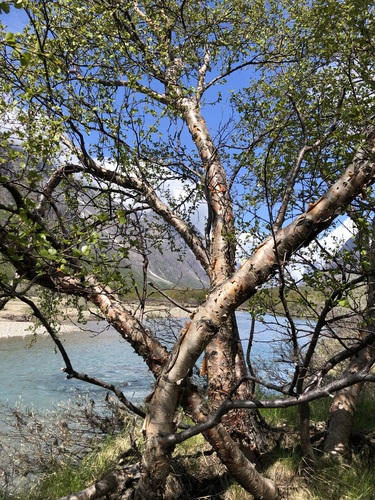
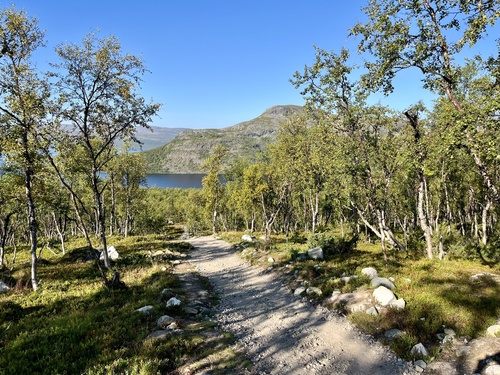
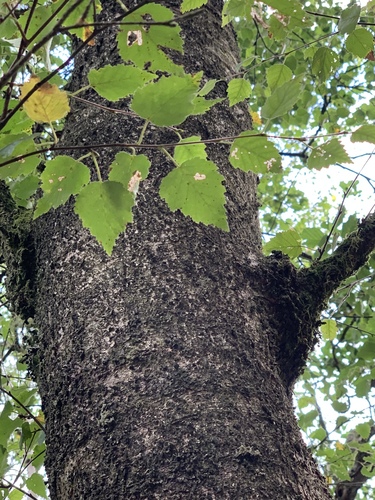
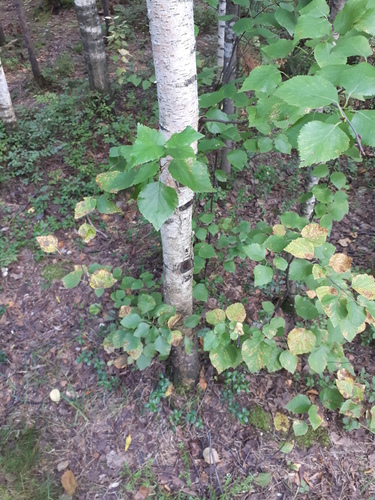
Betula pubescens Ehrh.
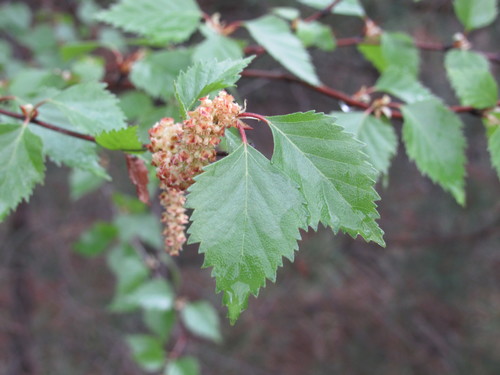
Source: Wikipedia
Synonyms 50
- 709,922 GBIF occurrences
- 20,955 iNaturalist observations
Common throughout Europe especially in upland areas (Blamey and Grey-Wilson 2003, Ohlemuller et al. 2006).
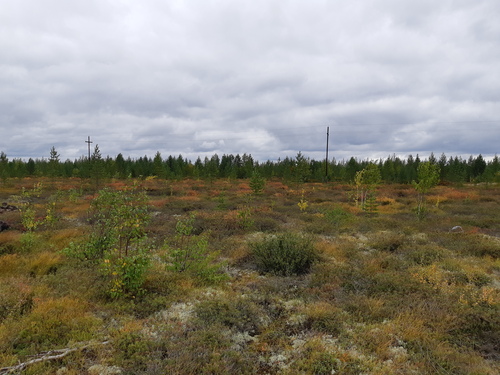
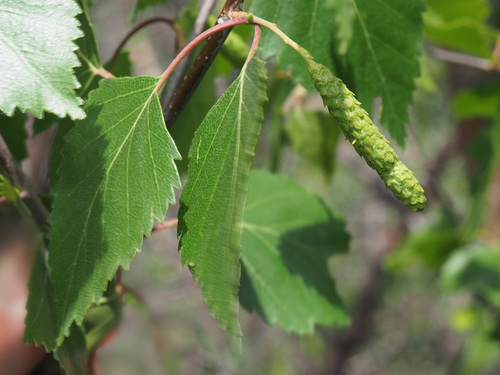
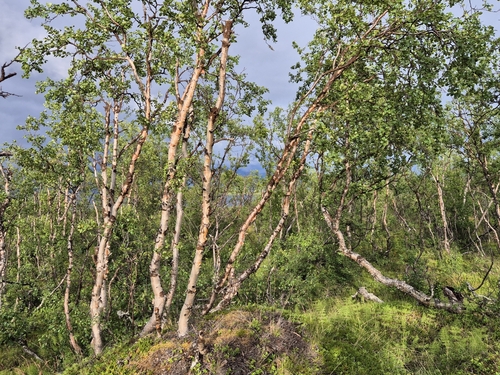
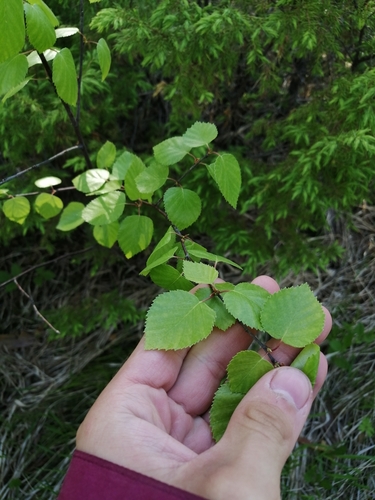
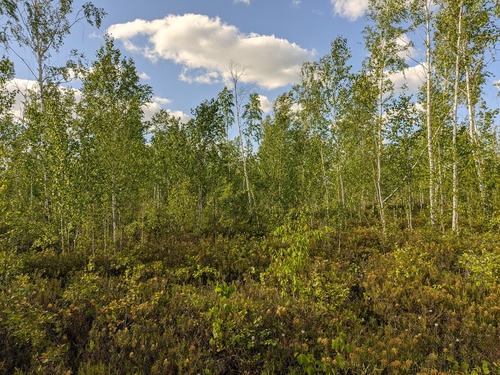
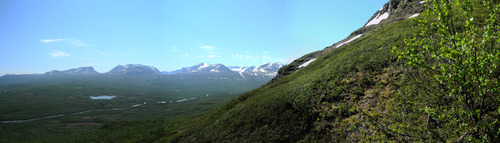
Downy Birch is a small deciduous broadleaved tree growing up to 20 metres tall with hairy leaves found in mixed woodlands, uplands and highlands, floodplains, as successional habitat on fens, mires and bogs, along streams and hill-side flushes, in peaty hollows, roadsides, and field boundaries. This tree grows in a variety of soil types but prefers wet, acidic, peaty soils. It is a generally short lived tree of wet woodland usually with alder, birch and willows as the predominant tree species. These woodlands occur on a range of soil types including nutrient-rich mineral and acid, nutrient-poor organic ones. It is able to rapidly colonise open unshaded areas, which have been burned such as open heathland and cut peat bogs. It is also planted widely in parks and urban areas (Botanical Society of Britain and Ireland 2023, Blamey and Grey-Wilson 2003, Maddock 2008).
There are currently no major threats reported to affect this species. In the future, it may be negatively affected through the loss of climatically suitable areas and low climatic suitability of locations outside its current range which is likely to extend further north (Ohlemuller et al. 2006).
Some areas of wet woodland habitat are protected under Annex 1 of the EC Habitats Directive. However, birch bog woodland occurs widely in scattered stands across the United Kingdom (Maddock 2008). It is listed as Critically Endangered in the national red list of Croatia (Nikolić and Topić 2005), Vulnerable in Hungary (Király 2007), Near Threatened in Luxembourg (Colling 2005), but Least Concern in Denmark (NERI 2007), Estonia (eElurikkus 2023), France (MNHN and OFB 2003-2023), Norway (Solstad et al. 2021), Sweden (SLU ArtDatabanken 2023), Switzerland (Moser et al. 2002) and the United Kingdom (Cheffings and Farrell 2005). The species occurs in numerous protected areas (UNEP-WCMC and IUCN 2023) and is included in ex situ germplasm (EURISCO 2023), and living collections (BGCI 2023).
European regional assessment: Least Concern (LC) EU 27 regional assessment: Least Concern (LC)Downy Birch (Betula pubescens) is a medium to large tree species with a palearctic distribution. The species is common throughout Europe and faces no major threats at this time. The species is used for timber, paper pulp, and medicinal purposes. Given its widespread distribution, stable populations and an absence of major threats, the species has been classified as Least Concern as it remains common throughout Europe.
Gallery