Betula pendula Roth
Source: Wikipedia
Synonyms 49
- 1,048,566 GBIF occurrences
- 76,588 iNaturalist observations
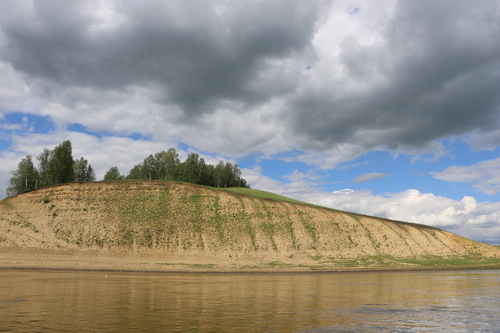
Silver Birch is most abundant in northern Europe where it follows the distribution of mixed forests where fairly large pure stands can be found. Its distribution is more patchy in southern and western parts of Europe where it is usually found at higher altitudes. In Spain, France, and Italy the populations have become more fragmented and further studies on the genetic variation of these southern populations is required. In general, this species produces a large amount of seed and is able to recolonise rapidly (Vakkari 2009).
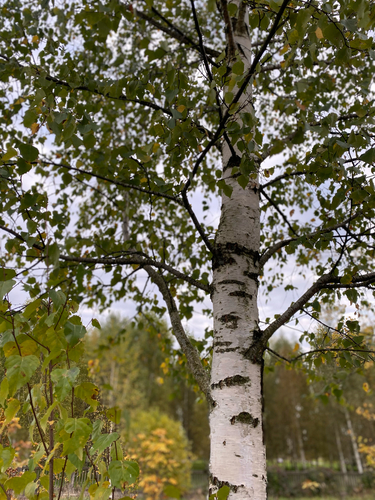
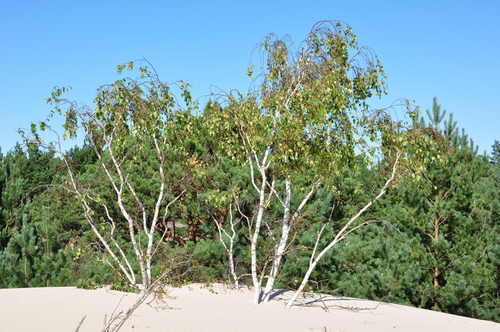
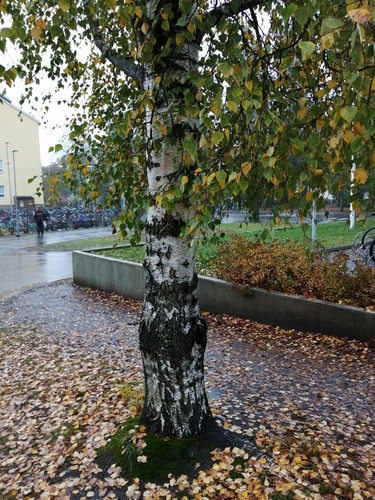
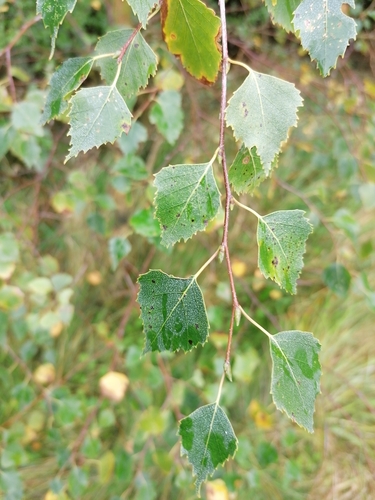
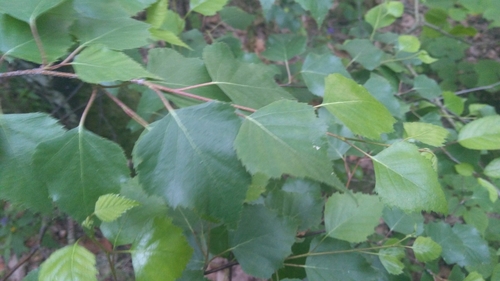
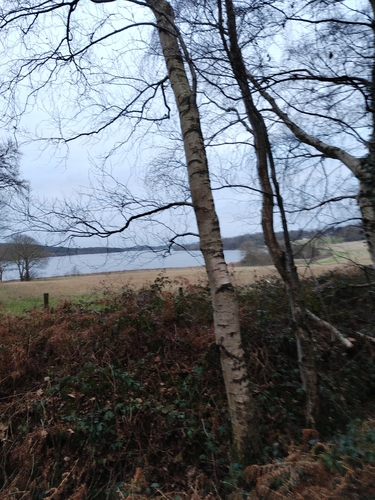
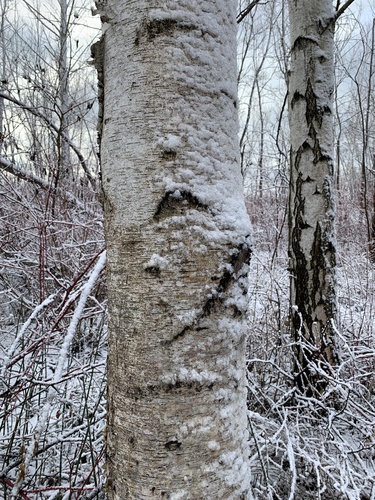
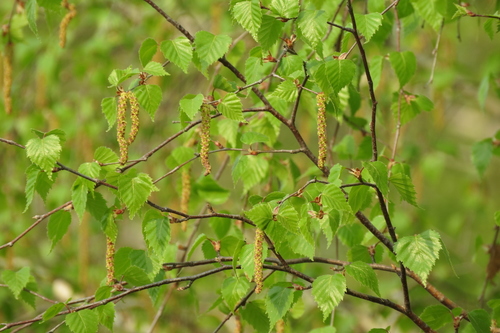
Silver Birch is a fast-growing deciduous broadleaved tree growing up to 30 meters tall found in mixed woodland, heathland, moorland, and mountainsides on well-drained, dry, sandy or acidic soils. Silver birch is an opportunistic species and produces a huge number of seeds that are wind dispersed. It is able to rapidly colonise open or burned ground and can become a threat to heathland. It is planted in gardens and is also found on roadsides and in parks. It hybridises with Betula pubescens and Betula aurata. The species is monoecious, male and female catkins are found in the same tree. The species is characterized by hairless leaves and young shoots and by very thick bark at the base of old trunks (Blamey and Grey-Wilson 2003, Vakkari 2009, Botanical Society of Britain and Ireland 2023).
Threats to the species are primarily a concern for industries based on the species as the extinction risk for the species is considered here to be low. Threats include native and introduced pests which are likely to be exacerbated by climate change. The Bronze Birch Borer (Agrilus anxius) is an insect pest endemic to North America which has, to date, not been detected in Europe. Introduction of the species has the potential to cause severe and catastrophic population loss for the species (Dubois et al. 2020).
Seeds are stored in the Millennium Seed Bank (Royal Botanic Gardens, Kew 2023) as well as several other institutions in Europe (EURISCO 2023). Specimens are also grown at dozens of botanical gardens worldwide (BGCI 2023). The species occurs in numerous protected areas throughout its range including Natura 2000 sites (UNEP-WCMC and IUCN 2023).It is listed as Least Concern in Denmark (NERI 2007), Estonia (eElurikkus 2023), Germany (Ludwig and Schnittler 1996), Luxembourg (Colling 2005), Norway (Solstad et al. 2021), Sweden (SLU ArtDatabanken 2023), Switzerland (Moser et al. 2002) and the United Kingdom (Cheffings and Farrell 2005).
European regional assessment: Least Concern (LC)EU 27 regional assessment: Least Concern (LC)Silver Birch (Betula pendula) is classified as Least Concern for both Europe and for the EU 27 Member States due to its widespread distribution, stable populations, and absence of major threats.
Gallery