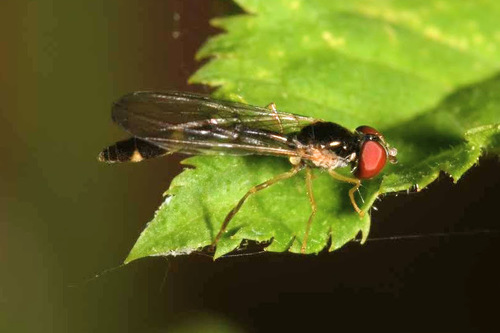
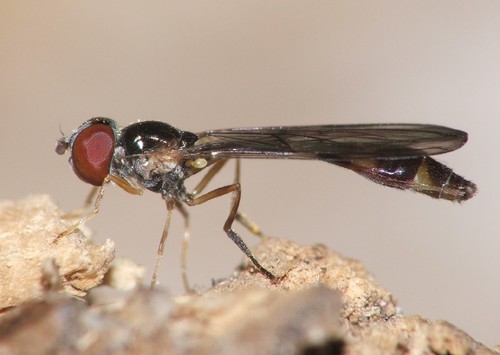
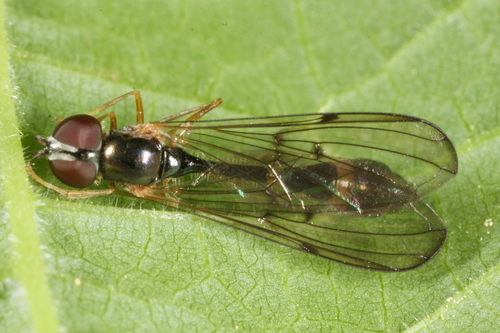
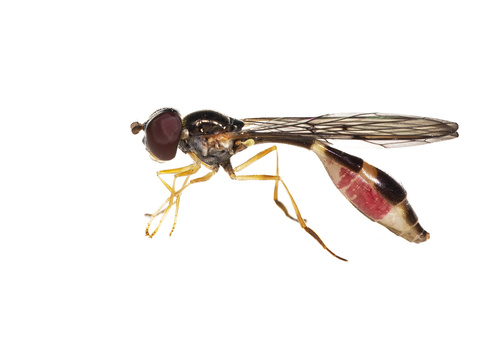
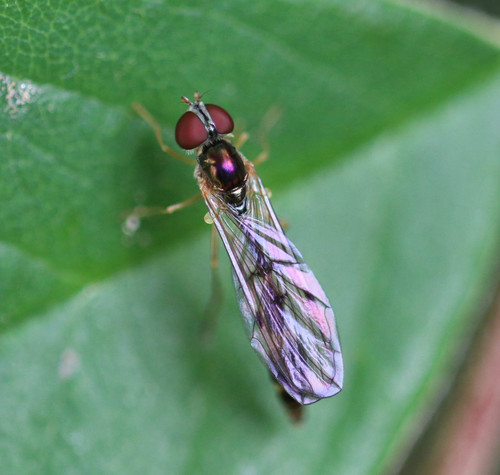
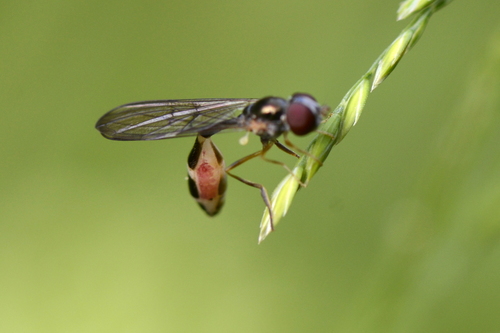
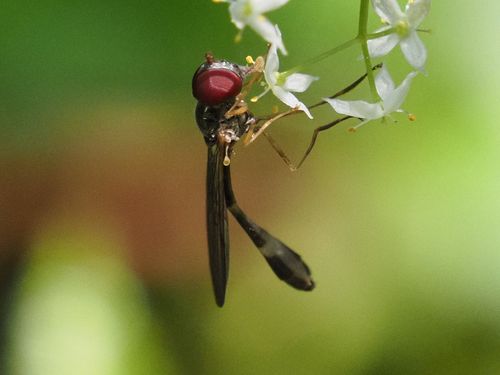
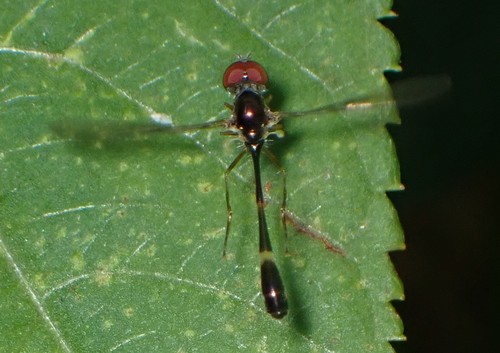
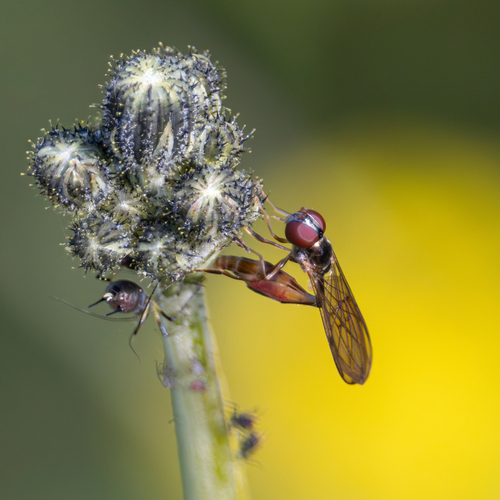
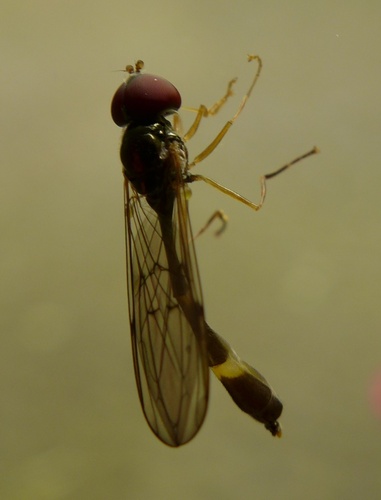
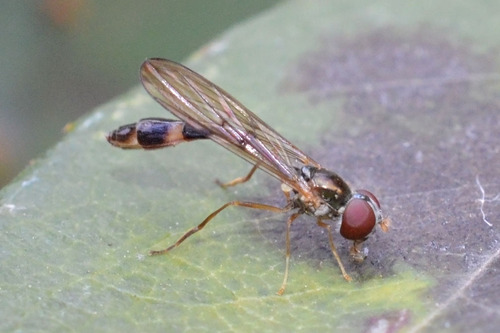
Baccha elongata (Fabricius, 1775)
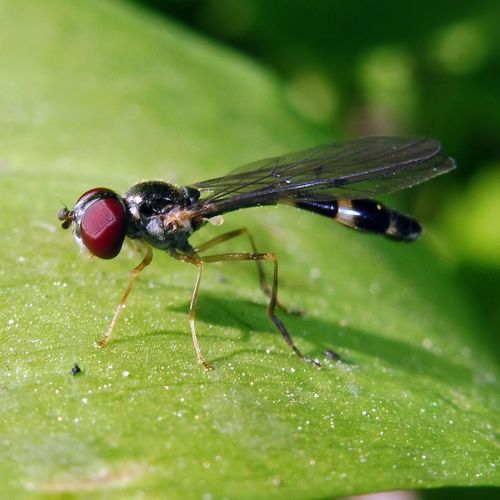
Source: Wikipedia
Synonyms 14
- 19,446 GBIF occurrences
- 2,794 iNaturalist observations
There is no information about population trends for this species.
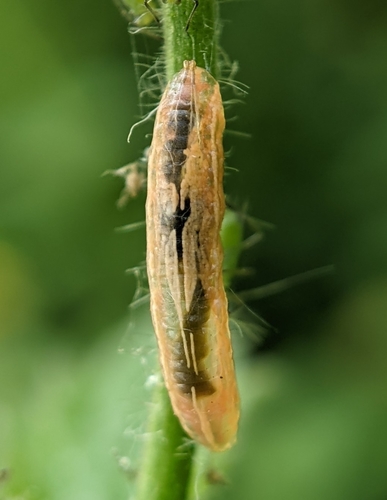
Baccha elongata occurs in forests, both coniferous and deciduous, both young and old; also in scrub woodland, hedgerows and suburban gardens. Adults fly from April to June and from July to September/October, visiting flowers of different species of Compositae, Rosaceae, Umbelliferae, Hedera, etc (Speight 2018). The larva is aphidophagous (Rotheray 1994).
Apart from general threats to biodiversity, there are no specific threats identified for this species in Europe.
There are no specific conservation actions for this species. Research is required into the taxonomy of Baccha species.
European regional assessment: Least Concern (LC)EU27 regional assessment: Least Concern (LC)This species does not meet the criteria for threatened categories in either Europe or the EU27. It is a widespread species, present in many habitats, and with large populations in most countries where recorded. There are no specific threats identified for this species. Therefore, this species is regarded as Least Concern in Europe and the EU27.
Gallery