Astragalus glycyphyllos L.
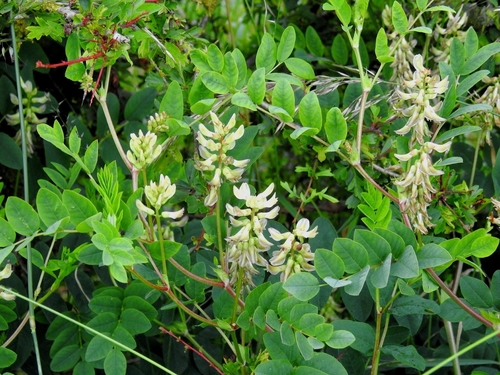
Source: Wikipedia
Synonyms 8
- 125,211 GBIF occurrences
- 11,912 iNaturalist observations
A generally local and abundant species that has been declining due to loss of suitable habitat, especially in the United Kingdom where populations are becoming increasingly isolated. It is generally rarer in southern Europe and the Caucasus (Botanical Society of Britain and Ireland 2023, Plants for a Future 2023).
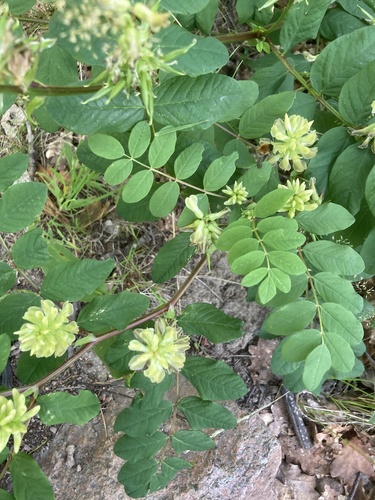
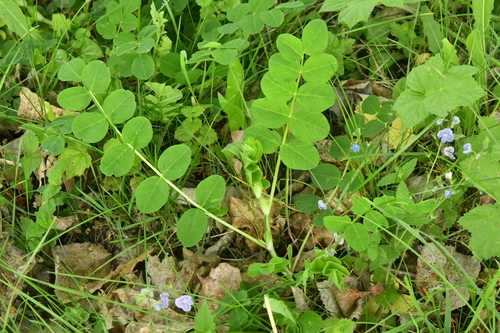
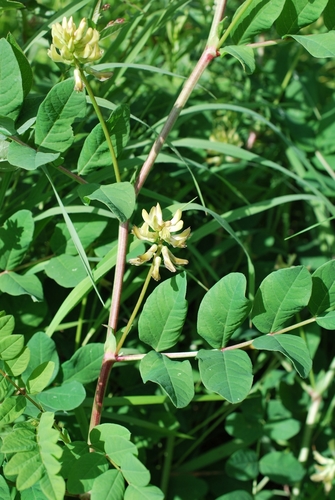
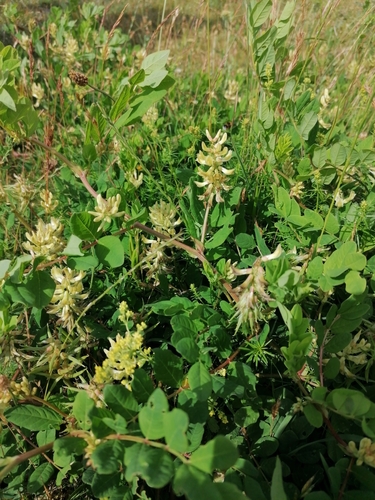
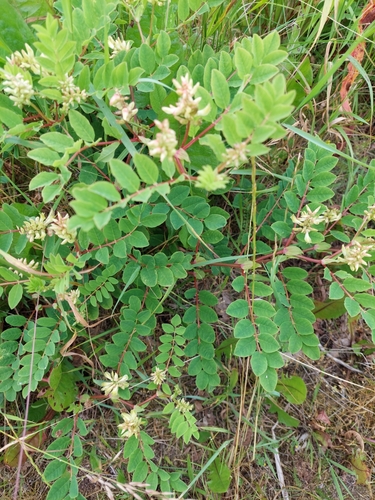
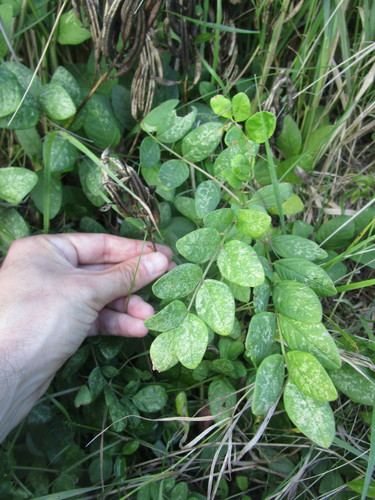
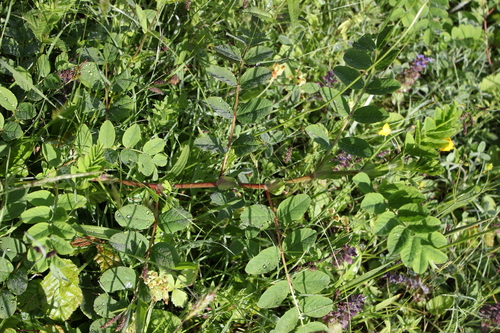
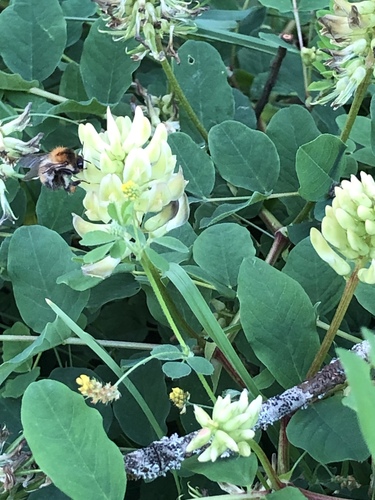
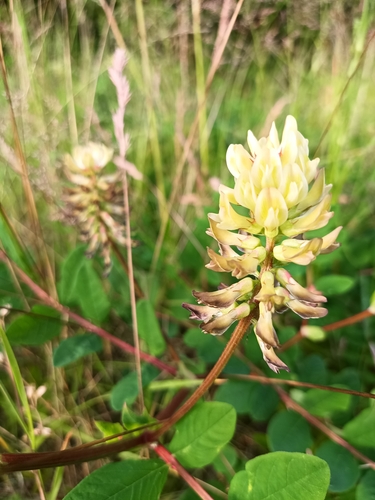
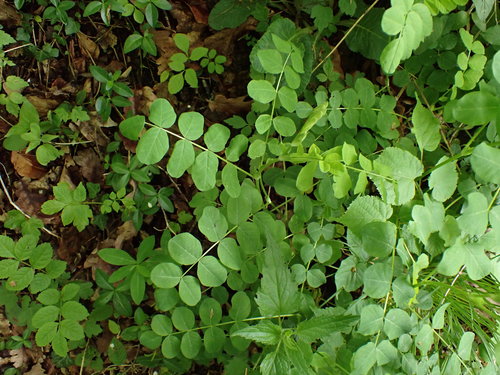
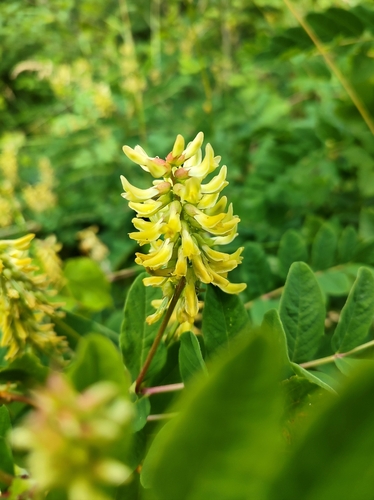
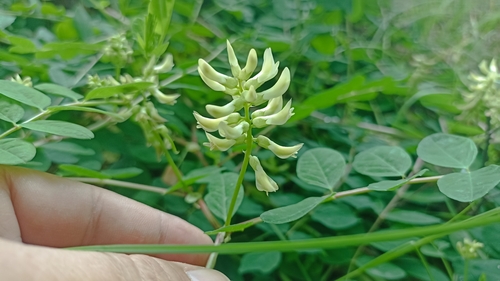
A medium to tall straggling perennial herb with pale green or yellowish flowers which is found in rough grassy habitats, open woodland and scrub, roadsides, railway banks, embankments, cliffs, chalk pits and montane areas. It grows in all soil types but thrives on calcareous soils with minimal grazing. It is cultivated in gardens and flowers from June to August (Blamey and Grey-Wilson 2003, Botanical Society of Britain and Ireland 2023, Talavera et al. 1999).
This species has declined in the UK due to the loss of rough grassland and tidying up of roadside banks and verges, stone walls and changes in land use management (Botanical Society of Britain and Ireland 2023).
Liquorice Milkvetch has been listed as Critically Endangered in the national Red List of Finland (Hyvärinen et al. 2019), but is considered as Least Concern in Denmark (Aarhus Universitet 2019), Estonia (eElurikkus 2023), Germany (Ludwig and Schnittler 1996, Metzing et al. 2019), Luxembourg (Colling 2005), Norway (Solstad et al. 2021), Switzerland (Moser et al. 2002) and the United Kingdom (Cheffings and Farrell 2005).In Bulgaria, this plant is described as scarcely spread, with single populations with small areas and limited resources of no economic importance. It occurs in national parks (Evstatieva and Hardalova 2004), and many protected areas, including Natura 2000 sites (UNEP-WCMC and IUCN).
European regional assessment: Least Concern (LC) EU 27 regional assessment: Least Concern (LC)Liquorice Milkvetch (Astragalus glycypyllos) is a widespread and common herbaceous plant which occurs throughout most of Europe. The species has undergone some population decline at the margins of its range but has a very large population that is currently not at risk of extinction. It is listed as Least Concern for both Europe and the EU27 Member States due to its widespread distribution and the lack of major threats.
Gallery