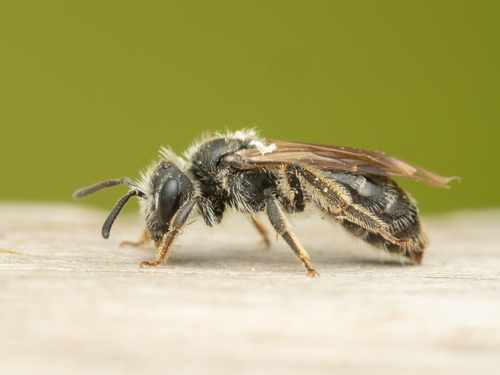
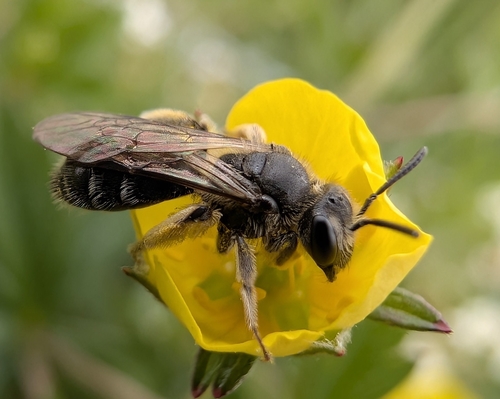
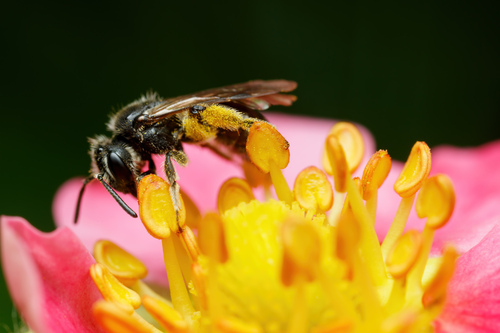
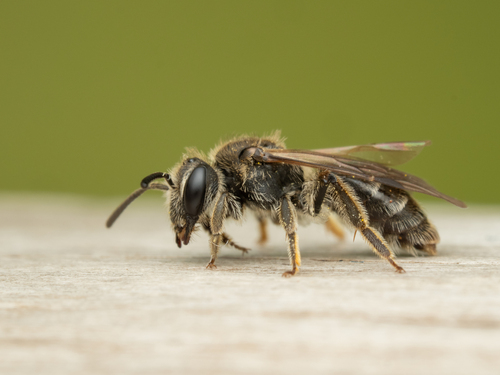
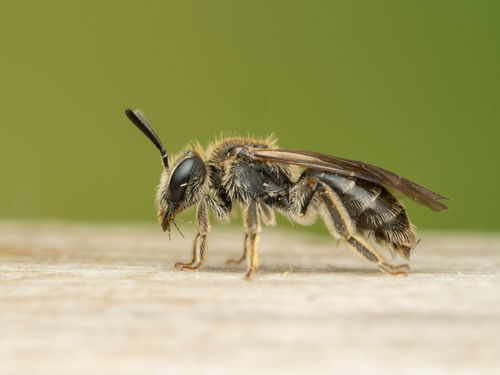
Andrena subopaca Nylander, 1848
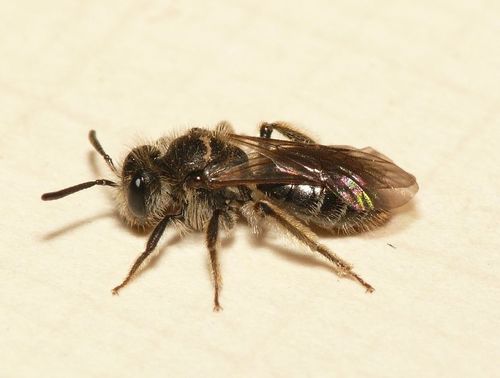
Source: Wikipedia
- 18,514 GBIF occurrences
- 40 iNaturalist observations
The populations are presumably large across Europe, but there is no information available on the population trend of this species. It is generally common and abundant in historical and contemporary collections, and so populations are considered to be stable.
Andrena subopaca mostly inhabits moist areas such as forest edges, clearings in floodplains, mountain and sub-alpine meadows. In the south of its range, it occurs mostly in mountains or river valleys. In Crimea, it may have two generations per year (beginning in April) whereas in other regions of Ukraine it is predominantly found from May to June and only has one generation. It is widely polylectic. The females visit flowers of many plants of the families Apiaceae, Asteraceae, Brassiaceae, Campanulaceae, Caryophyllaceae, Ericaceae, Lamiaceae, Liliaceae, Plantaginaceae, Ranunculaceae, Rosaceae and Scrophulariaceae, but more often on Rosaceae and Asteraceae (see also Wood and Roberts 2017). It nests in small colonies, often in open fields. Its brood parasite is Nomada flavoguttata (Kocourek 1966, Osytshnjuk 1977.
There are no specific threats documented for this species; presumably this species may be a target of general threats affecting European bees as reduction of suitable habitats by changes in land use (transformation of permanent flower rich areas into mono-agricultural landscapes), inappropriate field management (cutting the vegetation before or during peak flowering period), losing proper nesting sites due to agricultural activities (tilling and ploughing), and chemical exposure due to pesticide and herbicides treatments.
This species is included in National Red Lists or Red Data Books of Estonia (Least concerned; Soon 2020) and Norway (Least Concerned; Artsdatabanken 2021). It occurs in protected areas as Duna Drava National Park, Hungary (Jozan 1998), Piatra Craiului National Park, Romania (Tomozei 2004), Alpi Marittime Park, Italy (Schmid-Egger 2011). Further research is required to determine the population size, trends and threats to the species.
European regional assessment: Least Concern (LC)EU 27 regional assessment: Least Concern (LC)Andrena subopaca is listed as Least Concern given its wide distribution and large populations. There has been no material change since 2014, and so the classification of Least Concern is retained.
Gallery