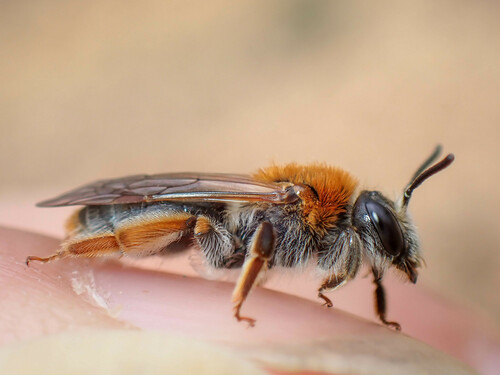
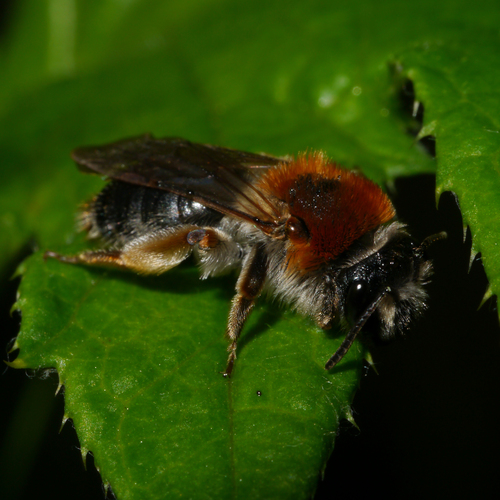
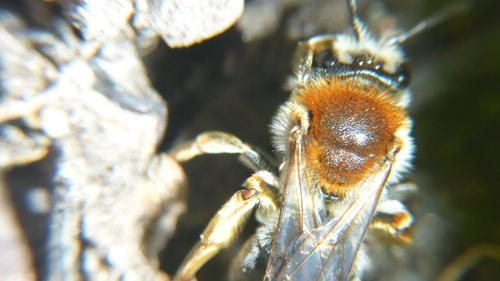
Andrena haemorrhoa (Fabricius, 1781)
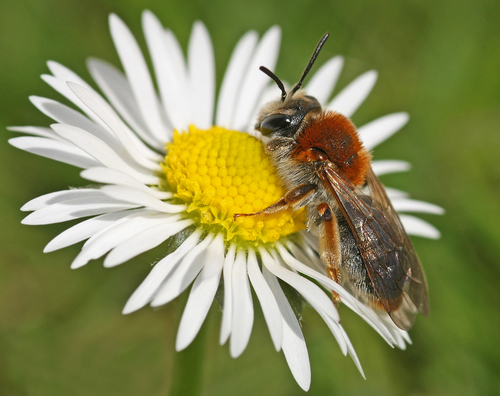
Source: Wikipedia
Synonyms 4
- 89,818 GBIF occurrences
- 12,607 iNaturalist observations
Populations are presumed to be large, but there is no clear information available on the population trend of the species. However, it is one of the most common Andrena species in both historical and contemporary collections, and so populations are considered to be stable.
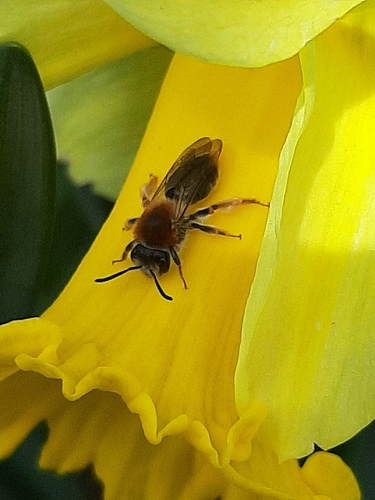
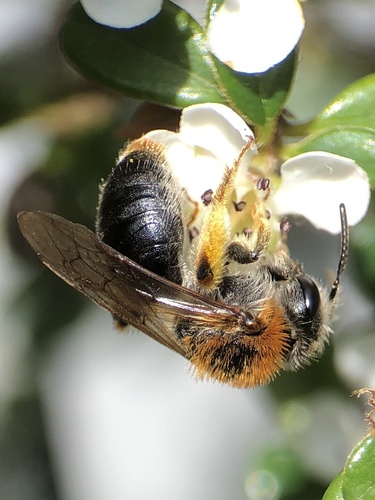
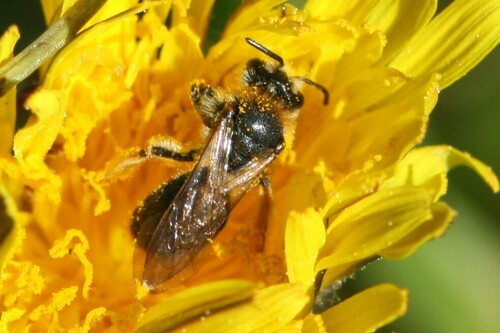
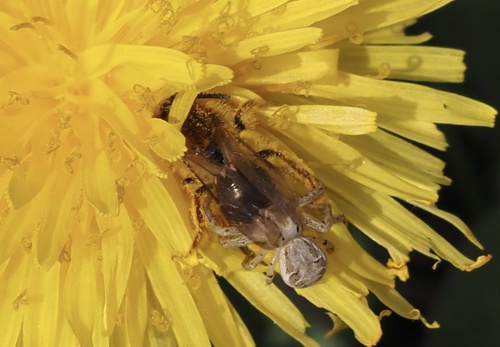
Andrena haemorrhoa occurs in several habitats up to 2,000 m asl. The species flies early in the spring, usually from the end of March to May, although in the Carpathian Mountains specimens have been collected during June and early July. Females forage on different flowers plants, such as Apiaceae (Carum carvi), Asteraceae (Taraxacum, Tussilago, Petasites), Brassicaceae (Rapistrum, Barbarea arucata), Campanulaceae (Campanula patula), Ericaeae (Vaccinium), Ranunculaceae (Ficaria verna), Rosaceae (Potentilla, Malus, Rubus, Prunus, Crataegus, Pyrus) and Salicaeae (Salix) (Osytshnjuk 1977, Dylewska 1987). Pollen analysis confirms that A. haemorrhoa is broadly polylectic (Wood and Roberts 2017).
There are no specific threats documented for this species, but it may be a target of general threats affecting European bees. These include the reduction of suitable habitats by land use change, such as the transformation of large plant diversity areas into mono-specific agricultural ones, or inappropriate field management, which includes cutting the vegetation before or during the peak of the flowering period. This leads to the loss of proper nesting sites due to agricultural activities such as tillage or chemical exposure to pesticide and herbicide treatments.
This species is included in National Red List of Ireland (Least Concern; Fitzpatrick et al. 2006), Estonia (Vulnerable; Soon 2020) and Norway (Least Concerned; Artsdatabanken 2021). Its distribution overlaps with protected areas, including the Duna Drava National Park (Jozan 1998) and Latranyi Puszta Nature Conservation Area (Jozan 2003) in Hungary. It was also found in Vanatori Neamt Natural Park (Tomozei 2005) and Macin Mountains National Park in Romania (Ban and Tomozei 2006). Further research should be conducted to determine the population size and trends, and threats to the species.
European regional assessment: Least Concern (LC)EU 27 regional assessment: Least Concern (LC)This species is listed as Least Concern in view of its wide distribution and presumably large population. It is one of the most common European Andrena species, and a classification of Least Concern is most appropriate.
Gallery