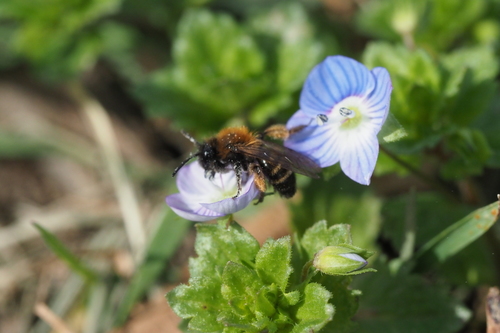
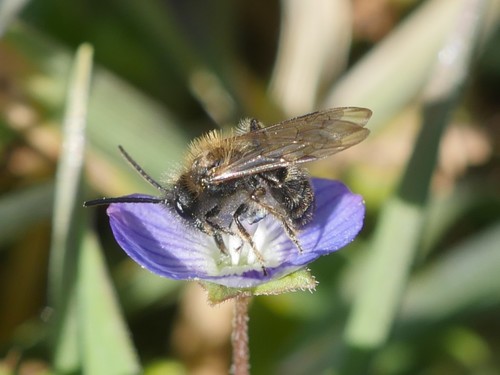
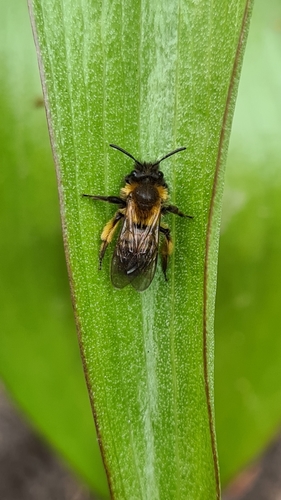
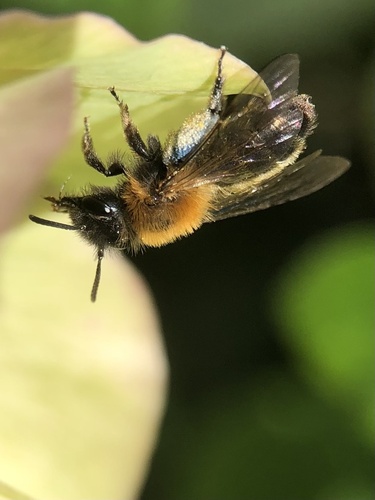
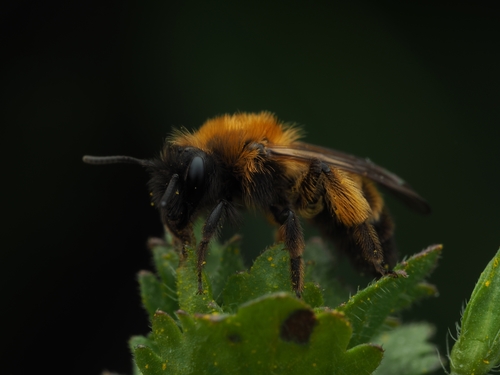
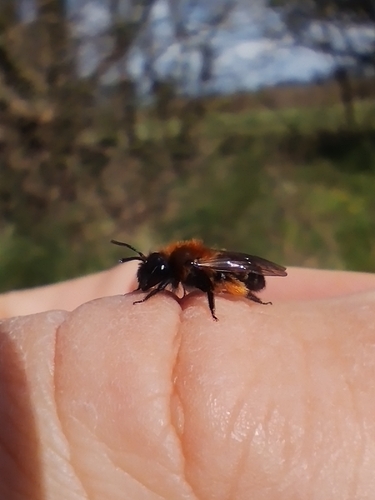
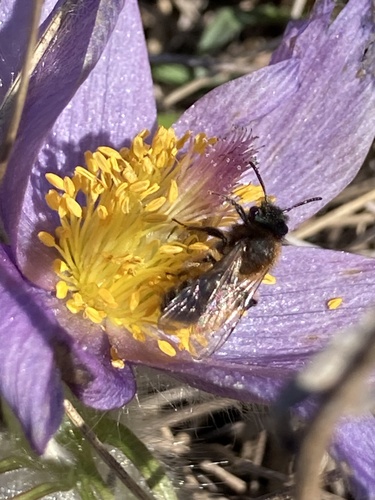
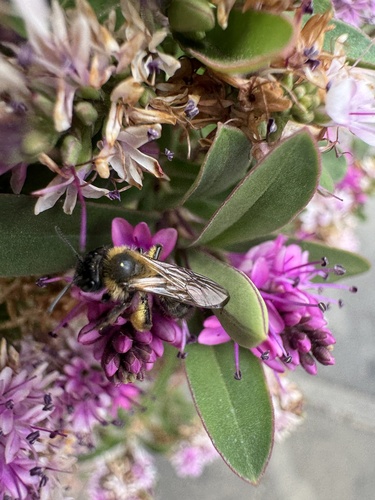
Andrena bicolor Fabricius, 1775
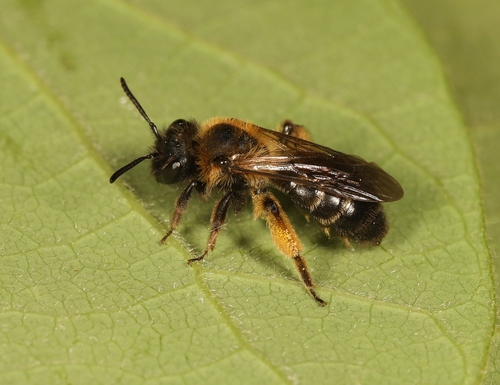
Source: Wikipedia
Synonyms 21
- 37,736 GBIF occurrences
- 3,527 iNaturalist observations
Populations are presumed to be large, and the species is common and abundant across its range. There is no evidence of decline.
Andrena bicolor occurs in a variety of humid and dry habitats, including open woodlands, calcareous grasslands and orchards up to 1,800 m asl in the Alps (Osytshnjuk 1977, Else 2006). The species flies in two generations from the end of March to August on Salicaceae (Salix), Asteraceae (Tussilago farfara, Petasites, Taraxacum officinale, Leontodon autumnalis, L. hispidus, Tragopogon), Euphorbiaceae (Euphorbia), Iridaceae (Crocus scepusiensis), Boraginaceae (Pulmonaria), Liliaceae (Gagea lutea), Ranunculaceae (Ficaria verna), Rosaceae (Potentilla verna, P. humifisa, Rubus, Prunus, Cerasus), Primulaceae (Primula elatior), Brassicaceae (Cardamine, Capsella bursa pastoris, Sinapis arvensis, Dentaria glandulosa, Calepina irregularis), Cistaceae (Helianthemum), Ericaceae (Vaccinium myrtillus), Asparagaceae (Scilla), Campanulaceae (Campanula, Jasione montana), Brassicaceae (Berteroa incana, Ballota nigra, Arabis), Lamiaceae (Thymus), Boraginaceae (Echium vulgare), Rosaceae (Rubus), Convolvulaceae (Convolvulus arvensis), Resedaceae (Reseda lutea) and Malvaceae (Malva). In Ukraine, the species is considered one of the main pollinators of cherry trees (Osytshnjuk 1977, Dylewska 1987).See also Wood and Roberts (2017) and Praz et al. (2019).
The threats to this species are unknown. However, A. bicolor may presumably be threatened by the reduction of suitable habitat through intensive forestry, changes in land use (transformation of rich flower areas into monospecific agricultural fields), inappropriate field management (cutting the vegetation before or during the peak of the flowering period and overgrazing), losing proper nesting sites due to agriculture activities (such as tilling) and chemical exposure due to the treatments with pesticides and herbicides.
This species is included in National Red Lists or Red Data Books of two European countries: Estonia (Soon 2020; Least Concerned) and Norway (Least Concerned; Artsdatabanken 2021). Its wide distribution overlaps with protected areas, such as Piatra Craiului National Park, Romania (Tomozei 2004) and Duna Drava National Park, Hungary (Jozan 1998). There are no conservation actions in place for this species.Further research should be conducted to determine the population size, trends and threats to the species.
European regional assessment: Least Concern (LC)EU 27 regional assessment: Least Concern (LC)This species is listed as Least Concern as the species is widespread and populations are observed to be large; it is one of the most common Andrena species in Europe. There has been no material change since 2014, and so a classification of Least Concern is retained.
Gallery