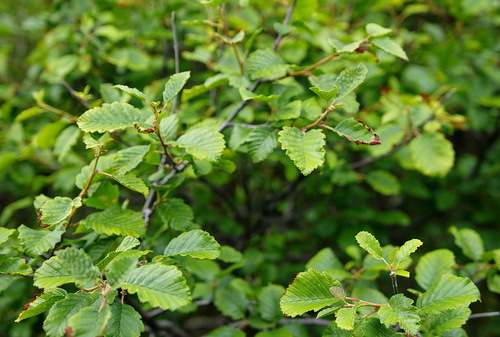
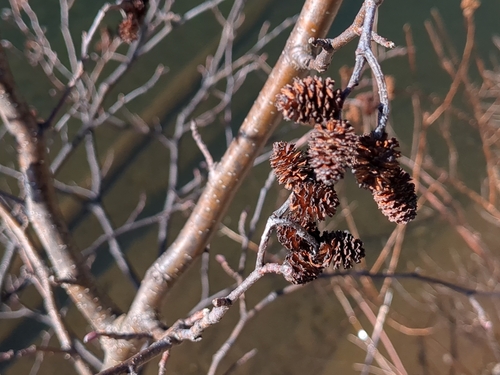
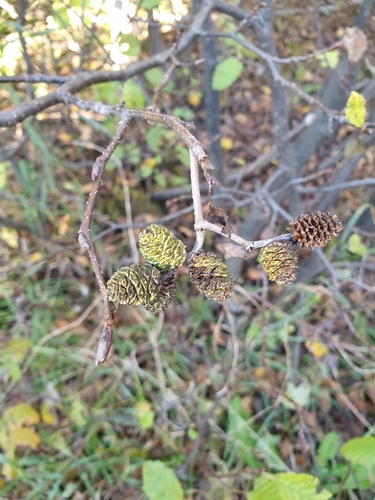
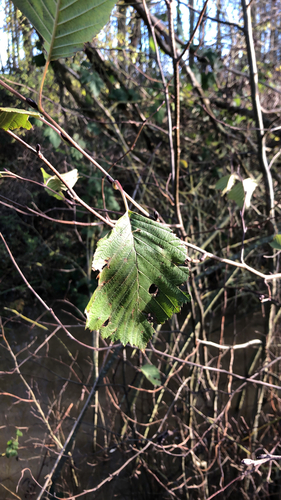
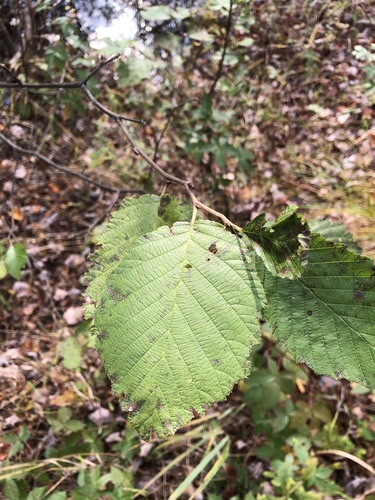
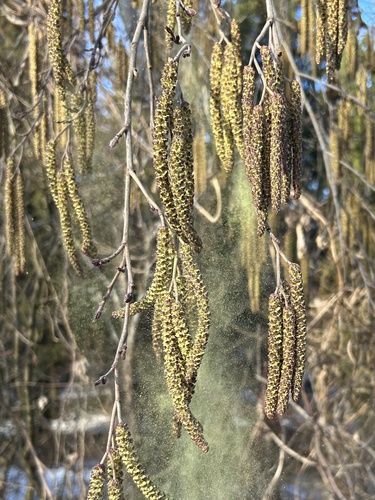
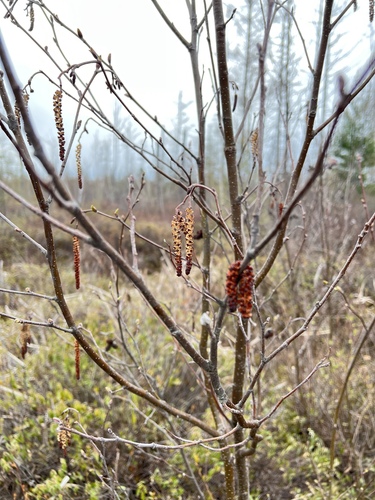
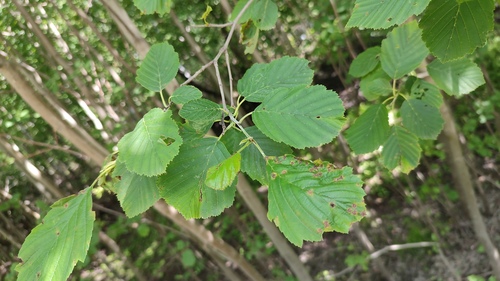
Alnus incana (L.) Moench
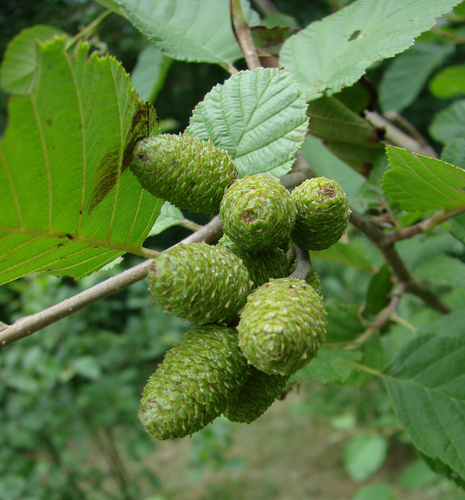
Source: Wikipedia
Synonyms 44
- 365,658 GBIF occurrences
- 42,593 iNaturalist observations
There is no detailed population information available for this widespread species, but is likely to be large.
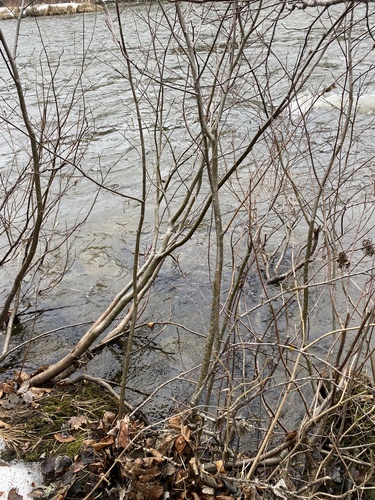
This species occurs as a deciduous shrub or small tree and colonises banks of rivers and streams, lake shores and damp meadows. It also found in bogs and nutrient rich swamp communities. It is tolerant of various soil types, moisture and texture classes. It is frost resistant and is able to grow in the northern forests of Scandinavia and European Russia, being only restricted by the presence of permafrost. It is a pioneer species and is able to regenerate swiftly from its root suckers and can thus rapidly colonise open disturbed sites. Gaps in the canopy cover created by activities such as fire and logging can result in this species forming dense pure thickets. It can form hybrids with Alnus glutinosa but this is a rare occurrence as the two species flowering periods do not usually overlap (Houston Durrant et al. 2016).
This species has few pest and diseases and does not tend to be targeted by grazing animals. It has been found to be the most resistant of the European Alnus to the oomycete Phytophthora alni (Webber et al. 2004, Houston Durrant et al. 2016).
This species is reported in 99 ex situ collections (BGCI 2016), however they may or may not be from a European source. It is listed as Least Concern in the National Red Lists of Estonia (Lilleleht 2008), Norway (Kålås et al. 2010) and Switzerland (Moser et al 2002).
European regional assessment: Least Concern (LC)EU 28 regional assessment: Least Concern (LC)This species has a very wide distribution and there are no major threats impacting this species across its European range. It is therefore not considered to be threatened and is evaluated as Least Concern.
Gallery