Alnus glutinosa (L.) Gaertn.
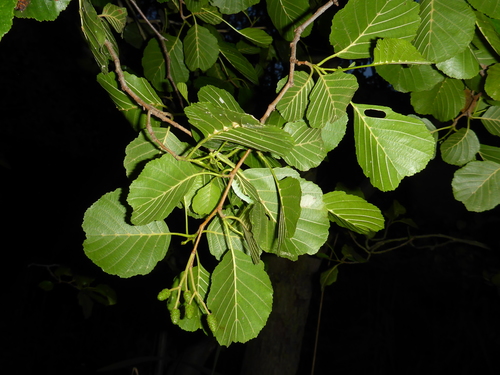
Source: Wikipedia
Synonyms 46
- 1,084,635 GBIF occurrences
- 56,065 iNaturalist observations
Across its range, this species occurs in isolated subpopulations which has led to extensive genetic diversity across populations. Although population size has not been quantified it is not believed to approach the thresholds for it to be considered threatened. It is considered common in some habitats. As the species grows in wet habitats, and this habitat is declining due to human impact, the species may be declining in some areas.
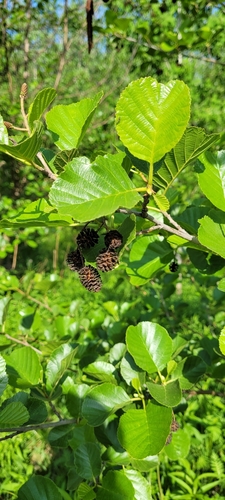
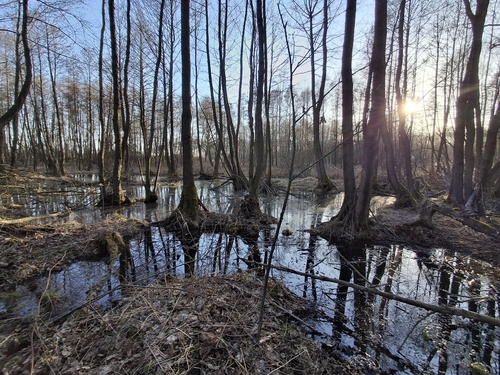
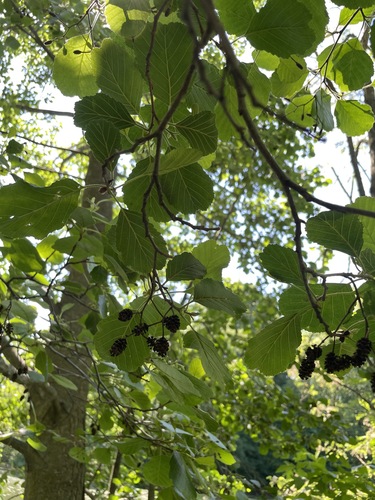
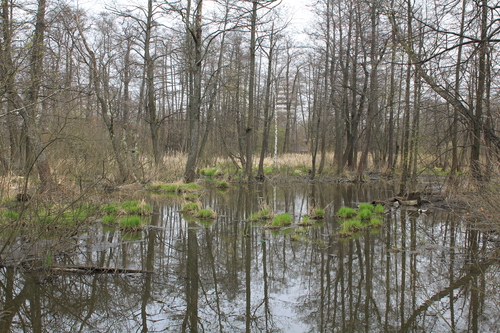
A large deciduous tree growing to a height of 20-30 m, this species favours a moderate to cold climate and prefers damp or wet soils. It grows well in acidic soils and its growth is reduced under the alkaline or near-neutral conditions that are desirable for many other species. This species is commonly found in hilly regions, along the banks of streams and rivers, in damp marshy woods and riverside woodlands. It grows alongside spring-lines in oak woods and damp hollows or on wet slopes in high rainfall areas, away from the waterside. This species can also grow on poor quality soil due to nodules on the roots with nitrifying bacteria. The roots of this species can grow into open water as dense masses of hard, dark red cords which adds support to the banks. It can rapidly seed into open sites, producing even-aged stands of mature trees, but seedlings are very shade and drought sensitive, so regeneration in woodland is often poor. This species does not tolerate temperatures of below zero for more than six months of the year and prefers areas with annual rainfall in excess of 500 mm.
Subpopulations are scattered which has resulted in high genetic variation between subpopulations and high specificity to local conditions. If habitat loss occurs, this will result in a narrowing of the gene pool and replanting efforts may be challenged by limited ability to survive outside of specific conditions. Adaptation to specific local conditions could also present a threat in future as climate change alters water regimes. This does not present a significant threat at the moment, but could present a greater threat in the future.A recently evolved fungus, Phytophthora alni, has killed 10% of trees in south England and Wales, and may have a wider impact in the future (Webber 2004).
Due to the genetic differentiation between subpopulations, it is important to protect the existing diversity of natural subpopulations. This species is listed as Least Concern in the National Red Lists of Denmark (NERI 2005), Estonia (eBiodiversity Estonia 2012), Norway (Artsdatabanken 2010), Luxembourg (Colling 2005), Sweden, Switzerland (Moser et al. 2002) and Great Britain (Cheffings and Farrell 2005). There are over 100 known ex situ collections found in botanic gardens and arboreta world wide (BGCI 2015).
European regional assessment: Least Concern (LC) EU 28 regional assessment: Least Concern (LC) Alnus glutinosa is a large tree that is found throughout most of Europe and beyond. It has a widespread and large European population. Due to the scattered nature of subpopulations, potential future threats exist, but these are not considered significant at present. The species is therefore evaluated as Least Concern.
Gallery