Agrimonia eupatoria L.
Source: Wikipedia
Synonyms 47
- 492,309 GBIF occurrences
- 34,920 iNaturalist observations
There has been a slight decline in the UK (BSBI/BRC 2024). A regional survey to study the population dynamics of this species in Sweden showed that it was intermediately abundant yet patchy in distribution, but revealed the subpopulations were small (less than 100) and restricted to grassland fragments on road verges (Kiviniemi 2002). In Belgium, this species is declining (Van Landuyt et al. 2006). Throughout the areas in which Agrimonia eupatoria and Agrimonia procera occur, hybrids are not rare (Castroviejo et al. 1998).
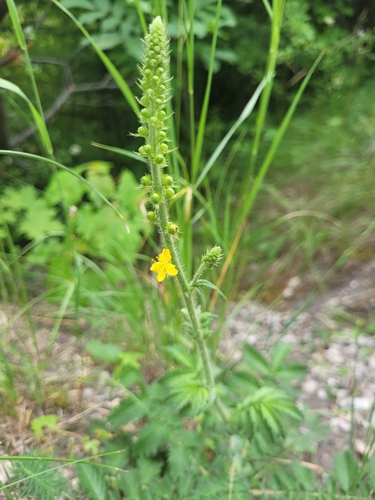
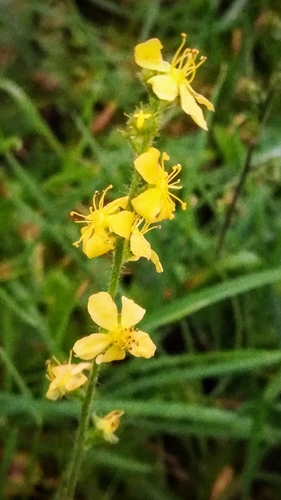
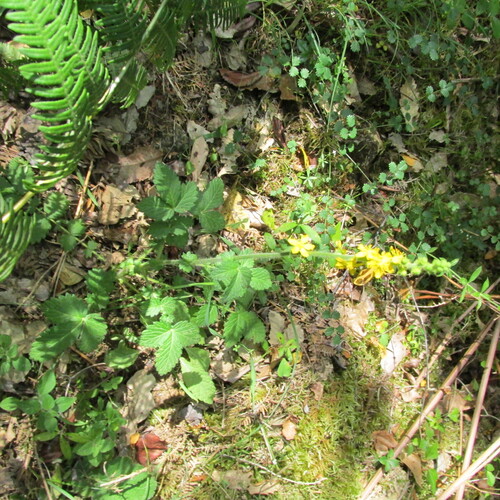
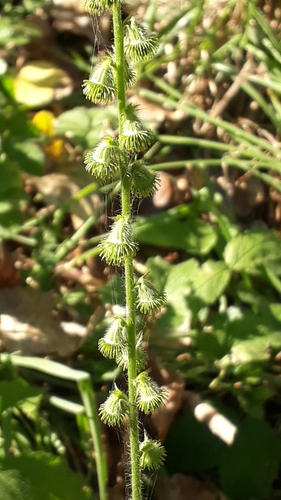
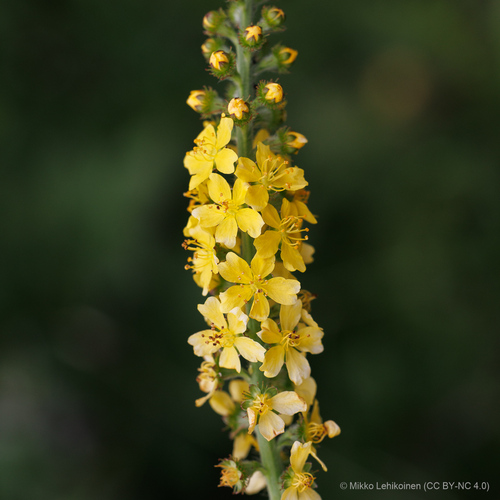
Agrimony is a rosette-bearing hardy perennial herb which can be found on the fringes of forests and woodland borders, hedgebanks and mounds, thorny thickets, pasture land, field borders, open grassland, roadsides, railway banks and waste places. It occurs on basic to neutral soils and reproduces and spreads by seed (Castroviejo et al 1998, BSBI/BRC 2024). It flowers between June and September. The fruits and seeds are sticky and adhere to animals, especially fur, and their adhesive properties may aid dispersal in fragmented habitats (Kiviniemi 1996).
It is locally threatened by land abandonment (i.e. succession of grasslands) and land development, for example in Cyprus (Tsintides et al. 2007).
There are no conservation actions in place. However, appropriate land management of suitable habitats such as field borders and grasslands is required in the areas where this species is declining. This species was last recorded from Cyprus in 1905 and is listed as Critically Endangered C2a(ii) and now exists in only two sites at Spilia and Pedoulas, at an altitude of 1,000-1,150 m where 137 plants in total were counted (Tsintides et al. 2007). The species is included on several national Red Lists as follows:
- Denmark: Least Concern (Aarhus Universitet 2019).
- Estonia: Least Concern (eElurikkus 2024).
- France: Least Concern (UICN France et al. 2018).
- Germany: Least Concern (Ludwig and Schnittler 1996, Metzing et al. 2018).
- Luxembourg: Least Concern (Colling 2005).
- Switzerland: Least Concern (Moser et al. 2002, Bornand et al. 2016).
- United Kingdom: Least Concern.
In Bulgaria, this species is protected in National Parks but is scarcely spread, with single populations with small areas and limited resources of no economic importance (Evstatieva and Hardalova 2004).In Belgium, this species is declining (Van Landuyt et al. 2006).The species is included in the living collection of at least 137 botanical gardens (BGCI 2024). It occurs in many protected areas, including Natura 2000 sites (UNEP-WCMC and IUCN 2024, GBIF.org 2024).
European regional assessment: Least Concern (LC) EU 27 regional assessment: Least Concern (LC)Although this species is locally declining and is considered to be threatened in Belgium and Cyprus, it is considered to be Least Concern for both Europe and for the EU27 Member States due to its widespread distribution, stable populations and no major threats in the majority of its range.
Gallery