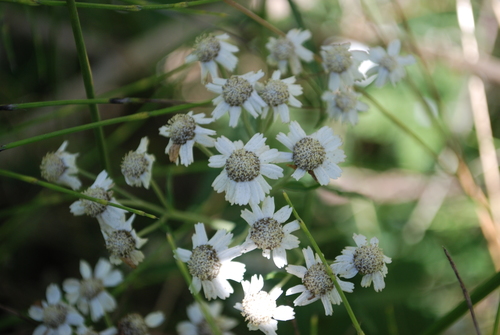
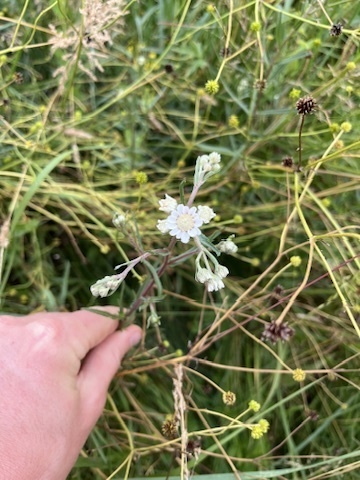
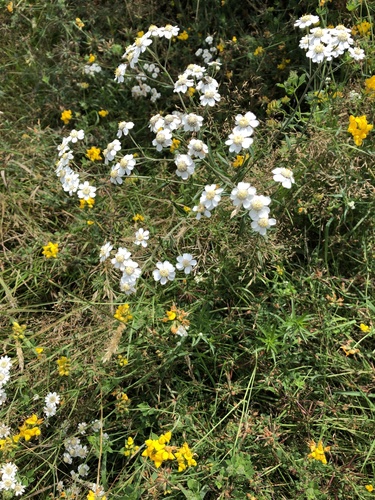
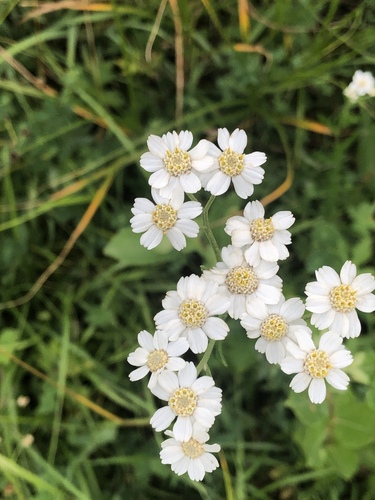
Achillea ptarmica L.
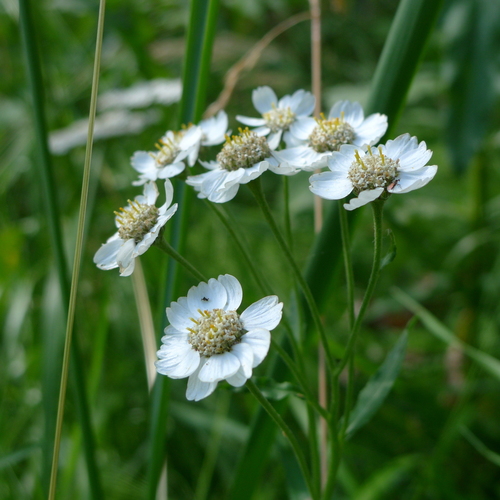
Source: Wikipedia
Synonyms 36
- 410,712 GBIF occurrences
- 14,211 iNaturalist observations
The overall population trend is unknown. Declines have been reported from the United Kingdom (Online Atlas of the British and Irish Flora 2012), but it is indicated as Least Concern in many national Red Lists therefore it can be assumed that the declines are neither fast nor steep.
This plant is a perennial herb found in wet and damp habitats such as fens, springs, marshes, rush-pasture, stream sides, wet heath, flushes on hill slopes and in shrubland. It has also been reported from commercially used grassland, roadsides and waste ground (Klotz et al. 2002, Online Atlas of the British and Irish Flora 2012).
There are not thought to be any widespread significant threats to this species.
This species is listed as Near Threatened in Germany (Bundesamt für Naturschutz 2012), Hungary (Király 2007), and Switzerland (Moser et al. 2002) but classed as Least Concern on the national Red Lists of Belgium (Van Landuyt et al. 2006), Denmark (NERI 2007), Estonia (eBiodiversity Estonia 2012), Luxembourg (Colling 2005), Norway (Artsdatabanken 2010), and the United Kingdom (Cheffings and Farrell 2005). It occurs incidentally in several protected areas (UNEP-WCMC and IUCN 2021).
This species is assessed as Least Concern due to its wide distribution, its ability to live in a wide variety of habitats and a lack of evidence for rapid population decline.
Gallery