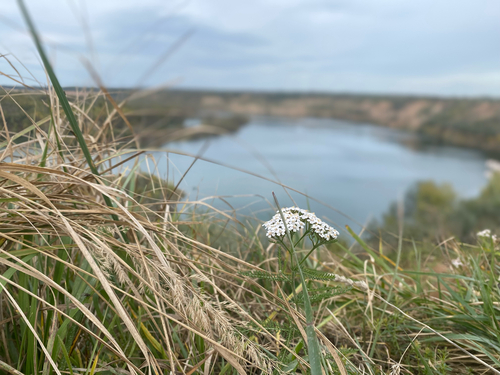
Achillea millefolium L.

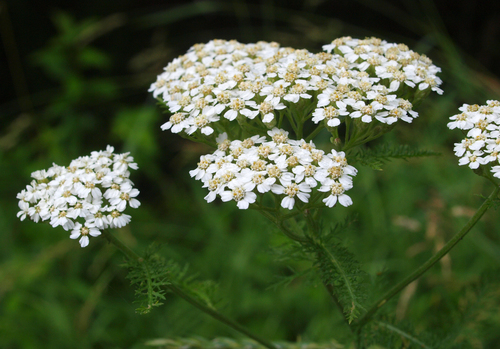
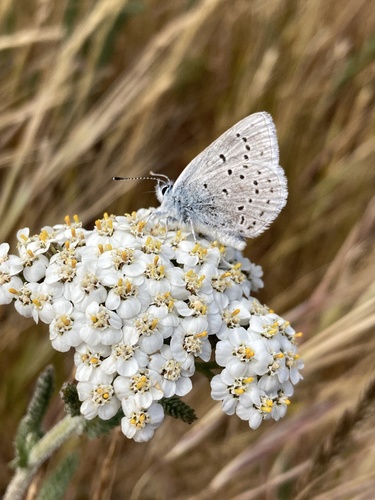
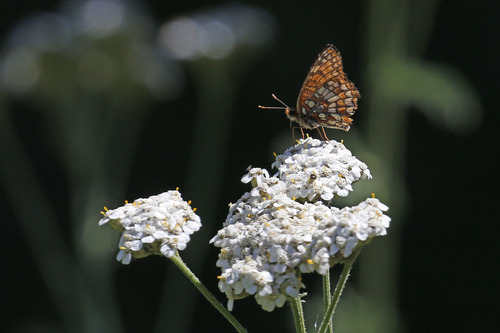
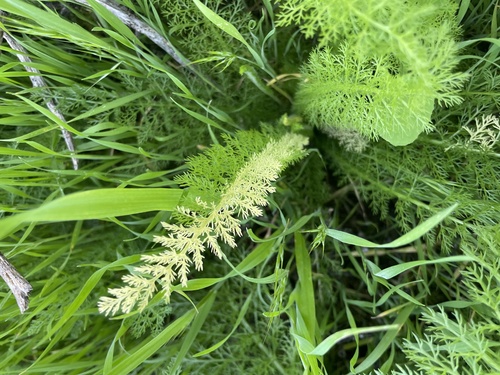
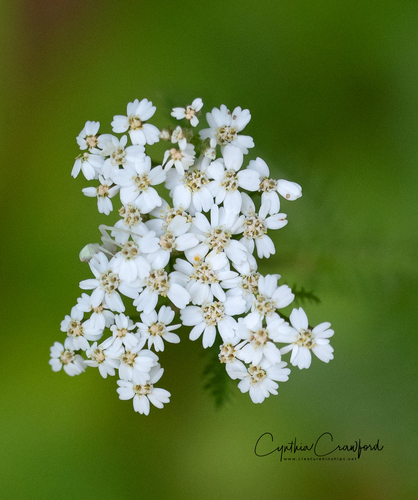
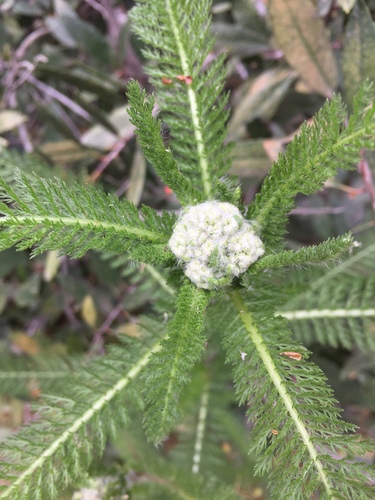
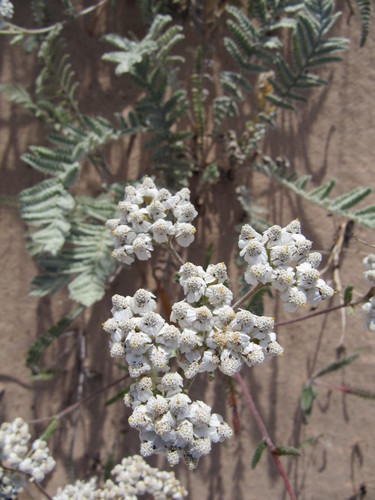
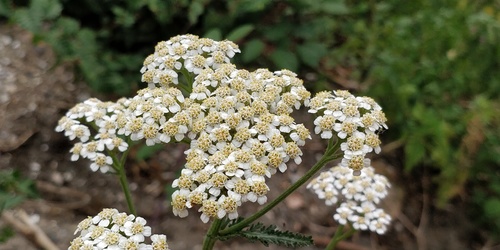
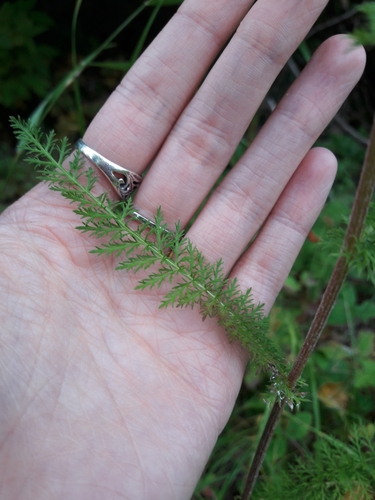
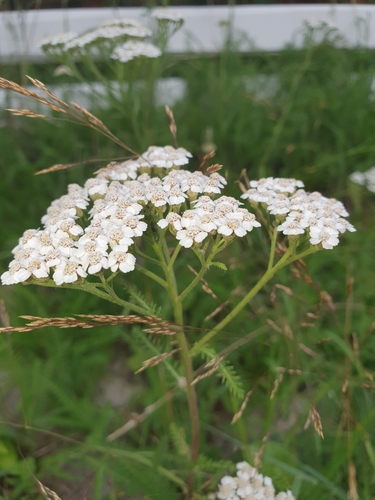
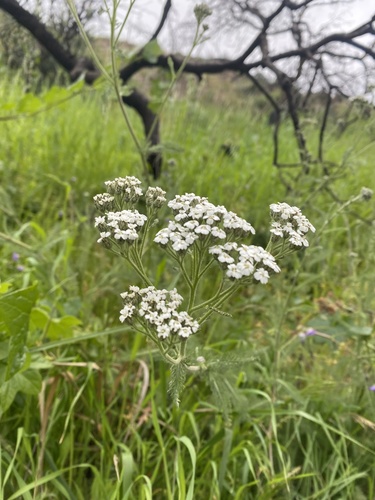
Achillea millefolium, commonly known as yarrow or common yarrow, is a flowering plant in the family Asteraceae. Growing to 1 metre tall, it is characterized by small whitish flowers, a tall stem of fernlike leaves, and a pungent odor.

Source: Wikipedia

Synonyms 47
Achillea ambigua, Achillea anethifolia, Achillea angustissima, Achillea arenicola, Achillea bicolor, Achillea borealis, Achillea californica, Achillea coronopifolia, Achillea crassifolia, Achillea cuspidata, Achillea eradiata, Achillea fusca, Achillea gigantea, Achillea gracilis, Achillea haenkeana, Achillea lanata, Achillea lanulosa, Achillea laxiflora, Achillea marginata, Achillea megacephala, Achillea nabelekii, Achillea nigrescens, Achillea occidentalis, Achillea ossica, Achillea pacifica, Achillea pecten-veneris, Achillea pseudotanacetifolia, Achillea puberula, Achillea sordida, Achillea subalpina, Achillea subhirsuta, Achillea submillefolium, Achillea sudetica, Achillea tenuis, Achillea virgata, Achillios millefoliatus, Alitubus millefolium, Chamaemelum millefolium, Millefolium officinale, Millefolium vulgare, Ptarmica borealis, Santolina millefolium, Achillea atrotegula subsp. borealis, Achillea borealis subsp. arenicola, Achillea borealis subsp. california, Achillea lanulosa subsp. alpicola, Achillea lanulosa subsp. megacephala
  • 1,813,142 GBIF occurrences
  • 335,032 iNaturalist observations
Conservation status code
LC
Conservation: status label
Least Concern
Conservation: population trend
Stable
Conservation: year assessed
2026
Habitats
IUCN: population narrative

A very common species found all over Europe with no significant trends or declines.

IUCN: habitat narrative

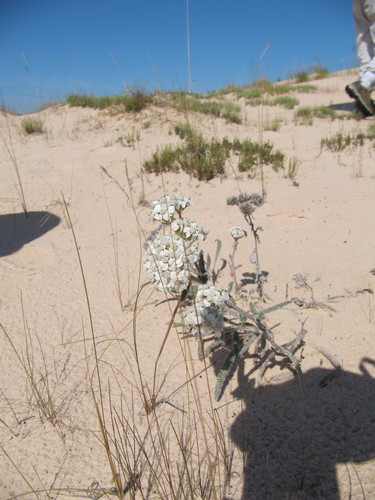
A hairy, aromatic, stoloniferous, patch-forming and strong-smelling perennial herb found in a variety of grassland habitats, pastures, meadows, grassy heaths, road verges, hedgebanks, lawns, waste places, montane areas wet from snow melt, sand dunes and shingle often growing on calcareous or slightly acid soils but not waterlogged, acid or nutrient deficient soils. It is drought tolerant and produces white/cream and red/pink flowers from July to October (Botanical Society of Britain and Ireland 2023, Blamey and Grey-Wilson 2003).

IUCN: threats narrative

There are no widespread threats to this species.

IUCN: conservation narrative

There are no conservation measures in place or needed.It is listed as Least Concern in the national red lists of Denmark (NERI 2007), Estonia (eBiodiversity 2012), Luxembourg (Colling 2005), Norway (Artsdatabanken 2021) and the United Kingdom (Cheffings and Farrell 2005). The species occurs in numerous protected areas, including Natura 2000 sites (UNEP-WCMC and IUCN 2023).

IUCN: rationale

European regional assessment: Least Concern (LC) EU 27 regional assessment: Least Concern (LC)This species is classified as Least Concern for both Europe and the EU27 Member States due to its widespread distribution, stable populations, and an absence of major threats.