Acer pseudoplatanus L.
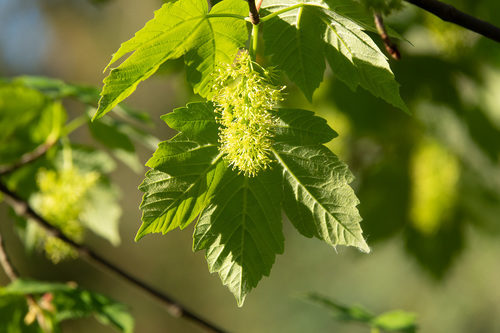
Source: Wikipedia
Synonyms 49
- 1,331,819 GBIF occurrences
- 88,173 iNaturalist observations
The population size of Acer pseudoplatanus is not known but thought to be large and there is no indication of population decline.
Acer pseudoplatanus is large tree that can grow to over 30 m tall. It is a versatile, fast growing species typically occurring on nutrient-rich soils and developing well under canopy shade (Pasta et al. 2016). The species has a short lifespan of between 15 and 30 years (Rusanen et al. 2003). Within it's more northerly range the species forms scattered sub populations at the base of slopes, valleys and ravines. Acer pseudoplatanus can found in mixed deciduous forests. It rarely forms pure forests but dominates in cool, humid environments often at the bases of valleys or ravines. The species supports numerous species of epiphytes, ground flora and herbivores (Pasta et al. 2016). It will not grow in areas prone to drought but can tolerate exposure to pollution; growth even shows improvement under increased nitrogen levels. The species has invasive potential due to large seed set and the long longevity of its seed (Rusanen et al. 2003). The bark can be stripped by grey squirrels.
Acer pseudoplatanus is highly vulnerable to the threat of Anoplophora glabripennis, the Asian Longhorned Beetle (Pasta et al. 2016) which causes species mortality. There are concerns over the genetic diversity of trees not found in mixed woodlands (Rusanen et al. 2003)
Acer pseudoplatanus is widely cultivated in parks and gardens in Europe. There are 171 ex situ collections found in botanic gardens (BGCI 2017). The species is considered not threatened in Switzerland (Moser et al. 2002) and of Least Concern in Europe (2016). The species was also previously assessed as Least Concern at the global level (Gibbs et al. 2009). It is recommended the species be monitored for population decline in response to the spread of Asian Longhorned Beetle. Rusanen et al. 2003 recommended the production of in situ conservation stands which maintain a broad genetic base for the species selected from individuals across the species range, including those outside of woodlands.
Acer pseudoplatanus is a large tree found in most of Europe and in the Caucasus. It is globally assessed as Least Concern. The species has a very large extent of occurrence (EOO) and population is assumed to be large and stable. This tree is also well represented in ex situ collections, is regularly planted in urban areas and outside it's native range. The species is also grown for its timber. It is recommended that the species is monitored for population decline as a result of the spread of Asian Longhorned Beetle, Anolophora glabripennis, across the species range, and the mortality risk this poses.
Gallery